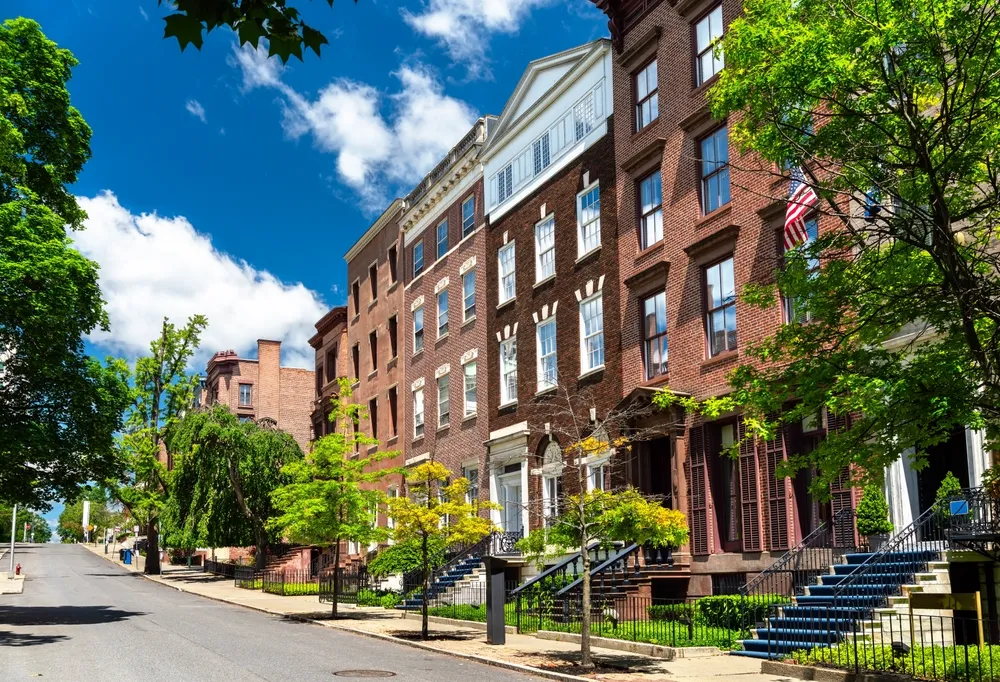
Few real estate markets in the Northeast tell a more layered story than Newburgh, New York. Situated on the Hudson River about 90 minutes north of Manhattan, this small city of roughly 30,000 people has spent decades navigating the consequences of mid-20th century urban planning decisions that left entire neighborhoods hollowed out. Today, it sits at a crossroads: rising luxury demand, persistent middle-market friction, and growing investor interest that doesn’t always translate into completed deals.
Sarah Beckham Hooff, founder and principal broker of ReAttached Real Estate, has been working this market since before it appeared on most investors’ radar. Her perspective offers a ground-level view of what’s actually happening in Newburgh and what it might signal for similar small American cities.
A Market With a Complicated History
Newburgh’s current dynamics can’t be understood without context. The city’s development was shaped by urban renewal decisions in the 1960s and 70s that concentrated vacancy, drove disinvestment, and suppressed property values for generations. “There were city managers making really dramatic and impactful decisions about urban renewal that were very racially charged,” Beckham explains, noting that the city manager from that era later led a prominent white supremacist organization.
That history is part of what drew Beckham to Newburgh. Returning to the United States between international assignments in environmental conflict management, she encountered a city with remarkable 19th and early 20th-century architecture and a community she found genuinely compelling, even as the physical environment showed decades of neglect. What began as a recording studio in an abandoned hair salon evolved into a real estate brokerage, an investment fund, and a construction company, all operating in the same market.
The K-Shaped Market in Practice
The gap between Newburgh’s top and bottom market segments is widening, with the middle increasingly unable to transact. “Newburgh is exemplifying very much the K-shaped economy,” Beckham says. “The rich have gotten richer, the poor have gotten poorer, and the middle is having a very hard time transacting.”
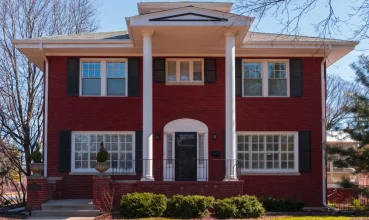
At the upper end, demand for finished, well-designed properties is strong and relatively new for the market. ReAttached recently closed its first single-family home appraised above one million dollars, a milestone reflecting how far the market has moved. Buyers at this level aren’t looking for projects. Spillover from Beacon, a more established and pricier Hudson Valley market just across the river, is contributing to this demand, with buyers discovering they can get significantly more space in Newburgh for comparable money.
At the lower end, Beckham is noticing a wave of AI-assisted deal prospecting targeting distressed and vacant properties. Investors are using algorithmic tools to identify potential acquisitions, generating a steady flow of inquiries about shells and extreme fixer-uppers. She’s skeptical about how many of these leads convert. “Playing with data is not the same as replacing a sewer line,” she notes. The relationships with plumbers, electricians, and contractors needed to complete a renovation aren’t something a prospecting tool can replicate.
The segment getting squeezed is the middle: mid-level fixer-uppers requiring renovation financing and a buyer willing to take on meaningful risk. A few years ago, buyers were taking out aggressive renovation loans to gut-renovate shells. That appetite has cooled as savings have declined, the job market has grown shakier, and anxiety about income stability has increased. The result is that this inventory is sitting longer than it used to.
What Out-of-Market Investors Get Wrong
For investors looking at Newburgh from a distance, the purchase prices can look almost too good. That’s where the analysis often stops – and where problems begin.
The construction talent pool outside major metro areas is fundamentally different from what investors expect. Many skilled contractors commute to Westchester or New York City for higher-paying work. What remains locally is largely small, owner-operated outfits, skilled and honest, but not set up to handle large-scale, time-sensitive projects. Written quotes are rare. Gantt charts are unheard of.
The practical implication is that timelines stretch well beyond investor projections. Beckham advises investors to roughly double their expected timeframes and keep holding costs low enough to absorb that reality. “Deploying five million dollars in Newburgh over the next 18 months is not possible,” she says. “The deals pencil, but the timeline implementation on the construction is actually getting it done.” When those conditions are met, however, the returns have been strong. Beckham’s own portfolio has seen cap rates in the high teens to low twenties on early acquisitions, though those results required deep local presence and hands-on management.
Neighborhood Dynamics and Pricing Signals
Performance varies considerably within Newburgh’s three square miles, and the differences often come down to a single variable: views. Properties with river sightlines command roughly $100 more per square foot, according to Beckham, and those neighborhoods have become increasingly competitive. Homeowners are willing to buy at low cap rates to secure the lifestyle, and some are converting multifamily buildings back to single-family use, effectively pricing out return-focused investors on market-rate deals.
In neighborhoods without view premiums, multifamily properties still offer investor-viable economics, though competition is increasing as the overall market matures.
Inventory and Seller Psychology
After years of sellers anchoring to peak COVID-era pricing, expectations are finally realigning with market reality. Beckham estimates it took roughly four years after the 2022 rate increases for this correction to take hold. The result is more realistic listing prices and more actual transactions. “This year is one of the first where we are not battling the issues with price perception in the same way that we were in the post-COVID interest rate rise era,” she says.
The narrative of the Hudson Valley as a destination for city transplants still holds, but it’s more nuanced than it once was. Alongside buyers moving up from New York City, Beckham is seeing a notable flow of people returning to the region after years elsewhere, particularly from Seattle and the Bay Area, where home appreciation has given them capital to reinvest. The region’s lifestyle appeal has broadened its buyer base beyond the classic urban-to-suburban migration story.
The Opportunity Nobody Is Capturing Yet
The segment Beckham finds most interesting sits between individual investors and institutional players: mid-sized multifamily in small cities like Newburgh. Three- and four-unit buildings in sub-100,000 population river towns haven’t attracted institutional attention, but she sees parallels to the early days of single-family rental as an asset class. “Money always tries to find a way to deploy itself at scale,” she says. “I don’t see that happening now in this mid-market multifamily, but I think it’s a very interesting opportunity.”
The challenge is execution, not economics. The investor or operator who builds construction and management infrastructure suited to this scale, in markets where the typical playbook doesn’t apply – is the one positioned to capture that opportunity. For now, the gap between what the numbers suggest and what can actually be built on the ground remains the defining constraint in markets like Newburgh.
About the Expert: Sarah Beckham Hooff is founder and principal broker of ReAttached Real Estate, serving the Newburgh, New York market. Her work in the city also includes an investment fund and a construction company operating in the same market.
This article is based on information provided by the expert source cited above. It is intended for general informational purposes only and does not constitute legal, financial, or real estate advice. Readers should conduct their own research and consult qualified professionals before making any real estate or financial decisions.