After years of intense competition and rapid price growth, the New Jersey housing market is cooling. Buyers are moving more cautiously, sellers are adjusting their strategies, and agents with deep local expertise are finding ways to stay ahead. In Union County’s Plainfield, that dynamic is playing out in ways that reflect both national headwinds and very local realities.
Rising interest rates, economic uncertainty, and a shifting buyer psychology have slowed what was once a frenzied pace of sales. For a city where average sale prices have climbed from roughly $350,000–$400,000 a few years ago to approximately $625,000 today, the stakes of getting pricing and presentation right have never been higher.
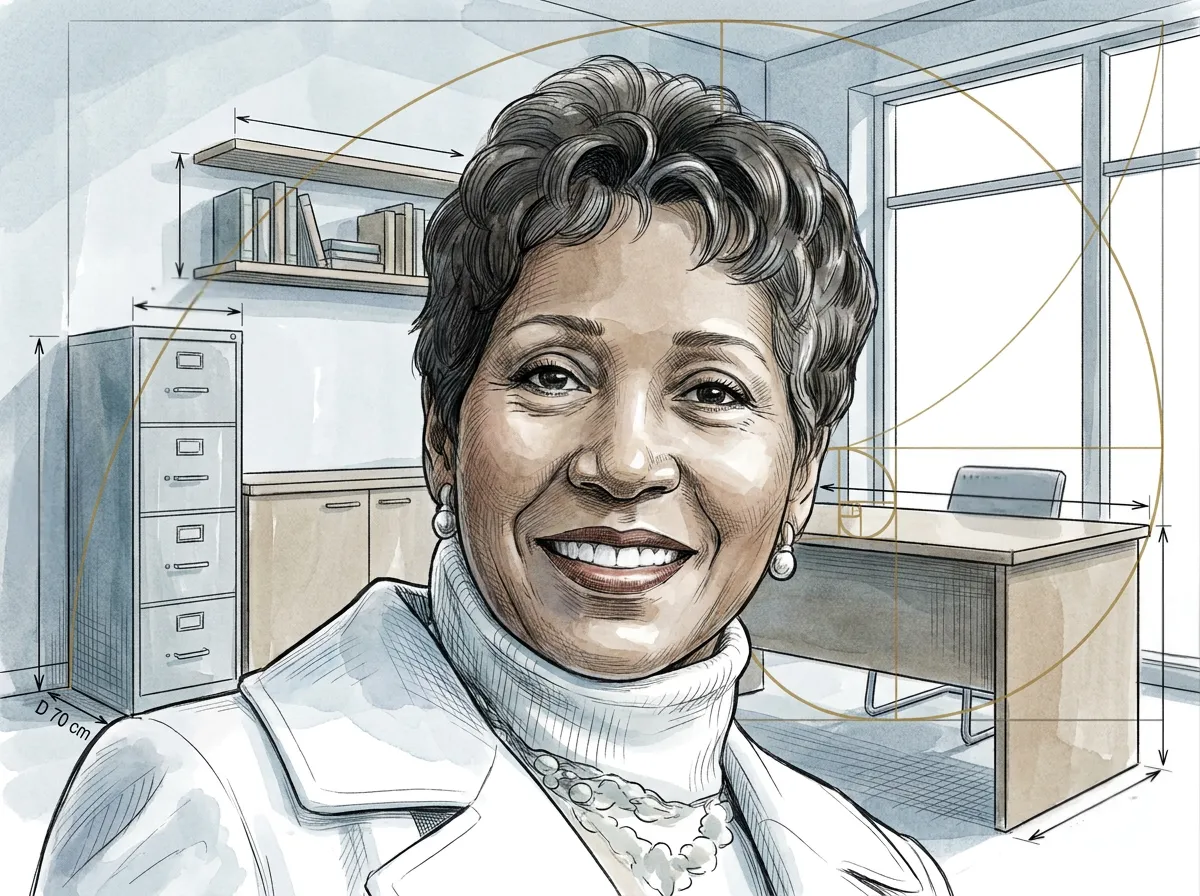
Darlene McWilliams, a Sales Associate and Realtor with Keller Williams Elite Realtors who has worked in the Plainfield area for 25 years, has watched that appreciation reshape who is buying, what they expect, and how agents need to position listings to compete.
Slower Pace, More Deliberate Buyers
The urgency that defined the post-pandemic market has softened. “We’re not seeing as many multiple offers as we did before,” McWilliams observes. “Buyers don’t feel the same sense of urgency. They’re holding off, they’re not jumping like they used to.”
The hesitation goes beyond interest rates alone. Geopolitical uncertainty, economic volatility, and a daily news cycle that shifts constantly are all weighing on buyer confidence. McWilliams notes that the emotional dimension of homebuying is often underestimated by analysts focused purely on rate movements. “When the news is inconsistent, chaotic, we feel chaotic,” she says. “And as a result, it’s not easy for us to make a decision.”
On the supply side, inventory has increased compared to recent years, with roughly 55 active properties currently on the market in Plainfield alongside more than 30 under contract. That move toward more balanced conditions means sellers can no longer rely on scarcity alone to drive price. Presentation, positioning, and pricing strategy matter more than they did when demand outpaced supply at every price point.
Where Buyers Are Coming From
Plainfield has long attracted buyers priced out of New York City, and that pattern continues. Brooklyn residents in particular have gravitated to the area, and more recently, Staten Island buyers have entered the mix. But the local upgrade and downsize market is equally significant. Buyers from nearby Westfield and Scotch Plains, looking to trade a larger home for something more manageable, often find that selling in those communities gives them enough equity to buy well in Plainfield.
“They’re going to get a lot of money on the sale of their home, and they’re going to buy a big house in Plainfield,” McWilliams explains. “That’s usually the way it works.”
Whether arriving from Brooklyn or from two towns over, these buyers tend to be informed and deliberate. They have done their research online, compared neighborhoods, and often come in with strong opinions shaped by sources that may not reflect local conditions. Managing that dynamic is one of the more consistent challenges agents face in the current market.
Why Broad Data Falls Short in Plainfield
County-level statistics tell only part of the story in a city where property values can vary sharply from one block to the next. “Every street in Plainfield is very different,” McWilliams says. “There are no cookie-cutter homes. We are a very street, a block-specific kind of selling opportunity.”
That granularity shows up clearly in pricing outcomes. A two-bedroom property near one of Plainfield’s ten historic districts recently closed at $625,000 – a number other agents had questioned as too high. The confidence to hold that price came from understanding what made that specific block and property type worth a premium. A separate listing, well-maintained with older but quality finishes, was priced above $700,000 and closed close to $800,000. Neither result would have been predictable from surface-level market analysis. Both reflected judgment built from decades of transaction experience in a specific geography.
Established neighborhoods like Sleepy Hollow, Netherwood, Hillside Avenue, and the historic districts continue to move faster and hold value more reliably than other parts of the city. Those areas have proven track records that buyers recognize, making them more resilient when the broader market softens.
Staging as a Competitive Tool
While pricing and location remain central, how a home is presented has become increasingly important in a market where buyers do most of their initial filtering online. McWilliams, who came to real estate through a background in fashion and interior design, treats staging not as an optional enhancement but as a standard part of her service.
Her framing is direct: “You’re not selling yourself, you’re selling a commodity. A product.” The job of staging, she argues, is to help buyers see what a home can offer them – not what it currently reflects about its owners.
She uses a simple analogy: “I compare it to a beautiful handbag. How can you enjoy or appreciate a beautiful handbag if I’ve got all my junk in there? I want you to see the compartments, the color, the flexibility of what it can offer.”
Decluttering, depersonalizing, and creating a clear sense of flow allow a property’s actual value to come through in photographs and walkthroughs, the moments that determine whether a buyer ever schedules a showing.
Guiding Buyers Through Noise
First-time buyers in the current environment face an information problem as much as a financial one. The volume of content available online, combined with advice from friends and family who bought in different markets or under different conditions, creates confusion that can lead to poor decisions or missed opportunities.
“The most common mistake of the first-time buyer is listening to the wrong people,” McWilliams says. “They use a lot of non-professional information, and that’s generally the first mistake.” Her advice is consistent: interview agents, find someone with genuine local knowledge, and then trust the process. An experienced agent who knows the school systems, neighborhood dynamics, and contract landscape can provide guidance that no amount of online research replicates.
What Comes Next
As Plainfield continues to attract buyers from across the region, the value of that local expertise is growing rather than shrinking. The market is moving more slowly than it was two years ago, but the fundamentals that drive long-term value, proximity to New York, historic housing stock, and relative affordability compared to neighboring towns, remain intact. For buyers willing to find the right representation, and for sellers willing to prepare their properties properly, the current environment still offers real opportunity. The agents who will thrive are those who can translate block-level knowledge into pricing confidence and help clients act decisively in a market that rewards preparation over haste.
About the Expert: Darlene McWilliams is a sales associate at Keller Williams Elite Realtors with 25 years of experience, focused on residential real estate in Union, Somerset, and Middlesex Counties in New Jersey, with a particular concentration in the Plainfield area.
This article is based on information provided by the expert source cited above. It is intended for general informational purposes only and does not constitute legal, financial, or real estate advice. Readers should conduct their own research and consult qualified professionals before making any real estate or financial decisions.