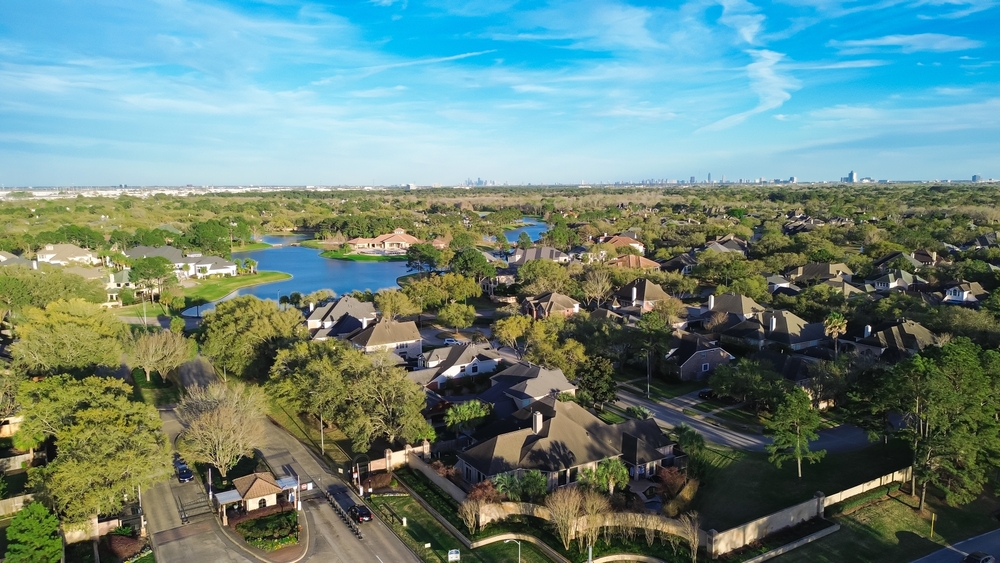
Balanced market data can mask what’s actually happening on the ground. In Cypress, Texas, one of northwest Houston’s fastest-growing suburbs, the numbers through July 2026 show stable pricing and no clear advantage for buyers or sellers. But according to Andrea Curran, Team Leader of The Andrea Curran Team at Compass, something shifted around the first week of July: buyers gained leverage but lost confidence, while resale sellers found themselves competing against builder incentives they cannot replicate.
Curran has worked the northwest Houston market for a decade. Her team covers residential, commercial, and ranch and land transactions, and she holds an accredited land consultant designation, one of fewer than 600 in the country. What she’s observing now is a market where psychology, not affordability, has become the binding constraint.
Buyers Have Leverage but Won’t Use It
The market data through July 2026 shows balanced conditions in Cypress. But Curran says the mood has shifted toward a buyer’s market since early July, with one problem: buyers aren’t acting on their advantage. They’re taking their time and hesitating to commit.
“There’s a misconception that the interest rates are unaffordable,” she says. “But if you look over the last six years, the only August that wasn’t in this interest rate price point was during the pandemic.”
Curran describes very normal market conditions without the buyer confidence to match. The practical effect is a market where sellers face mounting pressure from new construction while the buyers who could absorb resale inventory hold back.
New Construction Is Setting the Terms
Builders in Cypress are offering rate buydowns, design center incentives, and extras that resale sellers cannot match. Curran describes the competitive dynamic plainly: a seller who bought two years ago is now competing against a newer version of their home that comes with a bought-down rate, a free golf cart, and a free generator.
“The sellers who are competing with that new construction are at a disadvantage,” she says.
The sellers who struggle most are those who insist on aspirational pricing. Curran says she’s seen a consistent pattern: sellers who overshoot their recommended list price by $25,000 to $50,000 eventually have to reduce below where she originally recommended. Her advice is to price correctly from the start.
“This is not the market for that,” she says of aspirational pricing. “Listen when the market speaks to us.”
One agent on her team was negotiating a listing in mid-August that had sat for almost two months. The seller wanted no less than asking price and wanted the buyer to pay for the title policy, terms Curran describes as out of step with current conditions. Her recommendation for sellers in that position: they’d be better off deciding not to move.
Where Movement Still Exists
Not everything is stalling. Bridgeland, a Howard Hughes master-planned community that will eventually encompass three school districts, continues to perform well – the right house at the right price still moves there. The Woodlands, another Howard Hughes development, is still generating multiple-offer situations. And homes on 2 to 5 acres, enough space to breathe but not enough for agricultural exemption, remain desirable.
On the higher end, homes on acreage priced between $1.5 million and $2.5 million move faster than the broader market because of their scarcity.
The weakest segment is second homes. Waterfront properties on Lake Conroe, Lake Livingston, and along the Gulf from Crystal Beach through Jamaica Beach are sitting in saturated inventory. Many of those owners bought within the last four or five years and don’t have enough equity to exit comfortably. Curran says this is the toughest market segment right now but remains optimistic that some of those properties will move heading into fall.
Investment Opportunities and the School Factor
For investors considering the Cypress market, Curran points to two categories. Residential properties under $350,000, particularly newer construction in neighborhoods where building is already complete, work as buy-and-hold plays. Small office condos around 1,200 square feet are also performing well, which she describes as “very hot.”
She recommends investors target smaller new construction neighborhoods that are not still under construction and will not be two years from now, avoiding the ongoing builder competition that depresses resale values while construction continues nearby.
Looking ahead, Curran is watching how school zoning shapes buyer behavior. Cypress buyers focus intensely on which high school zone a property falls in, even though the district can rezone neighborhoods at any time as growth continues. That makes school-zone-driven purchases inherently uncertain; a buyer paying a premium for a specific zoning today has no guarantee it holds next year.
“People who are really looking for a solid school for their children, that’s been a big driver in Cypress, but now we’re starting to see that spread out into our Waller market also,” she says.
Waller, the neighboring county, which Curran identifies as one of the fastest-growing counties in the United States, has a school district taking a proactive approach to managing growth. For buyers priced out of premium Cypress school zones, Waller may offer a similar quality of education without the same pricing pressure.
The Buyer Profile Behind the Numbers
Curran describes her team’s typical client across all segments, from first-time buyers to multimillion-dollar custom homes, as self-made. These are people who place significant value on what they’ve earned and treat a home purchase as meaningful rather than transactional.
That profile matters for understanding the current hesitation. Buyers who worked hard for their capital are more cautious about deploying it when confidence is low, even if the numbers suggest conditions are favorable. For sellers competing against new construction, meeting those buyers where they are means pricing honestly and offering terms that don’t add friction to an already hesitant decision.
The gap between what the data shows and how buyers behave is the defining feature of the Cypress market in mid-2026. Sellers who price correctly and avoid competing on terms they cannot win, incentive packages, rate buydowns, brand-new finishes, are still finding buyers. Those who treat stable pricing data as permission to overshoot are watching their listings age past the point of easy recovery.
About the Expert: Andrea Curran is Team Leader of The Andrea Curran Team at Compass, covering residential, commercial, and ranch and land transactions in Cypress and northwest Houston, Texas. She has worked the market for a decade and holds an accredited land consultant designation.
This article is based on information provided by the expert source cited above. It is intended for general informational purposes only and does not constitute legal, financial, or real estate advice. Readers should conduct their own research and consult qualified professionals before making any real estate or financial decisions.