Cedar has long been the default choice for exterior wood applications in American residential construction. It’s available, familiar, and relatively affordable. But builders and architects working on high-end homes, particularly full-clad exteriors in mountain regions, are increasingly moving away from domestic species and toward thermally modified alternatives that offer greater dimensional stability and longer warranties.
The shift is driven less by aesthetics than by performance anxiety. Builders who install thousands of square feet of cladding on a single home need confidence the material won’t warp, cup, or twist after installation. That confidence has historically been hard to find with natural wood, which is part of why composite materials gained ground in the first place. Thermally modified wood, lumber heated to high temperatures in a controlled process that alters its cellular structure, sits between the two: it retains the look of natural wood while behaving more like an engineered material.
What Builders Are Asking For
João Costa, Managing Partner at GMX Group, a company that sources tropical hardwoods from South America and thermally modified wood from Europe, says requests from builders in his own client base have shifted noticeably toward low-maintenance, high-stability materials. “They want something sustainable, and they want no-headache products,” he says. “They will install it, turn their backs, and everything will be all right.”
That demand shows up unevenly across market segments. Residential projects tend to move quickly and generate repeat orders once a builder is satisfied with a material’s performance. Commercial projects, museums, and restaurant chains move more slowly, often requiring two to three years of specification and approval before material orders are placed, according to Costa.
Ayous, a species sourced from Cameroon and processed in Turkey, is one thermally modified wood product on the market that suppliers position as an alternative to cedar. Costa describes it as comparable to cedar in price, with a warranty backing it that he says natural cedar suppliers typically don’t offer, a claim specific to his company’s product rather than a settled industry comparison.
Supply Chain Structure Is Part of the Story
Material performance isn’t the only variable builders weigh. How suppliers structure their inventory and delivery also shapes which products get specified, particularly on projects with tight schedules. Costa says that in his experience, switching suppliers is rarely about price. “Pricing was never an issue,” he says. “I would say lead times and customer relationship.”
Costa describes some competitors in the thermally modified space as operating on a pre-commitment model, securing orders before importing inventory, which can extend delivery timelines. GMX, he says, keeps product warehoused in the U.S. and ready to ship rather than ordering per project. Whether that model represents a broader industry pattern or is specific to how GMX has chosen to operate isn’t something this reporting can independently verify; it’s presented here as Costa’s account of his company’s approach, not as a general market standard.
Costa also frames distribution as relationship-driven rather than transactional. “It’s not like, okay, I sold, I move on. No, I go back,” he says. “It’s all about relationship.” He says this involves regular visits to distributors and their customers, technical support at the job site, and follow-up after installation.
Where Material Choice Carries the Most Weight
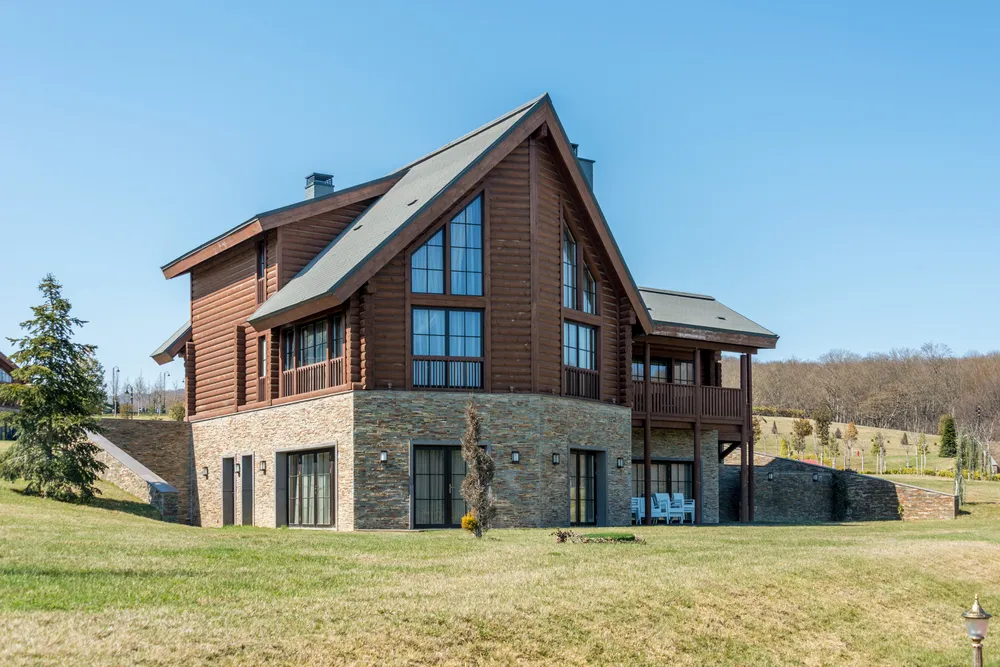
Costa points to mountain-area builds, full-clad cabin-style homes where wood covers the entire exterior, as cases where material selection matters most, since a builder committing to a large cladding job is choosing between a wood product stable enough to perform without callbacks or a composite alternative. He says GMX has won some projects that were initially headed toward composite because the builder lacked confidence in the stability of a natural wood option. That’s offered as an example of the broader dynamic at play in this market, not evidence that any single product resolves the underlying stability concern for all builders.
Sustainability Documentation Has Become a Baseline Requirement
Sustainability credentials have shifted from differentiator to prerequisite among established suppliers in this space. Major U.S. distributors increasingly require compliance documentation before onboarding a new supplier. Costa says GMX carries FSC-certified inventory and provides traceability documentation for its loads, including tracking of logs sourced from South American forests. “I don’t get those questions so often anymore because I have been pitching those dealers with my sustainability conversation for 10 years,” he says. “They know they can rely on us.”
Requirements vary by buyer: some builders specifically require FSC certification, while others need only documentation that materials were harvested properly. Costa says GMX also supports community infrastructure projects, including schools, near its forest operations in Brazil.
Tariffs and Freight Costs Add Pressure
Supply chain cost pressure isn’t unique to wood products, but it compounds in a category where margins are tight, and competition includes manufacturers shipping directly to ports. Recent tariffs on Brazilian materials required suppliers like GMX to assess which specific products were affected. Rising fuel costs have also squeezed the economics of local delivery, pushing some suppliers to adjust pricing to stay competitive with importers who don’t carry last-mile trucking costs.
Costa describes the current construction market as slow but cyclical, consistent with prior downturns he’s seen in the industry. For builders weighing material choices during a slower period, inventory availability and delivery reliability appear to factor into supplier selection alongside price and product performance.
About the Expert: João Costa is Managing Partner at GMX Group, a company that sources tropical hardwoods from South America and thermally modified wood from Europe for the U.S. residential and commercial construction market.
This article is based on information provided by the expert source cited above. It is intended for general informational purposes only and does not constitute legal, financial, or real estate advice. Readers should conduct their own research and consult qualified professionals before making any real estate or financial decisions.