As housing markets cool, buyers are paying up for homes they can move into without lifting a hammer and discounting nearly everything else. In the Lake Tahoe and Reno region, that discount may be outrunning the actual cost of the work. JB Benna, who leads Benna Mountain Luxury at Sotheby’s International Realty, says buyers are estimating repairs at many times what they would cost and writing offers to match. “Buyers overestimate concerns like 10x what they cost,” he says.
The result is a market split by condition. Updated, move-in-ready homes are drawing multiple offers and selling over asking price, Benna says, while properties that need work sit, take price cuts and, in some cases, sell below offers their owners turned down months earlier. Average days on market have risen to about 54, up from 30 to 40 a year ago, and Benna has several listings approaching 100 days.
Why Buyers Overestimate Repairs
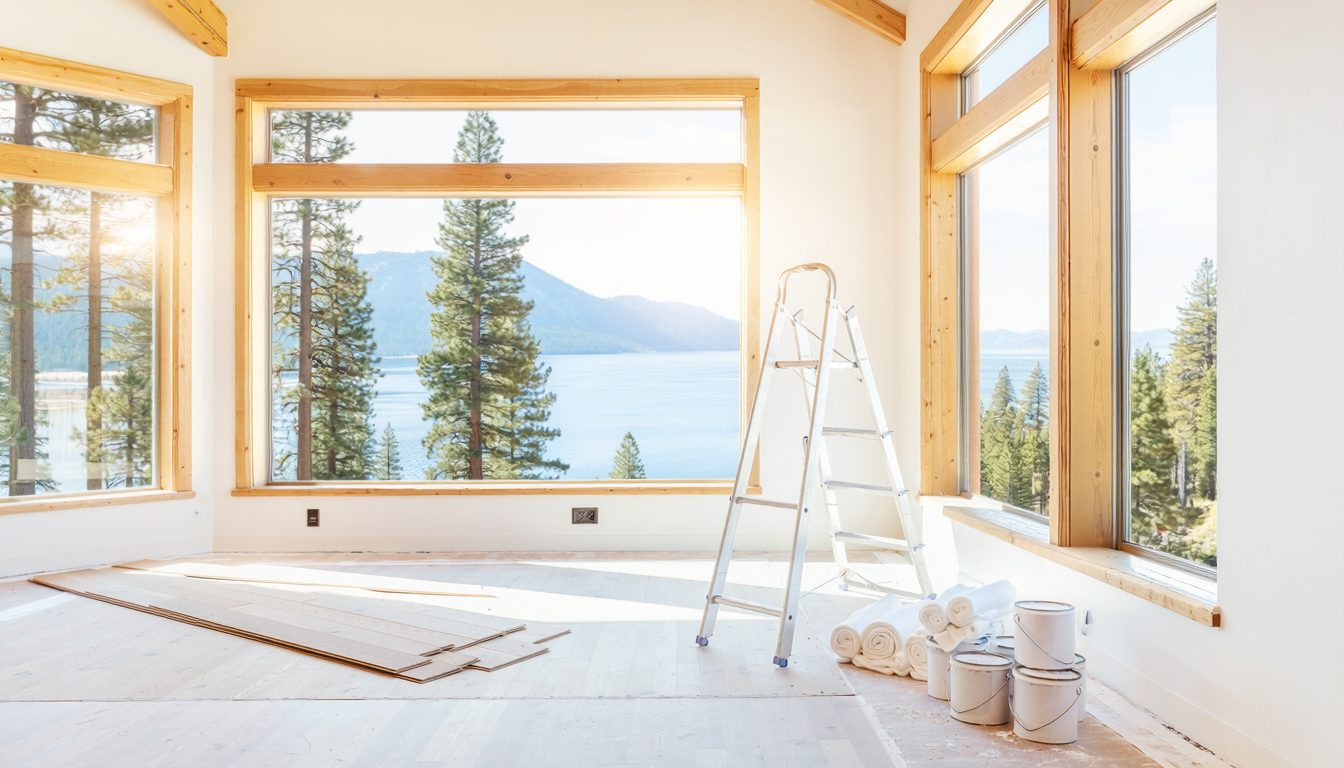
Benna recently walked a dated property with a buyer who pointed to worn carpet and aging windows and assumed the fixes would cost a fortune. Benna’s own tally came to a small fraction of that estimate.
That gap shapes offers. Buyers subtract the cost of the remodel they imagine, not the repairs the house needs. On an older Mediterranean-style home in a strong location, Benna says, buyers budgeting for extensive upgrades, and wanting their all-in cost to stay within their limit, offered well below the seller’s price. Whether the house needs that much work depends largely on the buyer’s vision. “I do have a lot of buyers that are kind of trying to buy the house that they envision rather than the house that exists,” he says.
Minor issues trigger the same reaction. Benna points to dated finishes, fire insurance questions, and a faint humid smell at one property caused by HOA overwatering, which a dehumidifier fixed. “Buyers just are not willing to put up with any concerns,” he says.
Part of the explanation is real cost. Labor is expensive and time-consuming to arrange, and buyers aren’t wrong that projects take time. But Benna says the larger driver is the hassle itself: buyers don’t want the stress of managing contractors after closing, so they treat any project as a major one. Broader financial pressure reinforces that caution. Buyers “really can’t afford to overpay because everything’s expensive,” Benna says, pointing to high gas prices, high interest rates, and a general sense of uncertainty.
Where Sellers Absorb the Gap
Sellers of homes that need work are paying for those inflated estimates. Benna says offers on his listings often fall just short of what sellers want, by a sliver of the asking price. Sellers who hold out tend to sit, then “end up taking price reductions and end up going below where the previous offers were at,” he says.
Even realistic pricing isn’t always enough. Benna’s team won one long-stalled, overpriced listing by proposing the lowest price among the competing agents, yet offers still came in below it, and the price has since dropped again.
Benna’s answer is to remove objections before a home is listed. His team spends months on painting, landscaping, stucco repair, and staging so buyers find nothing to discount. In some cases, those homes have then drawn quick multiple offers.
The divide isn’t always predictable, and it isn’t strictly about price. Among the team’s lower-priced listings, one recently sold in its first weekend, while another they expected to move fast has sat for months.
Two Markets Heading Into Winter
The region functions as two markets. Reno is largely a primary-residence market and more sensitive to interest rates. Tahoe is driven by vacation and second-home buyers, with a large share of cash deals, though cash plays a meaningful role in Reno as well. Benna attributes much of that cash to Californians who sell their homes and buy in Nevada outright, drawn by its more favorable tax climate as taxes rise in California. That flow has been a staple of the market since rates rose in 2022, he says, and conditions held up well until this year, when sellers began to outnumber buyers.
Other pressures are now slowing decisions. The first contract on the Mediterranean-style home canceled during one of this year’s wildfires, which Benna says have made some buyers nervous. Some sellers are considering taking their homes off the market for the winter to let conditions reset and see how markets react to the election. Benna recalls a 2024 transaction with what amounted to an election contingency, driven less by who would win than by how markets would respond. He sees a similar wait-and-see mood now, though he hopes November and December bring an end-of-year push that moves some of the inventory.
What the Gap Means
For sellers, Benna’s point is that fixing objections before listing can cost far less than the discount buyers apply when they see them. “If a product is truly turnkey, it’ll sell quickly,” he says. “But if someone feels like they have to go in and do a bunch of modifications just to move in or just to feel like it’s up to standard, then they don’t really want to do that right now.”
The same dynamic cuts the other way for buyers willing to take on a project. When most buyers inflate renovation costs and avoid the hassle altogether, homes that need work face thinner competition and discounts that can exceed what the repairs would actually cost. How wide that margin is depends on the property and the buyer’s plans, but Benna’s experience suggests that, in the Lake Tahoe and Reno region right now, the discount can be bigger than the repair bill.
About The Expert: JB Benna leads Benna Mountain Luxury at Sotheby’s International Realty in the Lake Tahoe and Reno region. A seventh-generation Tahoe native, he ran an advertising studio marketing lakefront and ski-in, ski-out properties before moving into sales. His team works with lakefront, ski, and Reno estate properties.
This article is based on information provided by the expert source cited above. It is intended for general informational purposes only and does not constitute legal, financial, or real estate advice. Readers should conduct their own research and consult qualified professionals before making any real estate or financial decisions.