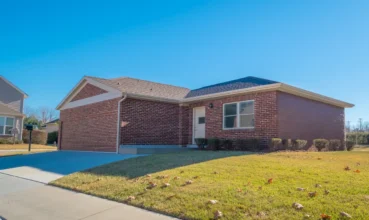
Across the Las Vegas Valley, rental listings are lingering. Properties that once leased in days now sit for weeks, and in some cases, months. The shift has forced property owners to rethink not just what they charge, but what they offer tenants to get them through the door and keep them there.
The change is measurable. According to Corinne “Ren” Gordon, a Realtor and permitted property manager who co-owns Hive Real Estate Group & Property Management in Las Vegas, her firm’s portfolio has gone from leasing properties in under two weeks to an average of about 30 days. When she runs comparable market analyses for incoming owners, she sees listings from other firms sitting 60 to 124 days, a sign that the gap between well-positioned properties and poorly positioned ones is widening fast.
“We’re not in the environment anymore where you can put almost anything on the market at an aspirational price and expect people to fight over it,” Ren says.
The Cost of Chasing an Extra $200
One pattern Ren sees repeatedly is owners fixating on squeezing an extra $100 or $200 per month out of a rental rate, without accounting for the cost of the vacancy that pricing creates.
“What owners don’t realize is that if a property sits vacant for just one month chasing that number, the math can actually work against them very quickly,” she says.
That arithmetic has become more consequential as tenants gain leverage. Renters today have more information, more choices, and more ability to compare properties quickly online. For owners, competing on availability alone no longer works. Ren says condition, presentation, staging, and responsiveness all factor into whether a listing converts.
The shift is also funneling a specific type of owner into property management who might not have been there a year or two ago. Ren says she is seeing more single-family homeowners who tried to sell, couldn’t get the price they needed in a volatile sales market, and are now turning to rentals as a holding strategy. Some are stuck with high interest rates and cannot pay down their private mortgage insurance enough to make a sale worthwhile, so they rent for a couple of years to build equity before trying the sales market again.
Retention Over Speed to Lease
The most concrete shift Ren describes is in what owners ask her. A few years ago, the standard questions were about maximum rent and speed to lease. Now owners want to know what they can offer tenants to make them stay longer.
Hive has responded by layering in programs that go beyond traditional lease terms. One offering gives tenants cash-back rewards for on-time rent payments and timely maintenance tasks like changing air filters. Another is a rent-to-own structure where a portion of monthly rent goes into an escrow fund, giving the tenant a head start on a future down payment or closing costs.
“We’re seeing that we’re getting tenants to stay a lot longer because they’re invested in their home, they like where they live, and now they also have the opportunity to possibly purchase that same space,” Ren says.
On the furnished side, a segment Hive has operated in for roughly two decades, originally built around a single client who was relocating out of state and didn’t want to sell, the incentives look different. The firm offers concierge-type additions: welcome gifts, entertainment packages, and discounted rates for longer stays. Demand for furnished units comes from corporate executives on temporary relocation, insurance-displaced residents needing housing while their homes are repaired, snowbirds escaping cold-weather climates, and newcomers to Las Vegas who want to test neighborhoods before committing to a purchase.
Owners Are Getting More Cautious
Ren notes that owner sentiment has shifted toward caution, particularly among long-tenured clients. Some owners in her portfolio have been with the firm since the early 2000s and are now evaluating whether to age out, pass properties to the next generation, or execute 1031 exchanges into holdings that better fit their current needs.
Newer owners, meanwhile, are arriving with more questions and more sophistication. They want to know what small improvements they can make incrementally, rather than deferring maintenance until a large, expensive renovation becomes unavoidable, to keep a property competitive whether they plan to continue renting, sell, or exchange.
That strategic thinking extends to how owners handle tenant hardship. Hive connects tenants facing financial difficulty with county-based assistance programs covering rental assistance, food support, and case management. Ren frames this as practical: housing stability reduces turnover, which reduces vacancy costs. “We believe that stability happens with housing first,” she says, “and that without housing, you really don’t have an opportunity to have great stability in your life.”
Technology Without Losing the Personal Side
Ren says property management is heading toward a wider adoption of AI and automation tools, but she sees risk in leaning too far in either direction. Firms that ignore new technology may fall behind competitors. But firms that automate too aggressively risk losing the personal judgment that property management requires, the kind of situational decision-making that no algorithm handles well.
“If you go too far on the AI side, you’re going to lose that personal touch,” Ren says. “But if you don’t dive into the technology side in any aspect, you might be forgotten.”
She expects the gap between firms that use technology responsibly and those that don’t to widen. The firms that get it right, in her view, will be the ones that automate routine tasks while keeping human judgment at the center of client relationships.
Realistic Expectations Are Winning
For owners managing rental properties in Las Vegas right now, the market is no longer forgiving overpriced listings or deferred maintenance. Tenants have enough options to be selective, and vacancy costs erase the gains from holding out for higher rent. The owners seeing the best results are the ones pricing accurately, maintaining their properties, and offering tenants reasons to stay beyond the lease terms themselves.
“Las Vegas is rewarding realistic expectations and strong positioning,” Ren says.
About the Expert: Corinne Gordon is a Realtor and permitted property manager who co-owns Hive Real Estate Group & Property Management in Las Vegas, Nevada.
This article is based on information provided by the expert source cited above. It is intended for general informational purposes only and does not constitute legal, financial, or real estate advice. Readers should conduct their own research and consult qualified professionals before making any real estate or financial decisions.