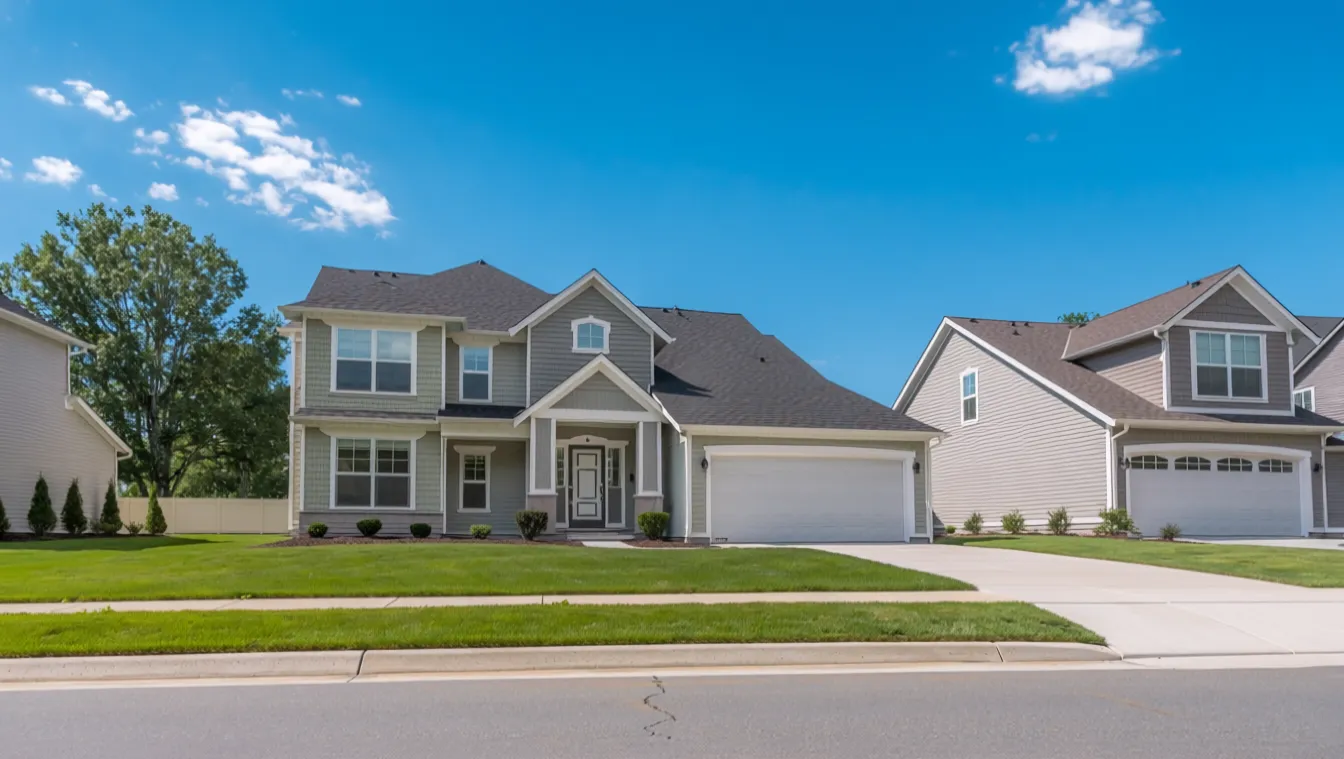
The conventional picture of a healthy housing market assumes activity across the price spectrum, first-time buyers at the bottom, move-up buyers in the middle, and luxury purchasers at the top. In the Kansas City metro, that middle layer has largely gone quiet. Upper-end buyers are transacting, entry-level buyers are finding ways in with family financial support, and the broad middle, homeowners who want to move but can’t justify the cost of trading up, is staying put.
Shannon Doser, a 20-year veteran agent leading The Doser Group at LPT Realty in Kansas City, sees the pattern in her own production. “The upper end is buying, and the lower end is buying, and the middle is staying,” she says. Home values in the metro have climbed roughly 50 percent over the past five years by her estimate, and current interest rates make the next step up financially painful for households that already own. The result is a market where activity concentrates at the extremes while the core of repeat buyers – the segment that typically drives volume – waits on the sidelines.
First-Time Buyers Aren’t Going It Alone
One of the clearest signals of how affordability pressure is playing out in Kansas City shows up among first-time purchasers. Of the 14 first-time buyers Doser closed last year, she estimates 12 had financial help from parents or grandparents. The desire to buy is there, particularly among younger buyers whose families are encouraging homeownership, but the standalone economics often don’t work.
“The kids have to have either a roommate or a fiancé or something,” Doser says. “Most of them aren’t really available to go in and just live in a house alone.”
That family-assisted buying pattern has become a regular feature of entry-level transactions in her market rather than an occasional exception. Doser says the traditional starter home, affordable enough for a single young buyer to carry independently, has largely disappeared from the Kansas City landscape.
Right-Sizing, Not Downsizing
Among older homeowners, the motivation to move doesn’t fit neatly into the traditional downsizing narrative. Doser describes a cohort of clients around age 50 who are empty nesters looking not for less space, but for different space, updated kitchens, pools, layouts suited to life after raising children. The homes they’re targeting are often as large as or larger than what they’re leaving.
“They’re not downsizing, they’re not upsizing, they’re just moving into something different,” she says.
This group is active when they can make the numbers work, but many are among those waiting for conditions, rates, confidence, and personal circumstances to align before committing. The gap between wanting to move and being able to afford the move is keeping even motivated sellers in place.
Pricing Discipline Is Separating Outcomes
In a market where consumer confidence has weakened over recent months, pricing strategy is producing sharply different results. Doser frames the choice bluntly: patience or price.
Listings that come on at or slightly below where comparable sales data points sell quickly and on favorable terms, at or above list price, according to Doser. Listings that come on above market sit, and the eventual correction costs sellers more than pricing correctly from the start would have.
She points to a recent listing that sat for 40 days before the sellers came down to where she had originally recommended pricing. “When they end up coming down, they end up conceding a heck of a lot more than they would have if they had come on priced appropriately,” she says.
The disconnect runs both directions. Doser describes buyers who expect perfection at the price they want, and sellers who expect the conditions of 2022. “People have unrealistic expectations of what they’re going to get as a buyer, what they’re going to get as a seller,” she says. That mismatch is the primary reason deals fall apart in her market.
Consumer Confidence Is the Binding Constraint
While interest rates get most of the public attention, Doser sees the deeper issue as broader sentiment. She describes a notable pullback over the past couple of months, driven less by rate levels themselves than by pervasive negative media coverage and its effect on how people feel about making large financial commitments.
“Interest rates are volatile, but they feed into consumer confidence more than they do the reality,” she says, noting that current rates around seven percent are close to the long-run historical average. The problem is perception shaped by the anomaly of rates in the twos earlier this decade. “They took them too low. They should have never been in the twos.”
The practical effect is a pool of pent-up demand, people who want to marry, divorce, relocate, or change neighborhoods but feel the timing isn’t right. Doser expects that demand to release eventually, though the timing remains uncertain. “If I had a crystal ball, I’d be really, really wealthy. But it’s coming. We just don’t know when.”
What Holds Steady
Across the Kansas City metro, Doser sees new construction performing softer than the resale market, while cleaned-up, move-in-ready homes at lower price points continue to sell well. Johnson County, Kansas – consistently ranked among the top counties nationally for quality of life, according to Doser – remains stable. “It’s not going to go down. It might not go up, but I don’t think it’s going to go down.”
Kansas City’s broader appeal as a destination continues to draw relocating buyers, particularly from higher-cost markets like Denver and California. Doser says post-Covid transplants from those areas were often able to pay cash for homes that would have been unattainable in their previous markets, a dynamic that has pushed more activity into the million-dollar-plus range than the metro saw before the pandemic.
Looking into 2027, Doser anticipates a market that includes more foreclosures and cash-offer activity, alongside continued attrition among agents. “A lot of agents are really not selling anything,” she says. For buyers and sellers navigating the current pause, the market’s direction hinges less on where rates land than on when confidence catches up to conditions that are, by historical standards, closer to normal than the years that preceded them.
About the Expert: Shannon Doser is a 20-year veteran agent leading The Doser Group at LPT Realty in Kansas City, Missouri.
This article is based on information provided by the expert source cited above. It is intended for general informational purposes only and does not constitute legal, financial, or real estate advice. Readers should conduct their own research and consult qualified professionals before making any real estate or financial decisions.