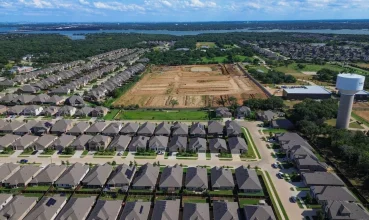
The New Jersey Shore real estate market remains stable, with properties under $800,000 selling quickly while higher-end homes see longer listing periods. After a surge in demand during the pandemic, the region has settled into a year-round market, attracting permanent residents from urban areas who are seeking a different pace of life.
Maria Jakubik, a residential agent with The Metta Team at Keller Williams Realty Ocean Living, brings a decade of experience in construction and renovation to her real estate practice. Her background in mortgages gives her a clear understanding of both market fundamentals and the obstacles buyers face today.
Jakubik often draws on her lending expertise to help clients avoid common pitfalls. She routinely reassesses buyers’ financial readiness, even after pre-approval, if a client’s employment or financial situation changes. “If a client says something that makes me think they should talk to a mortgage rep again, even though they’re pre-approved — maybe they lost their job, bought a car, or got a new job with more income — I can guide them,” she explains.
The Shore’s Lasting Draw
The Jersey Shore attracts buyers for more than just its beaches. The area offers a slower pace and a lifestyle that has become especially appealing as remote work has expanded.
“There’s something at the beach — everybody’s just a little bit more laid back,” Jakubik says. She points to the region’s outdoor culture, health-conscious residents, and the daily access to the ocean as key draws. “I can go to the beach, breathe salt air, watch sunsets and sunrises — things people only see on vacation — I get to do every day.”
The pandemic accelerated a shift to year-round living. Previously, the Shore would empty in winter, but the rise of remote work has changed that dynamic. Many buyers who initially purchased second homes have now made them their primary residences.
Market Segmentation and Buyer Behavior
The current market is divided by price point. Homes under $800,000 in desirable neighborhoods remain in high demand, often selling within weeks of listing. In contrast, luxury properties above $850,000 are seeing slower movement than during the pandemic boom.
“Anything under $800,000 is still moving pretty quickly in good neighborhoods,” Jakubik observes. “But anything over $850,000 to $900,000 — and in the millions — those were flying during COVID, and even after, but the last six months, the luxury market has slowed down. They’re on the market maybe 20 to 30 days instead of a week.”
The most active buyers are professionals in their 50s and 60s coming from North Jersey and New York. These buyers are often looking for a more relaxed lifestyle but still want comfortable, well-sized homes. “They’re downsizing, but not really downsizing,” Jakubik notes. “Maybe not a 4,000-square-foot colonial, but still a decent-sized home, and they want to spend their working years in a more relaxed environment.”
Managing Waterfront Complexities
Buying near the water involves more than just location; it requires a clear understanding of flood insurance costs and local regulations. Jakubik addresses these issues early in the process, often securing preliminary flood insurance quotes for clients before they make an offer.
“My flood insurance went from $680 when I moved in to almost $2,000 now,” she says. “That’s something I bring up right away.” She also warns clients about local restrictions on short-term rentals, which can impact investment potential. “Certain towns don’t allow short-term rentals. They only allow 30-day or more rentals. If you have a client looking to buy something for Airbnb, you have to know which towns allow that.”
Investor Activity and Targeted Opportunities
Investor interest in the Jersey Shore remains steady, though the most attractive opportunities have shifted geographically. Jakubik advises investors to look beyond the largest beach towns, where prices have already risen, and consider emerging areas in Southern Ocean County.
“There are some beach towns in Southern Ocean County that are turning over because people are moving from Monmouth to Northern Ocean, now Southern Ocean,” she notes. “Eight years ago, I mentioned a town to a bunch of builders, and it flipped because we see it happening slowly. There are Southern Ocean County towns right now where that’s happening.”
Investors who identify these up-and-coming neighborhoods early can often secure properties before broader demand drives up prices.
Dispelling Affordability Myths
A major challenge for the Shore market is the perception that coastal living is out of reach for most buyers. Jakubik regularly works to correct this misconception, pointing out that the area offers options for a wide range of budgets.
“People think it’s unachievable to live at the Shore, like it’s millions of dollars to own a house,” she says. “You could get a condo for around $250,000 — maybe not a big one, maybe a one-bedroom — and then you could have a $7 million house on the ocean. There’s room for every budget.”
She encourages buyers to consider homes that need some work rather than waiting for the perfect property. “Buy the house that needs a tiny bit of work. Take your time, do what you have to do to it, build equity. You should always buy the worst house on the nicest street — that’s where you’ll have the most equity.”
Current Market Dynamics
Most transaction challenges arise during home inspections rather than from financing or insurance issues. Sellers are often reluctant to make repairs on issues that were present during their own ownership. Jakubik’s team prepares both buyers and sellers for these negotiations by reviewing inspection reports and setting realistic expectations before the attorney review stage. “We go over the report and say, ‘If you were buying a house, would this affect you?’ We make it realistic and set expectations.”
Looking Ahead
Heading into 2026, Jakubik expects the market to remain active, with the potential for increased sales if interest rates decline. “I think there’s going to be a slight adjustment, but if interest rates drop, which I believe they will, it’s going to get busier for us.”
Her team is expanding efforts to educate first-time buyers about affordability and equity-building, hosting seminars and working directly with clients to demystify the process. They are also increasing collaboration with builders on new developments and partnering with investors to address distressed properties.
“We’re trying to get people to understand that your first house doesn’t have to be a mansion,” Jakubik says. “We’re trying to make buying a home feel more affordable.”
What This Means for Buyers and Sellers
The Jersey Shore’s shift from a seasonal destination to a year-round community is reshaping both buyer expectations and seller strategies. Today’s buyers are more pragmatic, focusing on long-term value, livability, and the realities of coastal homeownership. Sellers who understand these priorities — and price and prepare their properties accordingly — are more likely to see successful, timely sales.
For investors and first-time buyers, the Shore still offers opportunities at a range of price points, provided they are willing to do the research and act quickly in competitive segments. As work and lifestyle patterns continue to evolve, the Jersey Shore stands out as a market where thoughtful planning and realistic expectations can still yield strong results.