Smart homes are packed with technology, but most of it does not work together. The average American home has over 20 smart devices, yet less than 20 percent of them communicate seamlessly, says Leon Xue, Co-founder and COO of Intecular, a company revolutionizing smart home integration.
“The average American home has over 20 smart devices, and less than 20% of them work together. To us, that is absurd,” he says.
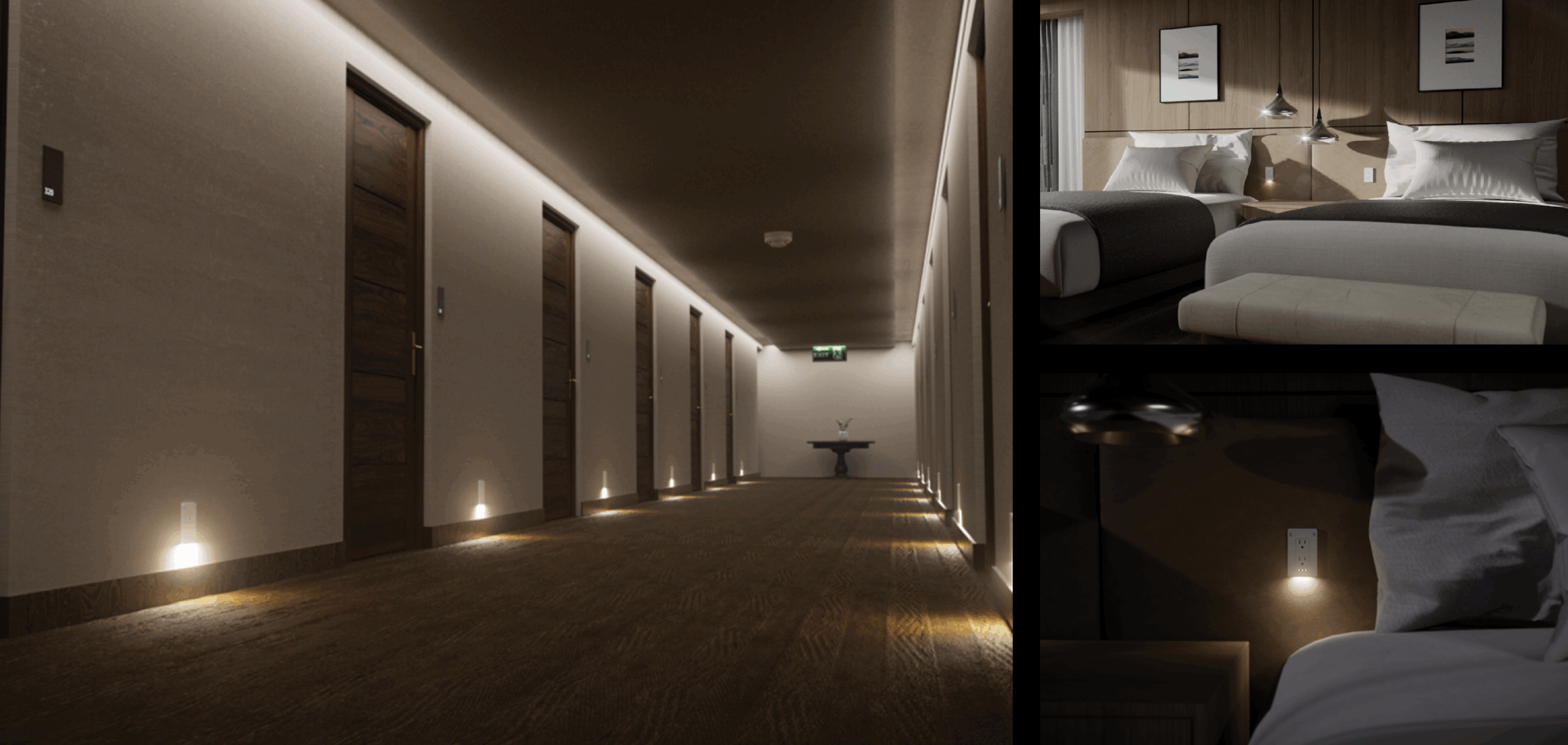
Despite promises of simplicity and connected living, the smart home industry has delivered a fragmented landscape of single-function devices that overcrowd outlets and create clutter. Intecular’s innovative approach transforms the ordinary electrical outlet into a multi-functional smart hub, offering a new path toward true integration.
The Smart Home Paradox
The irony of today’s smart homes is striking: devices designed to simplify our lives often complicate them instead. “When you have 21 smart devices, your Alexa and air quality monitor fight for outlet space with your toaster,” Xue explains. “That clutter is not what we want.”
This fragmentation creates a frustrating user experience. Most consumers purchase single-function devices: an air quality monitor from Amazon, a motion sensor from Best Buy, a smart thermostat from Home Depot, each requiring its own app and power source, with minimal integration between them.
The InvisOutlet Solution
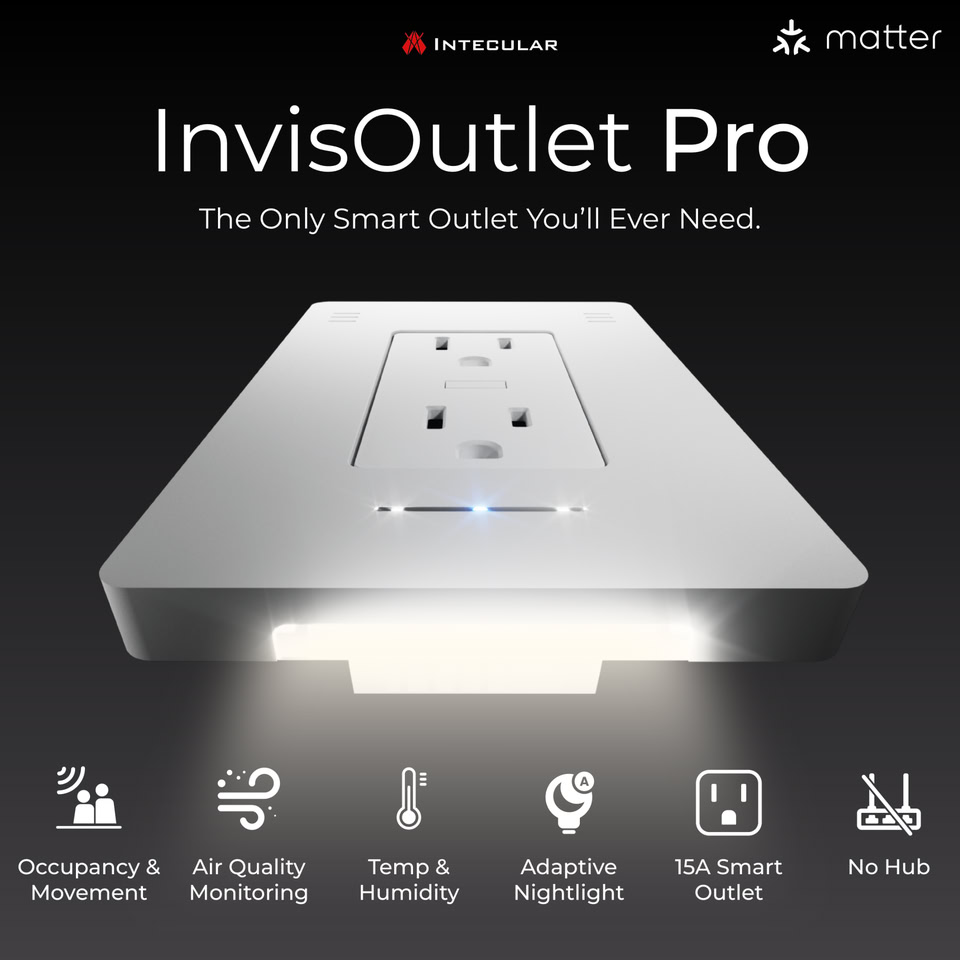
Intecular’s flagship product, the InvisOutlet Pro, takes a fundamentally different approach by enhancing existing infrastructure rather than adding more devices.
“We wanted a consistently powered device without worrying about batteries or cords,” Xue explains. “The most consistent power source is direct home power.”
The InvisOutlet Pro features a modular cover plate that detaches from the in-wall unit. This slim cover plate, just a few millimeters thick, contains multiple sensors:
Air quality monitoring: Measures CO2, VOCs, and provides an overall Air Quality Index
Occupancy detection: Uses mm-wave radar technology to detect human presence, not just motion
Temperature and humidity sensors: Monitor environmental conditions
Adaptive nightlight: Automatically adjusts brightness based on ambient light levels
All functions are controlled through a single app and are compatible with major smart home platforms like Google Home and Alexa. For commercial applications, the system integrates with existing property management dashboards through APIs.
From Kickstarter to Commercial Success
Intecular’s journey began with a successful Kickstarter campaign that raised over $160,000 from more than 800 backers who purchased 2,200 units.
“The funding helped, but what was more valuable was understanding there’s genuine interest and a clear use case,” Xue says. “That’s when it goes from a few geeks developing a device to something we should bring to market.”
Unlike many crowdfunded projects that never deliver, Intecular successfully fulfilled all orders, though it took 18 months. “You’ll never find a more loyal, understanding, patient and supportive group of people in any sort of launch,” Xue says of their backers.
Now, the company is expanding beyond direct-to-consumer sales into major retail and commercial channels, including partnerships with Home Depot and HD Supply, which serves single-family rentals, hospitality, and multi-family properties.
The Commercial Value Proposition
For commercial property owners and managers, Intecular’s value proposition is compelling and data-driven. As Xue puts it, “It’s less about the wow factor and more about how much money you can save me, and how I can improve guest experiences.”
Intecular has already installed units in the Holiday Inn Express and Suites at the Mall of America, demonstrating real-world applications:
Smoking Damage Prevention
10% of non-smoking rooms are smoked in each month
Average cost of smoking damages: $1,100 per incident
Real-time air quality monitoring sends data at three-second intervals
Historical tracking allows properties to defer costs back to guests
Potential savings: $5,500 annually by resolving just five incidents
HVAC Energy Savings
Smart AC controls can reduce hotel HVAC energy consumption by 20-30%
HVAC typically accounts for 40-50% of a hospitality building’s total energy consumption
A 200-unit hotel can save up to $20,000 annually
Mm-wave radar detects actual human presence rather than just motion, avoiding false readings that disturb sleeping guests
“If someone turns in their sleep and triggers a motion sensor, the very loud PTAC system will kick on,” Xue explains. “Or if they’re a still sleeper, the temperature will rise to a preset setting. Both are massive guest experience errors that our more accurate occupancy detection solves.”
For a 200-unit hotel, consolidating multiple smart functions into the InvisOutlet Pro can reduce initial project costs by approximately $70,000
The Road Ahead
With product development complete and major distribution channels opening, Intecular is positioned for significant growth. The company is currently fundraising and aims to sell 20,000 units in the next 12 months.
While the founding team is young, they’ve surrounded themselves with industry veterans. “Our advisors and head of partnerships have all been in this industry for a combined 60 years,” Xue notes.
Intecular is following a growth model similar to Ring, the smart doorbell company that started with crowdfunding and expanded through retail before being acquired by Amazon. In fact, one of their strategic advisors was an early employee at Ring who helped guide that company’s growth.
“We’re really aiming for the billions,” Xue states confidently. “I believe we have the team, ambition, and pace to scale this at the same rate as Ring.”
This article was sourced from a live expert interview.
Every month we conduct hundreds of interviews with active market practitioners - thousands to date.
Every time a home goes on the market in the United States, the listing data – price, photos, square footage, descriptions – enters a multiple listing service. From there, that data gets copied. According to Tim Dain, President & CEO of NorthstarMLS, the regional MLS serving Minnesota, some MLS databases get replicated hundreds or even ...
The skilled-trade shortage in U.S. construction has persisted for years, but the industry’s response is taking a specific new form: developers are moving production into factories, and those factories are increasingly being built on American soil. For buyers in markets where labor constraints have slowed new housing and driven up prices, domestic factory production could ...
The company has already published over 5,000 articles in collaboration with over 1,800 market experts across all 50 states, powered by a tech-forward approach to research and reporting. MIAMI, FL – July 28, 2026: KeyCrew Media, the expert-sourced real estate news network, today unveiled KeyCrew Local, a network of local real estate news sites and ...
A 57-year publishing legacy joins forces with a modern editorial studio to deepen coverage and reach a new generation. SANTA FE, N.M. – July 23, 2026: Leading Estates of the World, the original luxury estates and lifestyle publication, today announced a partnership with KeyCrew Media to strengthen and elevate its coverage of the world’s finest ...
If you have ever watched an empty lot sit untouched for months, permit sign flapping in the wind, no workers in sight, and wondered what is taking so long, the answer may have less to do with lumber prices or labor shortages than you think. A growing number of development professionals argue that a quieter ...
Interest rates get most of the blame when commercial real estate deals stall. But in Houston’s industrial market in 2026, a different problem is collapsing deals that survive months of due diligence: federal policy that changes direction without warning. According to Shahin Naghavi, Managing Partner and Principal Broker at Riverside Equity Group, a boutique firm ...