Most housing developers treat infrastructure as a line item. For the Tohono O’odham Nation in Southern Arizona, the second-largest land-based tribe in the United States, with a reservation roughly the size of Connecticut, infrastructure regularly consumes up to 50% of total project costs. That figure reshapes every assumption about what it costs to build affordable housing and why tribal communities remain so persistently underserved.
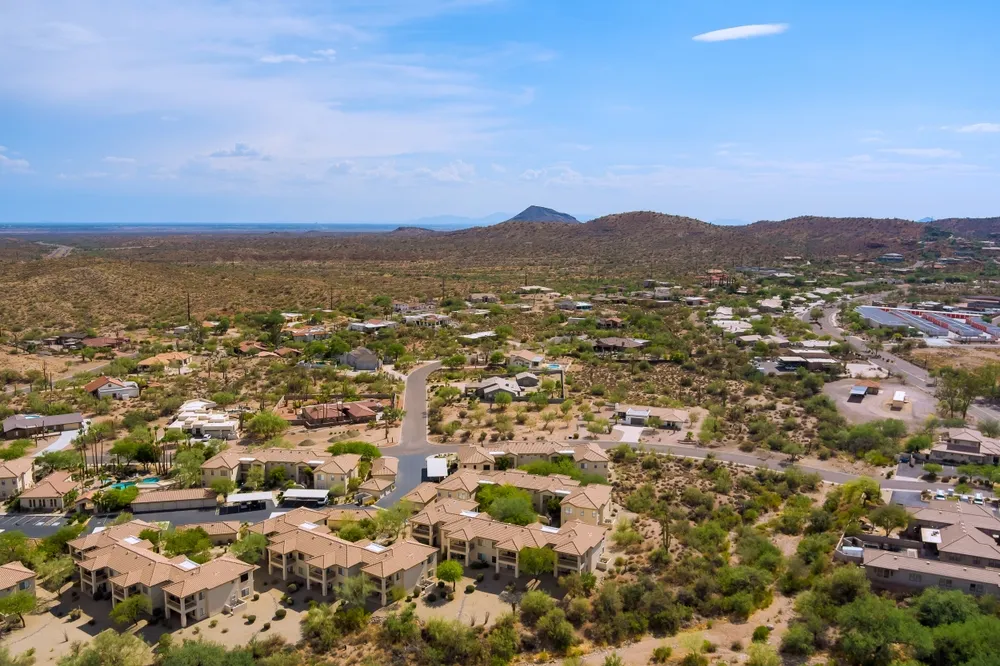
The math is straightforward but rarely understood outside Indian Country. When land is undeveloped, sits on a 100-year FEMA floodplain, and has no access to municipal water, sewer, or electric utilities, every home requires building roads, running new power lines, elevating pads, and extending water service, often across hours of desert terrain. The result: a single home can carry a $500,000 total project cost without being anything close to a $500,000 home.
Why Standard Cost Comparisons Miss the Point
Alexandra Terry, Deputy Director of Administration and Development at the Tohono O’odham Ki:Ki Association (TOKA), the nation’s housing authority, says outside developers routinely misread tribal project budgets. “A developer in town looks at our project cost; they’re like, oh my gosh, why is it costing $500,000 to build one house? And let me guarantee you, we are not building half-million-dollar homes.”
The Association serves roughly 35,000 tribal members across 11 districts containing approximately 60 communities. It operates with about 100 employees, roughly 90% of whom are tribal members. The nation maintains its own utility authority because it cannot tap into regional municipal services like Tucson Electric Power. Federal procurement requirements and Davis-Bacon wage rules add further cost pressure, but the dominant factor remains horizontal development, not vertical construction.
“It’s not as simple as a developer coming in and buying a parcel of land and tapping into a water line,” Terry says. “It’s completely raw, vacant, undeveloped land. We’re essentially starting from scratch.”
A New Market Tax Credit Applied to Housing for the First Time
New Market Tax Credits have long funded community facilities, education centers, hospitals, and recreation buildings, but had not, to TOKA’s knowledge, been applied to affordable housing. The association’s San Miguel Homes project changed that. Working with US Bank, Travois, and Chickasaw Community Development Financial Institution, TOKA structured a New Market Tax Credit allocation that, according to Terry, delivers roughly 20 to 25% of total project cost directly to the bottom line, offsetting infrastructure and development expenses.
The mechanism matters because tribal housing authorities already layer federal IHBG funds with tribal dollars and other sources. New Market Tax Credits slot into that existing layering practice without conflicting with programs like LIHTC, which cannot be combined with New Market credits on the same project. For a housing authority running seven independent audits annually, 18 consecutive years without a single finding or area of concern, the compliance burden is manageable.
TOKA is already planning a second New Market Tax Credit project, estimated at $25 million, located just outside reservation boundaries. Terry estimates roughly 20% of those costs could be offset through the credit. “This is definitely something that can be scaled larger for tribes if they wish,” she says.
The Bottleneck Is Three Problems Deep
Even with new financing tools, TOKA maintains a waiting list of just under a thousand active households. An additional group, what Terry calls the inactive waiting list, consists of applicants who stopped updating their materials out of frustration with wait times. Their original application dates are honored if they return.
The constraints stack: funding first, then land allocation (which requires navigating ancestral and cultural considerations), then contractor availability. Construction crews face multi-hour drives to reach project sites, and the nation has limited capacity to house workers during mobilization. One district, Strictoac, has not received new housing in more than 20 years; Terry says the last new homes were built there in the mid-1980s.
A recent denial illustrates the funding challenge. The state denied TOKA’s LIHTC application for the Schuk Toak project, citing high infrastructure costs. The state offered to approve a reduced request, effectively requiring TOKA to fund the infrastructure gap out of pocket, but the association had already taken on significant loan obligations for other projects. “It was a very, very heavy blow for us,” Terry says. The project will proceed with HUD Indian Housing Community Block Grant-Competitive funds and a Pima County grant, but at reduced scale without the state dollars. TOKA plans to reapply for LIHTC next year.
Building the Foundation for Everything Else
The homes TOKA builds are designed for generational occupancy, block construction furred out for desert climate resilience rather than standard stick-built. A child growing up in one of these homes may become the grandparent who still lives there. That durability standard adds cost but reflects a housing model with no comparative sales market. These homes do not trade; they pass through families.
Each housing project also lays groundwork for broader reservation development. As infrastructure extends to serve new homes, it reduces the per-unit cost of future construction in the same area. “The more infrastructure that we continue to develop and the more homes that we can continue to construct will eventually bring down the cost overall for more homes going forward and economic development,” Terry says. “Housing is the start and the core.”
For tribes facing similar constraints, undeveloped land, no municipal services, limited contractor access, the New Market Tax Credit model TOKA proved with San Miguel Homes offers a replicable path to offset costs that state funders often penalize rather than accommodate.
About the Expert: Alexandra Terry is Deputy Director of Administration and Development at the Tohono O’odham Ki:Ki Association (TOKA), the housing authority for the Tohono O’odham Nation in southern Arizona.
This article is based on information provided by the expert source cited above. It is intended for general informational purposes only and does not constitute legal, financial, or real estate advice. Readers should conduct their own research and consult qualified professionals before making any real estate or financial decisions.