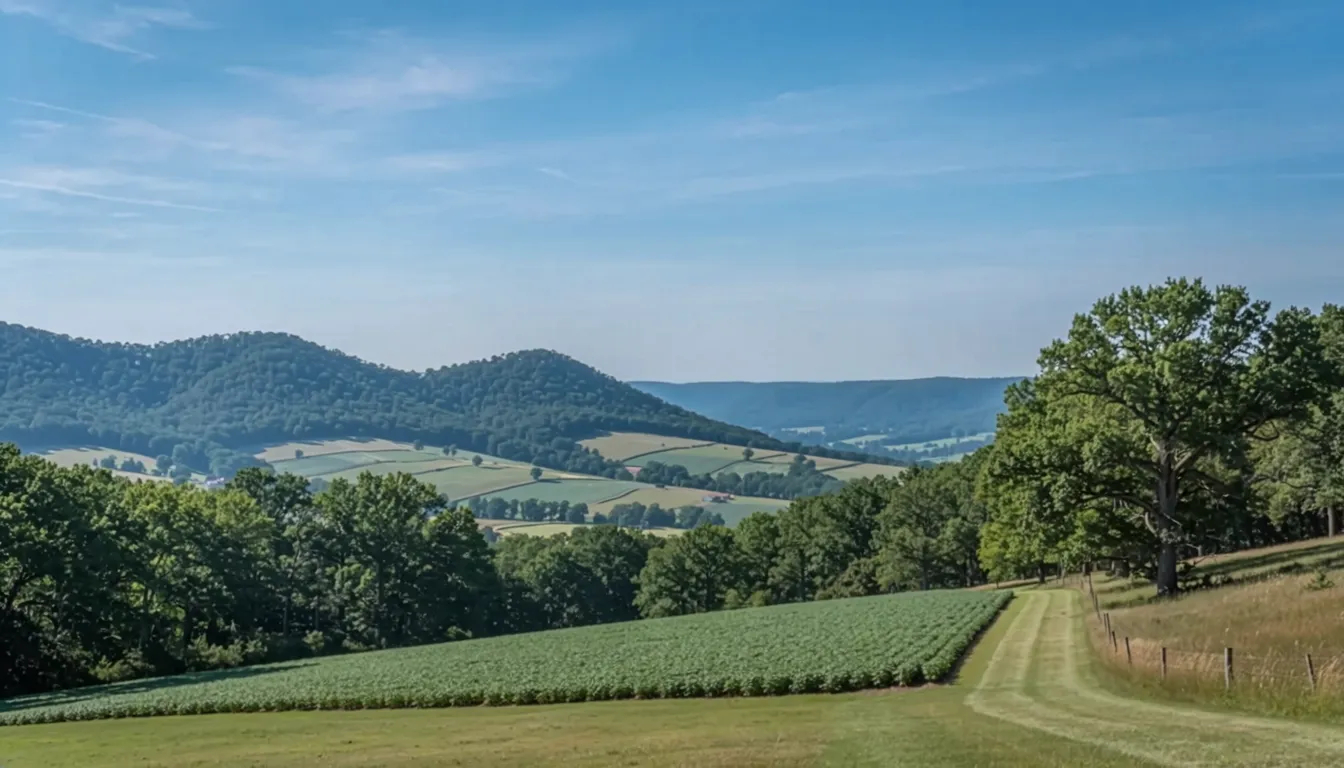
Most discussions of farmland values center on crop yields, commodity prices, and interest rates. In the dairy country of western Wisconsin, a different buyer is driving the market: the recreational hunter. Whitetail deer hunters have pushed per-acre prices beyond what agricultural economics alone would justify, creating a land market where habitat quality, trail camera history, and food plots matter as much as tillable acreage.
Mike Law, owner of Coulee Land Company, works this market across a cluster of rural counties along the Mississippi River corridor. His brokerage specializes in hunting land, farmland, recreational parcels, and country homes – a mix that gives him a close read on how different buyer motivations intersect in the same geography.
“The hunting community has really kind of outpriced our farmers,” Law says. “That’s what’s driven up the market or keeps the market strong, because the hunting in the area is so good.”
Price Per Acre Varies Sharply by County
Within what Law calls the “94 corridor” – running roughly from Hudson to Menomonie to Eau Claire, south to Tomah, and back to the Mississippi – per-acre prices range considerably. Buffalo County, historically the top county in America for Boone and Crockett whitetails, trades around $7,500 to $8,000 an acre. Trempealeau County runs $6,500 to $7,000. Dunn County has recently emerged as what Law describes as a hotspot, with a recent 40-acre parcel selling at $7,500 an acre – roughly double its pre-pandemic price.
That pandemic-era shift – buyers seeking outdoor escapes during a period of low rates and limited inventory – accelerated price gains across the recreational segment. Now the market has inverted: more listings, higher rates, and tighter affordability. But prices have not retreated. “I’ve never really seen it drop or crash like the housing market,” Law says. “I don’t think it’s as tied or related to the housing market as most real estate stats that come out.”
For buyers weighing recreational land as an investment, the income side also matters. Law points to one farm currently producing $45,000 a year in tillable rents – the kind of cash flow that can offset carrying costs and strengthen the case for holding land long term.
Realistic Pricing Is Generating Bidding Wars
Despite more inventory, well-priced listings are still drawing intense buyer interest. Law closed 11 deals personally in September, a pace he attributes largely to the seasonal uptick before hunting season and a disciplined pricing approach. One example: a 33-acre parcel listed at what he calls a “median price point” drew over 30 buyer inquiries, nine or ten showings in the first few days, and five or six offers – several above asking.
Properties listed at the top of comparable ranges, by contrast, sit. Law says that if a property has been on the market more than 30 days without offers or meaningful showing activity, the cause is pricing. “Those properties are sitting for three, six months before the sellers are finally getting the price down where the buyers need to see them,” he says.
Turnkey Condition Commands a Premium
Buyer expectations have shifted toward move-in-ready land. On a 315-acre listing priced at $2 million, Law halted an active timber harvest, improved the trail system, installed food plots and water holes, and had the property under contract within two weeks. He sees a broader pattern: today’s recreational buyers are less willing to invest their own labor in raw ground.
Documentation matters as well. A property with recorded land improvements, habitat work, and hunting history gives buyers confidence that the investment is sound. “If they’ve done habitat work, if they’ve had a really good, successful hunting history, trail camera history – that’ll really make the buyer more secure,” Law says.
Sellers of unimproved parcels often expect the same prices as turnkey properties, according to Law, but buyers do not see it that way. The gap between what rough ground lists for and what buyers will pay for it is where listings stall.
Century Farms and the Generational Transition
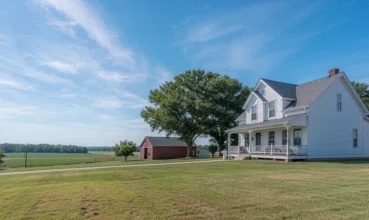
A recurring transaction type in this market involves century farms – properties held by a single family for over a hundred years – where the founding generation has passed, and heirs have built lives elsewhere. Law says he has handled seven or eight of these sales. One current listing, a 355-acre parcel, involves six siblings. He generally tries to keep these farms whole rather than subdividing, though small splits for housing lots sometimes make financial sense for sellers.
1031 exchanges are common in these transitions. Law describes one recent deal where a seller from a multi-owner farm used a 1031 exchange to downsize into a 40-acre parcel – keeping a place for family use while deferring the tax hit.
A recent shift has brought younger buyers back into the picture. “We’re getting more younger people that want to start their own farm, that want to continue dad’s legacy or grandpa’s legacy,” Law says – a reversal from the long trend of farm kids leaving for other careers.
Conservation Easements and the Northern Timber Market
Not all segments are performing equally. In northern Wisconsin, large timber tracts face a structural headwind: paper mills are closing as the economy goes digital, depressing demand for the raw material those properties produce. Law currently has two large parcels – totaling 2,500 acres – under conservation easement, a structure he says dramatically limits buyer appeal. The program documents alone ran over 150 pages, and the restrictions on future use deter most buyers. “If you want to find the quickest way to kill the value in land, put it into a conservation easement,” he says.
Buyers resist these properties because the easement dictates what they can and cannot do with the land. “Buyers don’t want to be told what to do with the piece of property when they buy it,” Law says. “They don’t want someone controlling what they want to do with it.”
What to Watch
Looking ahead, Law is tracking commodity prices – not because they drive recreational land values directly, but because strong crop prices improve tillable rents, which help buyers offset property taxes. Walnut timber prices have been up recently, adding potential income for landowners with hardwood stands. Law says he recently advised a former client to look into harvesting walnut timber while prices are favorable.
For buyers considering recreational land in western Wisconsin, the market presents a tension: prices continue climbing, inventory has increased, and affordability has tightened. The properties moving fastest are those listed at realistic prices with habitat work already completed. Raw parcels listed at turnkey prices are the ones collecting dust.
About the Expert: Mike Law is owner of Coulee Land Company, a western Wisconsin brokerage specializing in hunting land, farmland, recreational parcels, and country homes across the Mississippi River corridor counties.
This article is based on information provided by the expert source cited above. It is intended for general informational purposes only and does not constitute legal, financial, or real estate advice. Readers should conduct their own research and consult qualified professionals before making any real estate or financial decisions.