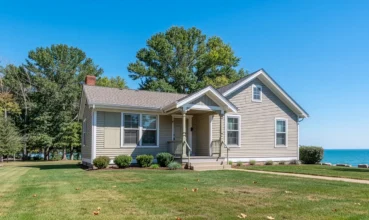
The land investment space has long been dominated by two extremes: speculative holds on raw acreage and full-scale horizontal development with entitlements, infrastructure, and vertical construction. Between those poles sits a less visible model, buying large rural tracts, subdividing them under existing by-right zoning provisions, and selling smaller parcels to retail buyers who want to build on their own terms. It depends on a specific set of market conditions, and those conditions are strengthening in high-growth counties across the Southeast.
Todd Schweber, CEO of USA Land Group, runs this model across dozens of states and hundreds of active projects. His firm underwrites over a thousand land deals monthly and passes on 94% of them. What remains are properties that meet a narrow set of physical criteria – access, road frontage, manageable topography, minimal wetlands – and sit in markets where absorption rates justify the buy.
What Drives Site Selection
The firm’s geographic concentration follows population migration patterns rather than any fixed regional preference. The Carolinas, Tennessee, parts of Georgia, Texas, Oklahoma, Florida, and Alabama show up repeatedly because of sustained growth rates and suburban expansion.
Schweber says about 3,000 intermediaries – brokers, agents, other funds, private equity firms, and family offices – send the firm opportunities that fit its criteria. The team then filters by data: population growth trends, affordability needs, and residential housing demand.
“We’re geo-agnostic, but there are some checkboxes that typically point our activity to certain markets just because of absorption rates or growth rates driving that activity,” Schweber says.
A flagship example is a 650-acre former horse farm in Jackson County, Georgia, on the outskirts of Atlanta. A brokerage relationship surfaced the deal, a property Schweber describes as mismarketed despite strong access and road frontage. After underwriting, the firm subdivided it into roughly 50 to 60 home sites under the county’s by-right provisions and is now selling them. The project was a $10 million acquisition with an expected $25 million exit, and capital for it was oversubscribed.
Why the Firm Passes
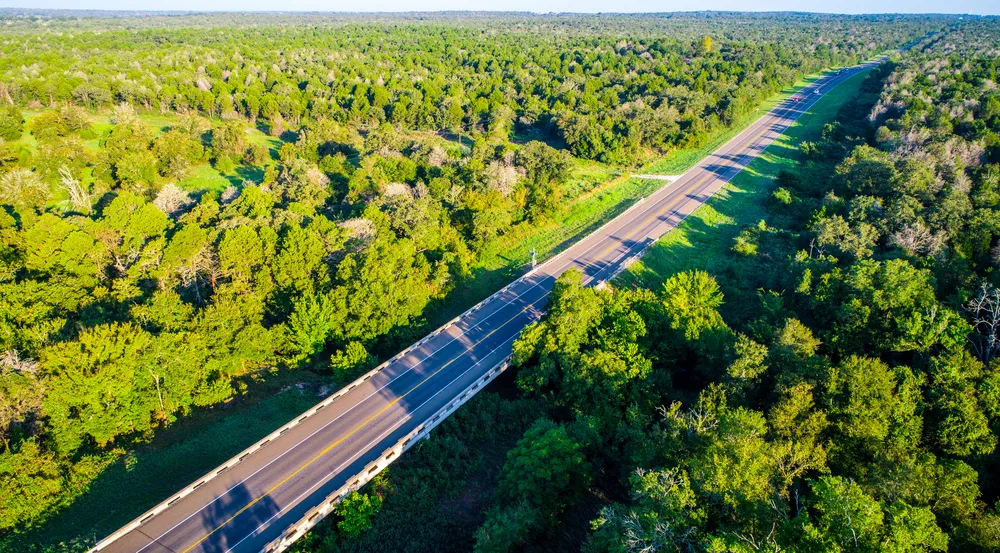
The physical characteristics of a property determine whether the subdivision model can work. Access is the first filter: if a property is landlocked, it either gets rejected outright or draws an extreme discount offer. Road frontage is equally critical because the subdivision model requires enough frontage to create multiple usable lots.
Beyond access, slope and topography matter. Flat land is far easier to work with than a steep hillside. Wetlands coverage above roughly 25% forces a discounted offer that sellers often reject. Together, these filters explain why only about 6% of incoming opportunities move forward, and why the ones that do tend to perform predictably.
Recreational Buyers
The firm’s buyer mix has changed meaningfully since the post-COVID period. During the pandemic years, roughly half the business served recreational buyers, people purchasing land for hunting, fishing, snowmobiling, or camping with no intent to build a primary residence. That segment contracted as consumer savings dried up.
“After Covid, people spent all of their savings account,” Schweber says. “That side of the business became a lot tougher as the liquidity markets really started drying up.”
The response was a near-complete pivot: the firm now focuses almost exclusively on residentially feasible properties. The demand side supports it. Buyers migrating to the Southeast increasingly want 5 to 10 acres within driving distance of major metros but outside the density of suburban subdivisions. Remote and hybrid work arrangements make an extra 20 or 25 minutes of commute acceptable for people who don’t go into an office daily.
Schweber describes this as an expanding ring around cities like Charlotte: longtime residents who arrived during earlier migration waves now want more space, and they are willing to move farther out to get it.
Conservation as a County-Level Advantage
High-growth counties are growing more reluctant to approve high-density developments, according to Schweber. His firm has found traction with a conservation-oriented approach: retaining natural landscape features rather than clear-cutting, and accepting lower density in exchange for smoother county approvals.
“Counties have been very open to working alongside of this model because it’s not something they’re used to seeing,” he says. “They’re used to seeing somebody come in and say, I want to put up a thousand row homes over there on the side of that beautiful mountain.”
The logic aligns buyer preferences with regulatory appetite. End buyers moving to rural areas want the natural attributes that drew them there: trees, terrain, open space. Counties want housing availability without the infrastructure burden and visual impact of dense subdivisions. The by-right subdivision model sits in the middle, providing both without requiring discretionary approvals that carry political and timeline risk.
The Capital Side
Equity has been relatively easy to source. The firm raised USA Land Fund One in approximately six months before closing it. Larger projects are capitalized individually to manage concentration risk. Schweber describes his investor base as experienced in the asset class and comfortable with the risk profile.
He frames land’s appeal to capital markets as steady rather than spectacular. “Land isn’t sexy, but it’s always there, and it always goes up and to the right,” Schweber says. When a firm layers in a specific value-add model – subdividing under by-right provisions rather than speculating on entitlements – the risk profile narrows further because there is no discretionary approval to fail.
Institutional debt was harder to secure initially. Lenders wanted to see physical construction, not line-redrawing on a plat map. That friction has eased; the firm now maintains a revolving relationship with a major agricultural and land lender, and passes that financing relationship through to retail buyers who need it.
Schweber acknowledges the attention flowing toward land plays tied to data centers and other large-scale uses, but frames his firm’s position as deliberately narrow. “I think a lot of people are jumping into the space that don’t understand the asset class in general,” he says. The firm’s position is that residential feasibility will continue to generate opportunities as long as population growth and migration trends hold in the Southeast, and that discipline around entry price matters more than finding the next hot use case. As Schweber puts it: “There’s no bad land. There’s bad prices in which you buy land for.”
About the Expert: Todd Schweber is CEO of USA Land Group, a land investment firm that underwrites over a thousand deals monthly across dozens of states, focusing on by-right subdivision of rural tracts in high-growth counties primarily across the Southeast.
This article is based on information provided by the expert source cited above. It is intended for general informational purposes only and does not constitute legal, financial, or real estate advice. Readers should conduct their own research and consult qualified professionals before making any real estate or financial decisions.