After several years of breakneck activity driven by low interest rates and pandemic-era migration, Miami’s luxury residential market has settled into a calmer rhythm. Inventory has grown, buyers are taking more time, and the bidding wars that defined 2021 through 2023 have largely faded. Yet demand at the upper end remains solid, with significant deals still closing regularly. The result is a market that functions more predictably, even if it moves more slowly, and one where pricing precision and local expertise matter more than they have in years.
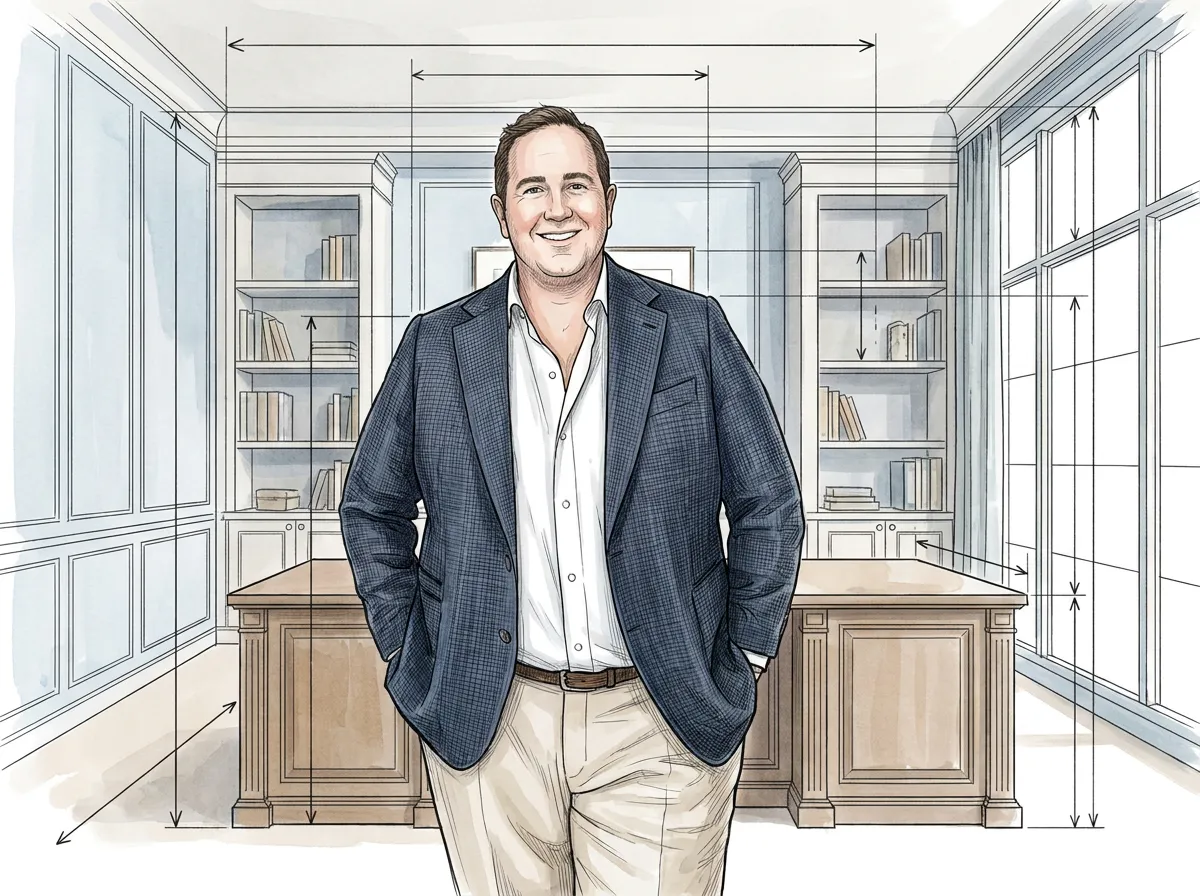
Christopher Wands, Founder and Executive Director of Luxury Sales at The Wands Team at Douglas Elliman, has spent a decade navigating South Florida’s residential market across price points ranging from $2,200 rentals to a current off-market listing at $29 million. His team of nine covers the full Tri-County corridor, Miami-Dade, Broward, and Palm Beach, and the patterns he’s observing offer a useful read on where the market stands heading into the second half of 2026.
A Market That’s Healthier, Not Hotter
The distinction matters. The conditions that defined Miami real estate between 2021 and 2023, low interest rates, frantic bidding wars, properties going under contract within days, have largely normalized. Properties that once sold in two days may now take 30, 60, or 90 days to move, a timeline Wands considers entirely reasonable.
“I think we’re in a healthier market than we were 12 months ago,” Wands notes, “and you see that with some bigger and larger trades.”
Multiple-offer situations haven’t disappeared. Wands recently put two single-family homes under contract, one at $1.1 million and another at $1.3 million, both of which drew competing bids and were financed rather than purchased with cash. That detail challenges a persistent narrative about Miami’s buyer pool. As Wands puts it, “If something’s priced right and it’s marketed with a professional, it’s going to sell.”
Where Things Move and Where They Stall
Activity levels vary sharply depending on the price point. The ultra-luxury tier, properties well above $5 million, continues to move with relative speed when the product is genuinely exceptional. The mid-luxury range, however, is taking longer to close. Wands describes this segment as the one requiring the most patience from sellers and the most precision in pricing.
Single-family homes priced under $1.5 million in Miami-Dade are still attracting consistent interest, particularly from buyers who want to stay in the city rather than move to the suburbs. At the other end, the team’s current listings include a five-acre estate in Homestead listed at just under $2.5 million and an off-market condo at $29 million, a range that reflects both the breadth of activity in the market and the team’s strategy of following clients rather than restricting themselves to a single price band.
International Buyers Remain Active
International demand remains a meaningful part of the Miami equation, though buyer behavior differs considerably by origin and price point. Latin American buyers, Wands observes, tend to concentrate in the investment-oriented segment below $2 million, often purchasing multiple units rather than a single higher-value asset. European buyers, particularly those seeking a second or third home in the United States, show more flexibility on price when the right property presents itself.
At the ultra-luxury level, interest rate movements have little bearing on purchase decisions. “They’re going to buy what they want to buy,” Wands says. New construction projects across the market are drawing strong international interest, with buyer origin closely tied to the specific price point and product type on offer.
The Case for Walkable Value
While much of the attention in Miami real estate focuses on beachfront addresses, one area drawing consistent buyer interest is Bay Harbour Islands, where The Wands Team currently holds two resale listings at La Baia. The buyer profile there reflects a broader pattern emerging across Miami’s more walkable neighborhoods: relocators from Chicago and the Northeast who prioritize proximity to amenities, community infrastructure, and a pedestrian-friendly environment, without paying the premium associated with nearby Bal Harbour.
“We’re seeing people who want new but don’t want to pay double,” Wands explains. The religious and cultural community infrastructure in Bay Harbour Islands is also a draw for buyers who factor neighborhood composition into their decision-making alongside price and product quality.
Correcting the Affordability Narrative
One of the more persistent misconceptions about Miami, according to Wands, is that affordability has collapsed across the board. He argues that news coverage of housing costs often lacks the context needed to reflect what’s actually available at various price points. Affordable options still exist in strong neighborhoods, though they require more targeted searching than they did a few years ago.
“Just because people are saying in the news that things are unaffordable doesn’t mean the news is always correct,” he says. The team’s rental volume, which ranks among the highest nationally, reflects how many clients arrive in Miami needing time before committing to a purchase, not necessarily an inability to eventually buy.
A related misconception involves negotiability. Many prospective buyers, Wands notes, avoid looking at properties slightly above their stated budget, assuming no discount is possible. In practice, pricing varies considerably by building, unit, and seller circumstance. Working with someone who understands those variables can surface opportunities that aren’t visible from the outside.
What’s Next
Several policy and economic developments could meaningfully affect Miami’s trajectory in the year ahead. Proposed state legislation to eliminate real estate taxes on homestead properties while preserving local levies for schools and municipal services could provide a significant financial incentive for primary residence purchases. If passed, Wands believes the effect on demand would be substantial.
Movement in interest rates is the other major lever. With a new Federal Reserve chair expected to take over in the coming weeks, Wands is watching for any signs of a move toward the mid-fives. A sustained decline in borrowing costs, combined with favorable tax legislation, could accelerate activity across multiple segments simultaneously.
Beyond the policy environment, migration patterns from states with higher taxes and heavier regulation continue to feed Miami’s buyer pipeline. That trend shows little sign of slowing.
For a market that spent several years operating at an unusual pace, South Florida’s current equilibrium may represent its most durable foundation in recent memory, active enough to reward well-priced, well-marketed listings, and selective enough to require the kind of local expertise that separates genuine market knowledge from surface-level familiarity.
About the Expert: Christopher Wands is the Founder and Executive Director of Luxury Sales at The Wands Team at Douglas Elliman, where he has worked in South Florida’s residential market for a decade.
This article is based on information provided by the expert source cited above. It is intended for general informational purposes only and does not constitute legal, financial, or real estate advice. Readers should conduct their own research and consult qualified professionals before making any real estate or financial decisions.