In a buyer’s market, the listings that sit longest usually look like a market’s weakest assets. In Rockwall, Texas – a lakeside community on Lake Ray Hubbard about 25 miles northeast of Dallas – some of them have become a practical entry point for investors. The same slowdown that leaves Rockwall’s newer tract subdivisions lingering on the market has opened a door for buyers who plan to rent rather than live in the house, according to Tommy McMahan of Trinity Properties Group, who has lived in Rockwall for 23 years.
The opening exists because Rockwall buyers now sort homes by how distinctive they are. Homes with history, views, or custom character still move. Homes that repeat the same few floor plans down the block do not, and owner-occupants have little reason to choose them. McMahan reads those same listings differently on behalf of investors: as relatively new houses with years left on their builder warranties, in a town where rental demand remains strong.
Character Commands a Premium
That sorting reflects a broader shift in buyer leverage. With mortgage rates quoted at 7 to 8 percent, Rockwall buyers have become choosier, pressing for price reductions or seller concessions and taking their time. Days on market have stretched. McMahan contrasts the current pace with 2015 and 2016, when a new listing could draw eight offers within its first three hours.
Buyers with that kind of leverage spend it on homes that offer something they can’t find elsewhere. Homes in Rockwall’s historic district, near the old courthouse square, move quickly. So do homes on the ridge that slopes down toward Lake Ray Hubbard, where neighborhoods step down the hillside and lake views command a premium. Listings above $600,000 to $700,000 also sell fast, supported by what McMahan describes as a relatively affluent segment of the community. Further down the price ladder, buyers seek out older custom homes and renovate them – “kind of like a gentrification of that home specifically for that house,” McMahan says.
Why Tract Homes Sit
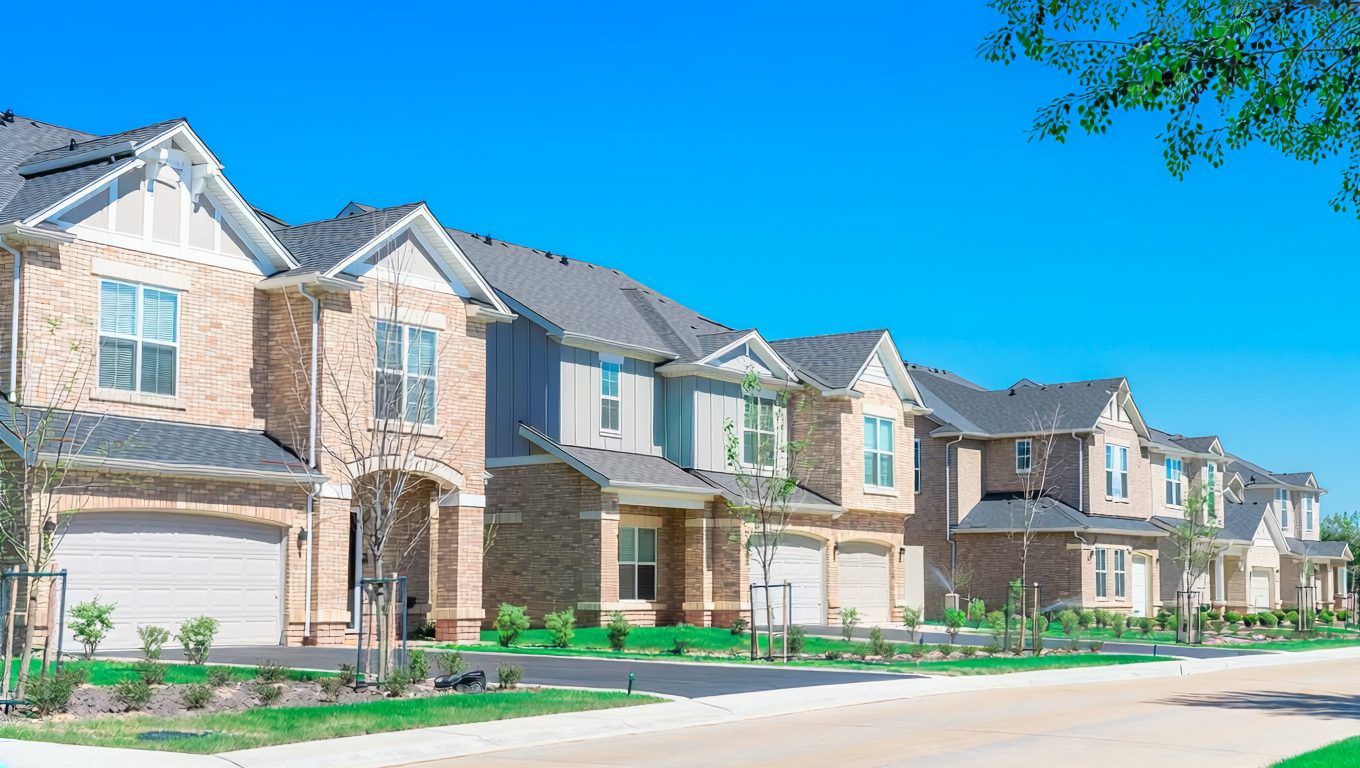
The homes that lose out in that sorting share a profile. McMahan calls them “cookie cutter” neighborhoods – subdivisions where the same handful of floor plans repeats every few doors. Those homes linger, he says, because a buyer can’t find “anything that’s distinguishing about it like an older custom home would have.”
A resale home in one of those subdivisions also faces a second problem: builders a few streets over sell nearly the same house new, with incentives attached. McMahan says builders can offer $25,000 to $40,000 in rate buydowns, appliances, and upgrades, which individual sellers can’t always match. For a homeowner selling a single house, concessions on that scale are often out of reach.
For first-time buyers in the $200,000 to $300,000 range, McMahan generally starts with new construction elsewhere in Rockwall County for that reason. The two- or three-year-old tract home, in other words, doesn’t lose on quality. It loses because it offers the owner-occupant nothing that a new build doesn’t.
A Warranty Clock for Investors
The drawback that costs those homes owner-occupants is exactly what draws McMahan’s investor clients. For investors with $200,000 to $300,000 to deploy, he looks in newer subdivisions across Rockwall County for homes that have sat on the market for a while and are less than 10 years old.
The age matters because many builders offer a 10-year structural warranty that covers the foundation. A house bought at two or three years old can still have seven or eight years of that coverage left, which limits the investor’s exposure to the costliest structural repairs – as long as the investor confirms the coverage term and that the warranty transfers to a new owner.
McMahan builds the holding period around that clock. The investor holds the house for five to seven years, sells before the coverage runs out, and uses the accumulated equity to buy two properties. In effect, one purchase turns into two within five to seven years. The sameness that works against these homes in a sale matters far less in this strategy, which depends on warranty coverage and equity growth rather than curb appeal.
Investors with longer horizons follow a different route. For budgets of $350,000 to $500,000, McMahan points to established neighborhoods, where investors hold for 15 or even 20 years and can count on more stable tenants.
Renters Make the Math Work
Both strategies depend on renters, and Rockwall has a steady supply of them. McMahan puts the average rent for a house at $2,500 a month, a figure that tends to attract families with stable jobs. Many arrive on job transfers and haven’t yet decided where in the Dallas–Fort Worth metroplex they want to settle; they choose Rockwall for its small-community feel and its schools, then rent while they look around.
Others rent because they believe they can’t yet afford to buy. McMahan says many first-time buyers assume they need 20 percent down, though programs exist that require less. “In their heads, that’s what they think and that’s what they envision. And they start doing math and their savings may not be where it once was,” he says. Those families typically rent for a year or two before buying.
Investors don’t have that tenant pool to themselves. Owners who locked in mortgage rates in the upper 2 to 3 percent range in 2020 and 2021 often lease their homes rather than sell, collecting rent above their payments and drawing on their equity to buy down the rate on their next home. Out-of-state and corporate investors fill out the rest of the field.
What keeps the field open is that renters don’t stay renters for long. One young couple he works with decided to buy now, even though their lease runs past the first of the year, because they were tired of paying someone else’s mortgage instead of their own. Each departure like that opens the house to the next family in the same position, which keeps the cycle that funds McMahan’s investors turning.
About the Expert: Tommy McMahan is a real estate professional with Legacy & Co. Real Estate in Rockwall, Texas, working in residential and commercial real estate, mortgage loan origination, and property management.
This article is based on information provided by the expert source cited above. It is intended for general informational purposes only and does not constitute legal, financial, or real estate advice. Readers should conduct their own research and consult qualified professionals before making any real estate or financial decisions.