The conversation around AI in real estate development has matured. Six years ago, the question was whether AI could do the job at all. Today, practitioners have moved past capability debates and toward a more practical concern: where exactly in the development process does AI actually perform better than a human with a spreadsheet and a CAD program?
The answer, according to Benji Shin, CEO and co-founder of Zenerate, is narrower than most people assume. The large language models generating headlines – ChatGPT, Claude, Gemini – cannot reliably handle geometric problems, which means they are not suited for architectural design or real estate feasibility work in their current form. “People’s expectations are so high,” Shin says, “but the current trendy AI models really can’t support geometry issues.”
The limitation is a known one in AI research, not specific to any single model. Language models lack intrinsic spatial understanding, which makes it difficult for them to capture multi-object alignment and the hierarchical relationships a layout depends on. In practical terms, a language model can describe a floor plan in words, but it isn’t built to guarantee that the rooms it describes don’t overlap, that a unit mix fits within a building’s actual footprint, or that a layout holds up against setback and floor-area constraints all at once. Research benchmarking this behavior has found that while models handle simple spatial queries well, they often fail to respect physical constraints or preserve spatial coherence, the difference between a plan that sounds plausible and one that’s actually buildable. That gap between expectation and capability is defining the competitive landscape for software companies working in generative design for real estate.
Where the Time Actually Goes
The feasibility stage of a development project has long been defined by a costly loop: a developer sets targets – building size, floor area ratio, number of floors, unit mix – and an architect produces three or four design options over several days. The developer reviews the package, requests adjustments, and the architect returns to the drafting table. Each cycle can take one to two weeks.
Shin experienced this firsthand as an architect doing high-rise residential feasibility studies before founding the company. The root inefficiency was structural: architects never see the pro forma, so they have no concrete reason why a developer wants a particular direction. “After we hear that request, we went back to the office and spent probably another several days to come up with the second package, then this kind of loop kept going,” he says. Architects execute without visibility into the financial logic driving the request.
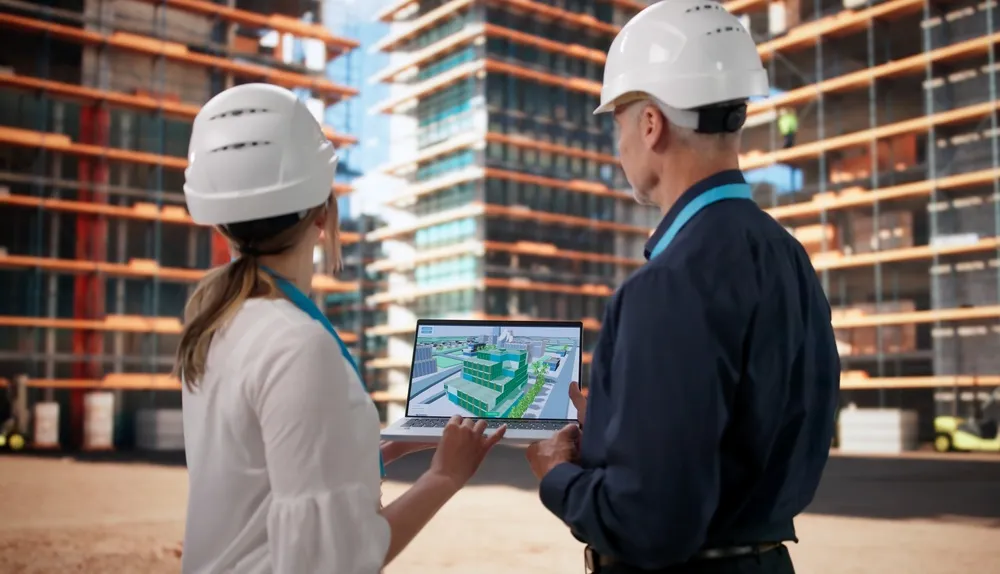
The tool Zenerate built collapses that loop by allowing developers and architects to sit in the same room, generate optimized designs against specific targets, and test different options in real time. What previously required multiple rounds of back-and-forth over weeks can now happen in a single one-hour session. “The communication cost is actually reduced significantly,” Shin says.
Two Parts, Different Priorities
Generative design platforms in this space generally combine two functions: design generation, which produces optimized layouts from target inputs, and editing capability, which allows manual refinement of a generated layout. Zenerate’s version of the editing function works like Canva – automated enough to feel intuitive, manual enough to allow precise adjustments.
Shin is candid about a sequencing problem that has shaped his company’s product development: editing capability is what users need first, before generation becomes valuable. “Editing is actually the first priority and then second is design generation,” he says. Zenerate spent its early period building out the generation side while lacking enough editing features, which slowed adoption, a reminder that in this category, the more sophisticated capability isn’t necessarily the one that gets adopted first.
That constraint has since been addressed. The addition of more robust editing tools over the past year has driven new enterprise interest for Zenerate, including an agreement with AvalonBay Communities and an exclusivity arrangement covering the Brazilian market with Tenda, a major Brazilian construction company.
Beyond Residential
While multifamily housing remains the dominant use case on the platform, Shin notes a shift toward land development – single-family master planning and subdivisions – that he describes as surprising. He also reports growing interest from large companies outside traditional real estate development: manufacturers, pharmaceutical companies operating multiple plants, and semiconductor companies designing fabs.
That interest reflects a broader pattern: as generative design tools mature, organizations managing large, repeatable facility types – plants, fabs, retail footprints – are beginning to treat building layout as a problem worth automating, the same way feasibility studies are for residential developers. “More and more big companies dealing with thousands of locations or real estate properties actually become more interested in utilizing AI software for their building design,” Shin says.
The Next Competitive Threshold
Shin frames the competitive timeline in specific terms. Right now, editing capability is what separates useful products from incomplete ones; it is the baseline requirement for any generative design tool to gain adoption. But he expects the landscape to shift within three to five years. “Later on, when everyone is actually equipped with good editing capabilities, then the next thing will be design generation,” he says.
By that point, he expects either an AI model strong enough to support advanced generation to emerge from within this category of company, or large technology companies to have developed new model architectures capable of handling the geometric problems that current models cannot. Whoever solves the geometry problem first, in Shin’s view, will hold the advantage once editing features become commoditized across the field.
The Geographic Structure
Zenerate maintains a strategic relationship between its Korean and U.S. entities. The company focuses primarily on the U.S. market, with software engineering, marketing, and sales teams located in South Korea. Shin describes the practical benefit simply: the two teams work day and night across time zones, maintaining continuous development cycles.
Over 70% of Zenerate’s customers are developers, according to Shin. Among current trends he observes on the platform, suburban projects are increasingly common relative to urban infill, though he declines to speculate on why.
For developers evaluating AI feasibility tools today, the underlying question is whether a given platform closes the gap between generation and geometry, whether it produces layouts that are not just visually plausible but dimensionally and structurally sound, and whether it does so without forcing users back into separate CAD software to verify the result. That gap, more than any single feature, is what currently separates functioning tools from experimental ones.
About the Expert: Benji Shin is CEO and co-founder of Zenerate, a generative design platform for real estate development feasibility, with a background as an architect working on high-rise residential feasibility studies.
This article is based on information provided by the expert source cited above. It is intended for general informational purposes only and does not constitute legal, financial, or real estate advice. Readers should conduct their own research and consult qualified professionals before making any real estate or financial decisions.