

A veteran Pennsylvania real estate agent is pulling back the curtain on a surprising market dynamic that challenges conventional wisdom about today’s housing landscape: properties just...

In Philadelphia, Younger Homebuyers Are Driving Demand, and Outer Neighborhoods May Be Next

Written by:
Date:
19 May 2026
Share via Facebook

Share via Linkedin

Share via X

Copy to clipboard

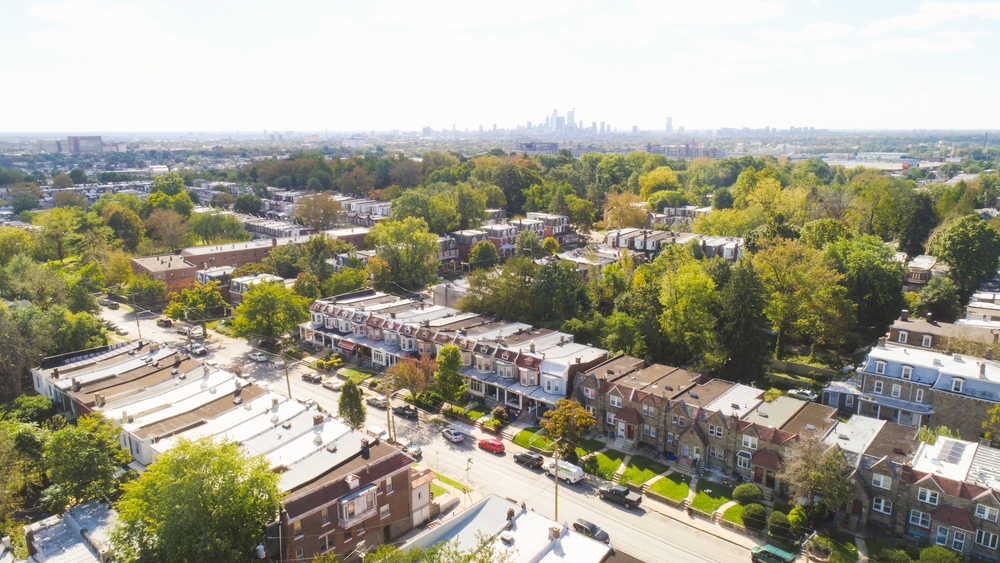
While the national homebuyer is getting older, Philadelphia is attracting younger buyers at a rate already evident in development patterns, and the pressure may soon spill over into areas that aren’t ready for it.
Nationally, rising prices, student debt, and delayed household formation have pushed the average age of first-time buyers upward. But Matt Harnick, Team Lead and Realtor at the Matt Harnick Team with Keller Williams, says the city of Philadelphia is moving in the opposite direction, with direct consequences for what gets built, where, and at what price point.
“The average age of your current homebuyer has really gone up significantly,” Harnick says. “What I’ve seen is that the average age of our city of Philadelphia buyer has gone down.”
Harnick attributes this to a wave of college graduates and early-career professionals choosing to put down roots in Philadelphia rather than migrating to higher-cost metros like New York or Washington, D.C. The city’s relative affordability, combined with its employment base and urban amenities, appears to be making it an attractive landing spot for younger buyers who might previously have rented indefinitely or moved elsewhere.
If this pattern holds, it represents a meaningful change in who is buying in Philadelphia, one that is already influencing development activity across the region.
New Construction Selling Out Before It Opens
The most visible evidence of this demand pressure is in new construction. Harnick and Michelle Chenevert, Operations Manager at the Matt Harnick Team, say new communities in the Philadelphia area are selling out almost immediately, with developers already marketing future phases before current ones are complete.
Chenevert describes one community where the team has closed multiple deals this year. The development is only in its second phase, but the builder is already selling units in phase three. “As soon as those communities go up, they’re selling out – or if not within the first week, pretty dang close,” Chenevert says. “There’s no relief.”
This pace of absorption means new construction is not providing meaningful inventory relief to the broader market. Instead, it’s being consumed as fast as it’s produced, largely by buyers who have been priced out of or frustrated by the resale market. The inventory shortage that has defined the Philadelphia suburban market for years is unlikely to be resolved by new construction alone.
The development activity Harnick is watching most closely isn’t in established suburban cores, it’s in the outer-lying areas of Philadelphia that are beginning to attract builder attention. “I’m fully expecting that we’re going to have a lot more development of some of the outer-lying areas of the city of Philadelphia,” he says. “It’s already happened.”
What Happens When the Urban Core Fills Up
As Philadelphia’s urban core continues to attract younger buyers and new construction sells quickly, development pressure is poised to migrate outward. The areas likely to benefit are those with reasonable access to employment centers and urban amenities but lower current land costs, locations that look marginal today but could prove well-positioned within three to five years.
Harnick is candid that the timing and shape of this expansion are uncertain. “I’m really not sure how it’s going to play out, to be honest,” he says. “But it’s something that I’ve been really curious about.”
What he is more confident about is that Philadelphia itself is already showing signs of a two-speed market. Days on market in the city have been rising even as properties continue to sell, a pattern that requires sellers to be more deliberate about pricing and positioning than in prior years.
“We’ve had to have talks with our sellers, look, your property could be sitting a little longer,” Harnick says. “We need to price it correctly, and we really need to be mindful of those things.”
Younger buyers driving demand in the city, while days on market creep upward, suggests the market is becoming more segmented by product type and location than aggregate statistics capture. A property that’s well-priced and well-positioned still moves; one that isn’t faces a longer timeline than sellers may expect.
The Investor Opportunity in the Transition Zone
For investors, this outward development pressure may open a specific window. Harnick notes that the competitive market has constrained his own investment activity; he hasn’t successfully acquired a flip property in several years, but he says the opportunity is visible for those with the capital and patience to pursue it.
“I think there are, inherent in that, some opportunities for investors too,” Harnick says of the outer-lying development trend.
The areas most likely to attract attention are those where land costs remain low relative to nearby neighborhoods that have already seen appreciation. Early movers in these zones could benefit as infrastructure, retail, and transit investment follows residential development, though the timeline remains uncertain, and not every outer-lying neighborhood will develop at the same pace.
Looking Ahead
Whether Philadelphia’s demographic inversion proves durable or reflects a temporary affordability advantage over nearby metros will depend on factors well beyond any single market participant’s control, including wage growth, interest rates, and regional employment trends. But the current pattern is clear: younger buyers are entering the Philadelphia market in growing numbers, new construction can’t keep up, and the resulting pressure is already pushing development interest toward the city’s edges.
For buyers, sellers, and investors watching the Philadelphia region, the outer-lying neighborhoods may be among the more consequential areas to track over the next several years, not because they’re thriving today, but because the conditions that precede growth are already forming.
About the Expert: Matt Harnick is Team Lead and Realtor at the Matt Harnick Team with Keller Williams, focusing on residential real estate in Philadelphia and the surrounding suburbs.
This article is intended for informational purposes only and does not constitute legal, financial, or investment advice. The views and opinions expressed herein reflect those of the individuals quoted and do not represent an endorsement of any company, product, or service mentioned. Readers should conduct their own due diligence and consult qualified professionals before making any investment decisions.
Similar Articles
Explore similar articles from Our Team of Experts.
Perspectives, Industry News, Residential Real Estate, Commercial Real Estate, Market Analysis & Policy, Real Estate Investment
Robert Marucci, Owner of Better Living Realty LLC, has witnessed a dramatic shift in how Connecticut cities approach vacant commercial buildings. “Ever since COVID, it’s changed ...