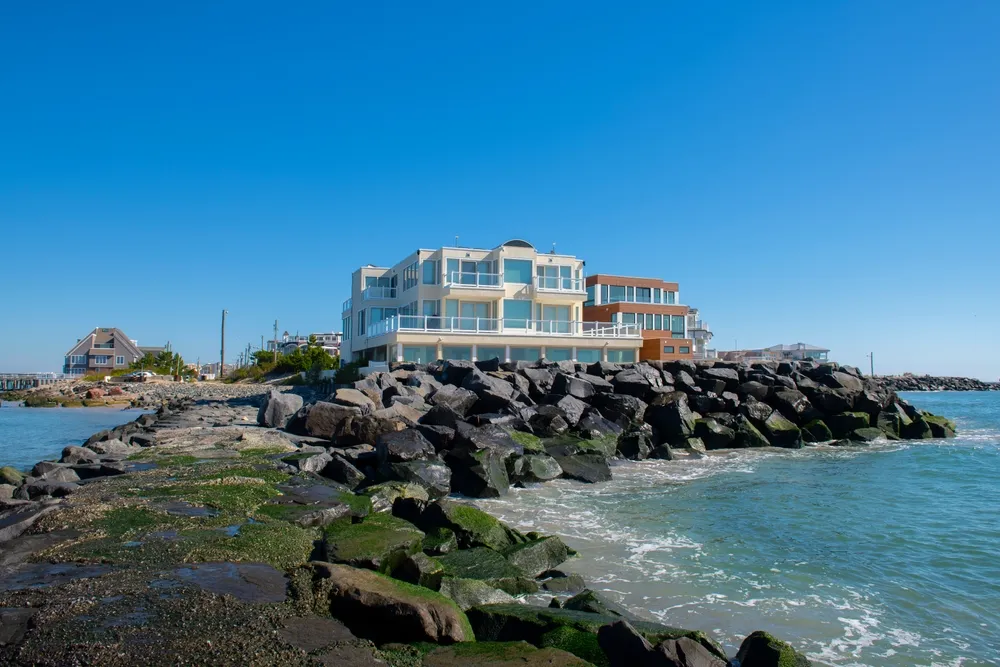
Ocean City, New Jersey, is a barrier island in Cape May County where generations of families have vacationed, rented, and eventually bought property. The town bills itself as “America’s Greatest Family Resort,” and its dry-town status and family-friendly character have created a buyer pool that renews itself decade after decade, largely from the Philadelphia metro, with increasing representation from New York. Despite elevated mortgage rates, geopolitical uncertainty, and rising gas prices, the single-family segment of this market has not only held but accelerated, with prices rising 10 to 30 percent in just the past three years, according to James Monteleone, a Realtor with Berger Realty who has worked the Ocean City market for 37 years.
The Single-Family Surge
Buyers want single-family homes, and they want them new or fully renovated. Properties that sold for $1 million to $1.7 million three years ago now trade between $2 million and $3 million, according to Monteleone. At the highest end, records have been broken in the $10 to $15 million range for bayfront and beachfront properties.
What’s driving the acceleration is a shift in buyer expectations. “It’s not the days of the old summer cottage with the window air conditioner,” Monteleone says. “Everybody wants nice and newer and fixed up.”
Two categories are moving fastest: new construction on teardown lots, and full gut renovations of older condos and homes. A renovated condo Monteleone recently listed at 17th Street sold in days at full price. When a well-priced single-family home hits the market, competition remains fierce. “If it’s a really good one, 25 people are on it that day,” he says. “Even now – if the word is out that this one is hot, there’ll be five offers on it.”
What’s Keeping Buyers Engaged Despite Headwinds
The mood among buyers and sellers is cautious but confident. Sellers with well-located, well-presented properties know their homes will move. Buyers are aware that rates haven’t dropped as much as they hoped, and that the historic lows of the pandemic era won’t return, but they’re still transacting.
Monteleone describes a market where macroeconomic concerns are present but not paralyzing. “Has it cooled a little? I think people are cautiously optimistic,” he says. “They want this war done, they want gas prices down, they want rates to ease even just a little.” But he adds that prices haven’t declined: “I can’t go absolutely on record saying prices have dropped either. No chance.”
For properties in the $900,000 to $2 million range, rate sensitivity and gas prices carry more weight in buyer decisions. For buyers at $3 million and above, those factors matter less. The practical result is that the luxury single-family segment remains the most insulated from broader economic pressure.
Flood Insurance Isn’t the Dealbreaker Outsiders Expect
One assumption outsiders bring to barrier island markets is that flood insurance costs are prohibitive. Monteleone says the reality doesn’t match the perception. Buyers on this island generally accept flood insurance as a known cost of ownership rather than treating it as a negotiating obstacle. “People have these ideas – I see it all over on the news – that flood insurance is tens of thousands of dollars,” he says. “And then you get your flood policy, and it’s a thousand bucks for the year.”
Higher-risk flood zones and very high-end properties can change the math, but for most transactions, flood insurance doesn’t lead conversations or derail deals.
Where Deals Fall Apart
The two most common deal-killers in Ocean City are financing complications and home inspection disputes. Mortgage underwriting requirements remain stringent, and buyers occasionally can’t clear the documentation bar. On inspections, the dynamic favors sellers in a tight market: “A lot of the sellers might be like, well, if you’re going to make this that big of a deal, I’m just going to sell it to somebody else,” Monteleone says. In a market where well-priced inventory draws multiple offers, sellers have that leverage – and buyers who push too hard on inspection findings risk losing the property entirely.
The Investor Playbook
For investors deploying capital into Ocean City, Monteleone’s advice centers on finding undervalued properties that need significant work, then executing a full renovation. He’s currently working with investors doing exactly this: buying older condos, gutting them, and reselling into a market that rewards quality finishes. One investor recently completed a flip at 17th Street and is finishing another bayfront condo at 11th Street before searching for his next acquisition.
The key constraint is competition. Well-priced acquisition opportunities attract immediate attention, and overpaying on the buy side can eliminate the profit that makes flips viable. “What to avoid is overpaying,” Monteleone says. “What he loves is we want to find one that needs a lot of work, and then we’ll go in there and gut it.”
The seasonal cycle also matters. The market slows through fall and winter, then accelerates in spring as buyers position themselves for summer occupancy. Monteleone says his focus for investors remains single-family homes – whether renovation or teardown-and-rebuild – as the segment with the strongest demand and price growth. “If we can find a good single, whether we have to renovate it or tear it down, that would be where I would start,” he says.
What Outsiders Don’t Expect
Buyers unfamiliar with Ocean City are often surprised by how much the island has changed. There is far more new construction than there was 20 years ago, and values have risen accordingly. The rental market may be equally surprising: Monteleone says beachfront weekly rentals now start at $9,000 to $15,000 per week, a figure that reflects both the island’s sustained demand and the quality upgrades buyers now expect from rental properties.
That rental income underpins much of the investment activity. Properties serve as both second homes and income generators, with owners renting a few weeks each summer while using the home themselves. The dual-use model keeps demand steady across buyer types, from families looking for a vacation home to investors seeking returns.
About the Expert: James Monteleone is a Realtor with Berger Realty, with 37 years of experience serving the Ocean City, New Jersey market on the Cape May County barrier island.
This article is based on information provided by the expert source cited above. It is intended for general informational purposes only and does not constitute legal, financial, or real estate advice. Readers should conduct their own research and consult qualified professionals before making any real estate or financial decisions.