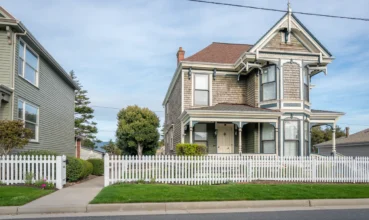
The pandemic-era migration that reshaped housing markets across the American West has left a lasting imprint on Northern Colorado. What began as a wave of remote workers fleeing California and Texas in search of space, affordability, and outdoor access has given way to a more complex picture, one where prices have climbed, inventory has tightened, and buyers have grown considerably more discerning.
Anne Carlson, founder of Luxury Mountain Living and a Fort Collins-based broker covering a corridor from the Wyoming border to Denver, has had a front-row seat to all of it. Her practice sits at the intersection of lifestyle real estate and high-stakes personal transitions, and her read on the market reflects both the opportunities and the friction points that outside observers often miss.
A Market Built on Lifestyle
Northern Colorado’s appeal has never been purely about price per square foot. For many buyers, particularly those relocating from coastal metros, the draw is proximity to year-round outdoor recreation, hiking, paddle boarding, skiing, all reachable within 20 to 30 minutes of home.
Fort Collins, in particular, has emerged as a destination in its own right. Its walkable downtown, Colorado State University, and blend of demographics have attracted buyers who want urban energy without urban density. The city’s Main Street, famously said to have inspired Walt Disney’s design for his theme parks, resonates with relocating buyers looking for community character alongside mountain access.
That lifestyle narrative has shaped how Carlson approaches her work. Rather than focusing narrowly on transactions, she positions herself as a guide to the broader experience of living in the region. “What is it like to live here? What are the hiking trails? Where are the breweries? All of the lifestyle pieces go into it,” she says.
The Luxury Segment
At the top of the market – broadly defined in Colorado as properties above $1 million – conditions are holding up, but with notable nuance. Luxury buyers in Northern Colorado tend to be less sensitive to interest rate movements, and jumbo loan rates have actually been more favorable than conventional rates in recent months. Still, the pace of transactions reflects a buyer who is in no particular hurry.
These buyers often want land with specific characteristics, and they know they don’t have to compromise. That dynamic means deals can take considerably longer to come together, and off-market sourcing becomes essential. “The perfect house might be off-market, so you’re trying to find those perfect sellers, matching it with the perfect buyers,” Carlson says.
Properties offering mountain views, golf course access, or country club amenities are moving faster than the broader luxury inventory, a pattern that reflects the lifestyle-driven nature of demand in this corridor. “Anything that provides that elevated experience is going quicker,” Carlson observes.
Sellers Are Adjusting With Friction
On the seller side, the market has clearly cooled from the frenzy of 2020 and 2021. Rate buydowns – where sellers fund a temporary reduction in the buyer’s interest rate, typically for one to three years – have become a standard negotiating tool. Pre-inspections are increasingly common as sellers try to get ahead of deal-killing discoveries. Staging and professional marketing have moved from optional to expected.
“You’ve got less than 30 seconds with a buyer online to see your home,” Carlson says. “I always make sure every drone footage, every video, everything is perfect by the time it hits the market.”
Even with these concessions, deals are falling apart at a notable rate during the inspection phase. Roofing has become a recurring sticking point in Northern Colorado, where hail damage is common, and replacement costs can run between $20,000 and $50,000. Neither buyers nor sellers want to absorb that expense, particularly when the seller is already moving out. By Carlson’s estimate, roughly a third of sales fall through during inspection, a figure that points to ongoing tension between seller expectations and buyer demands.
Affordability Pressure
Colorado’s broader affordability challenge is now filtering into Northern Colorado in visible ways. The same out-of-state migration that drove prices up during the pandemic has slowed, and some residents are now leaving for more affordable markets. Listings are down year over year, and the buyer pool has become more educated and more demanding, arriving at showings already familiar with comparable sales, neighborhood data, and market conditions.
“Buyers are so educated. They come fully armed; they know what every home is worth,” Carlson says. “As a real estate broker, you have to be above that, and you have to provide so much value to them.”
For investors, however, the current environment presents a different kind of opening. Markets like Greeley and Windsor, along with select pockets of Fort Collins, are offering deals that weren’t available during the peak years. Landlords who accumulated rental properties during the boom are now looking to exit without investing further in updates or repairs. “They don’t want to fix it up, they just want to let the rental go,” Carlson notes. “That’s the perfect time for an investor to come in.”
Emerging Trends Shaping Demand
Several patterns taking shape through 2026 point to where Northern Colorado’s market is heading next. Indoor-outdoor living continues to drive premium pricing, with buyers seeking to replicate resort-style amenities – pools, outdoor kitchens, covered entertainment areas – within their own properties. “Trying to create a country club in your own house,” as Carlson describes it, has become a genuine design and purchasing priority for higher-end buyers.
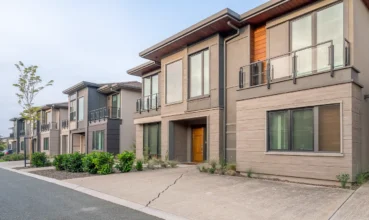
At the same time, a quiet move toward downsizing is underway among some pandemic-era buyers who overestimated how much space they actually needed. Patio homes and townhomes are absorbing some of this demand, and the turnkey preference, buyers who want to move in without touching a thing, remains strong across price points.
For a market that many outsiders still underestimate, Northern Colorado’s real estate story is less about dramatic headlines and more about steady, lifestyle-driven demand that has made it one of the more resilient regional markets in the Mountain West, even as broader affordability pressures continue to narrow who can participate in it.
About the Expert: Anne Carlson is the founder of Luxury Mountain Living and a Fort Collins-based broker covering a corridor from the Wyoming border to Denver in Northern Colorado.
This article is based on information provided by the expert source cited above. It is intended for general informational purposes only and does not constitute legal, financial, or real estate advice. Readers should conduct their own research and consult qualified professionals before making any real estate or financial decisions.