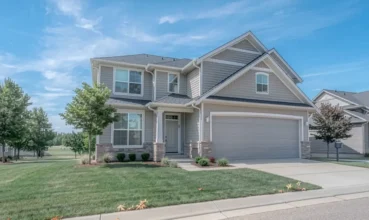
The assumption that tight inventory means a frozen market doesn’t hold in the towns just west of New York City. In Nutley, Bloomfield, and Belleville – a cluster of residential communities roughly ten miles from Manhattan – homes are selling quickly enough that annual transaction counts are running closer to normal than monthly inventory snapshots suggest, according to Carl Lordi, Broker Associate at eXp Realty and leader of The Lordi Team. The difference is turnover speed, not volume.
Lordi has worked these three towns for 25 years. His read on current conditions is that the market has returned to something closer to its pre-pandemic rhythm, still favoring sellers, but no longer requiring buyers to surrender every negotiating lever to compete.
Who’s Buying and Why
The buyer pool in this corridor is heavily weighted toward families relocating from Brooklyn. Lordi estimates that since the pandemic, roughly 70% of his buyers have come from that borough specifically. The draw is straightforward: proximity to Manhattan via the Route 3 corridor and Lincoln Tunnel, combined with residential space that Brooklyn pricing doesn’t offer.
These buyers are typically dual-income households starting or growing families, prioritizing school quality, park access, and a commute that stays under an hour. Lordi says that for the money they were paying in Brooklyn to live in roughly a thousand square feet, they’re getting three- or four-bedroom homes with backyards and nearby parks.
The pipeline has been consistent enough to push prices up substantially over several years, though the mechanism has shifted. Bidding wars still happen, but offers now land $25,000 to $50,000 over asking, not the $100,000 to $150,000 premiums that characterized the pandemic-era frenzy.
The Price Band That Moves
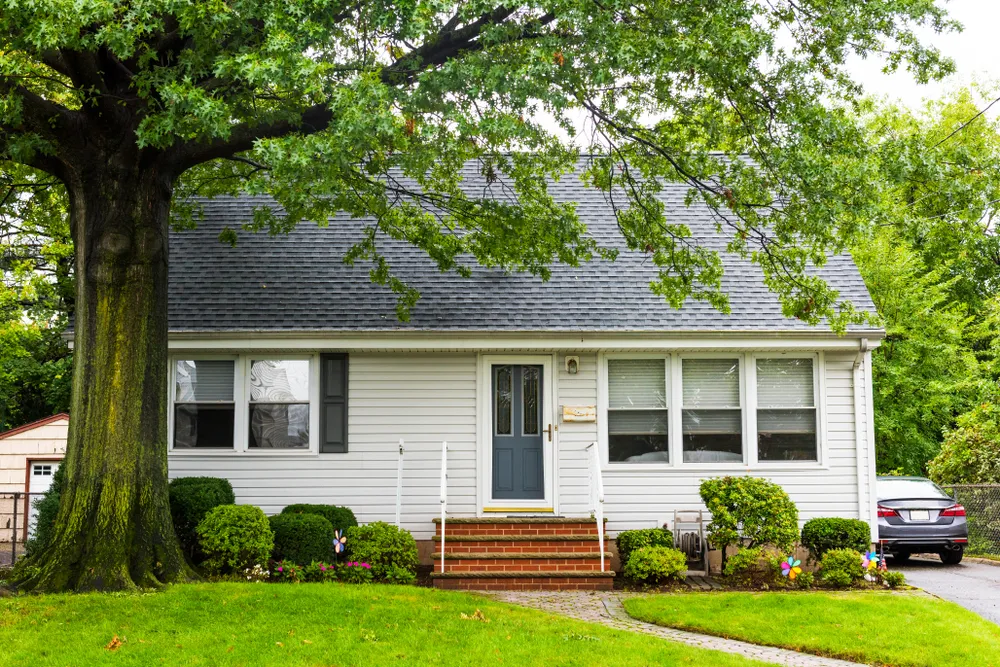
Within Nutley specifically, the fastest-selling properties cluster between $750,000 and $850,000, well-renovated three- to four-bedroom homes with updated kitchens and bathrooms. Entry-level homes start around $500,000 to $600,000 but typically need renovation, which creates a calculation many buyers resolve by spending more upfront.
“People look at it like, well, if I have to put $100,000, $200,000 into a house, I might as well buy the $800,000-something house that’s already renovated,” Lordi says. Once listings cross the million-dollar threshold, absorption slows noticeably – a few sales happen at that level, but the bulk of activity stays in that middle band.
For buyers weighing whether to renovate a lower-priced home or pay more for a move-in-ready property, the math increasingly favors the latter, renovation costs and uncertainty push demand toward the $750,000–$850,000 range, which in turn keeps that band competitive while homes above and below it sit longer.
Negotiations Have Returned
The most significant change Lordi describes isn’t in pricing but in deal structure. During the pandemic peak, buyers routinely waived home inspections, appraisal contingencies, and any leverage they might otherwise have held. That period is over.
Today’s buyers still make concessions to compete – waiving the first $2,000 to $3,000 in inspection repairs, offering $10,000 to $20,000 above appraised value to sweeten an offer – but they’re no longer abandoning due diligence entirely. Sellers, meanwhile, have had to recalibrate expectations. Some who listed in June based on spring closing prices found themselves sitting longer and adjusting downward when summer demand didn’t match.
In a recent deal on a home in the $600,000 range, an inspection revealed an issue that required Lordi to bring in contractors to assess the actual scope and cost. The resolution was a seller credit, a negotiated outcome that would have been unusual two years earlier, when sellers held enough leverage to refuse. “Those days are over right now,” Lordi says. “We’re going back to more normal real estate.”
Lordi says his 25 years of experience matter more in this environment than during the pandemic peak, when homes sold regardless of condition or strategy. Now, he says, identifying problems early and bringing contractors in before either party escalates is what keeps deals from falling apart.
What Would Unlock More Supply
Inventory remains below historical averages, Lordi estimates roughly 100 fewer homes available per month in each of his three core towns compared to the 20-year norm. The constraint is familiar: homeowners locked into 3% and 4% mortgage rates are reluctant to trade into higher borrowing costs, even when equity gains would offset the difference through a larger down payment.
Lordi describes the resistance as partly emotional. Sellers intellectually understand that their accumulated equity could fund a larger down payment on the next home, effectively reducing the monthly cost despite a higher rate. But giving up a rate starting with a three or four feels like a loss they can’t get past.
He sees a rate with a five in front of it – even 5.99% – as the psychological threshold that would move more sellers to list. “I think people saw a number with a five in front of it, I think it would make them say, hey, maybe we should go buy a house,” he says. That demand, in turn, would encourage more sellers to list because they’d see homes at their price level actually moving.
Beyond rates, Lordi is watching property taxes and the local job market as the two other variables that could shift the balance. North Jersey’s employment base has stayed strong enough to support current prices, but deterioration in specific sectors could cool demand. “As long as the job market stays pretty robust, then we should be okay,” he says.
If rates do reach that five-handle threshold, the market Lordi describes – one where demand already exists but supply stays locked – could see a rapid increase in both listings and transactions. Until then, the pattern holds: homes in the $750,000–$850,000 band that are well-renovated will continue to move quickly, while everything above and below that range requires more patience from both buyers and sellers.
About the Expert: Carl Lordi is a Broker Associate at eXp Realty and leader of The Lordi Team, with 25 years of experience serving Nutley, Bloomfield, and Belleville in northern New Jersey.
This article is based on information provided by the expert source cited above. It is intended for general informational purposes only and does not constitute legal, financial, or real estate advice. Readers should conduct their own research and consult qualified professionals before making any real estate or financial decisions.