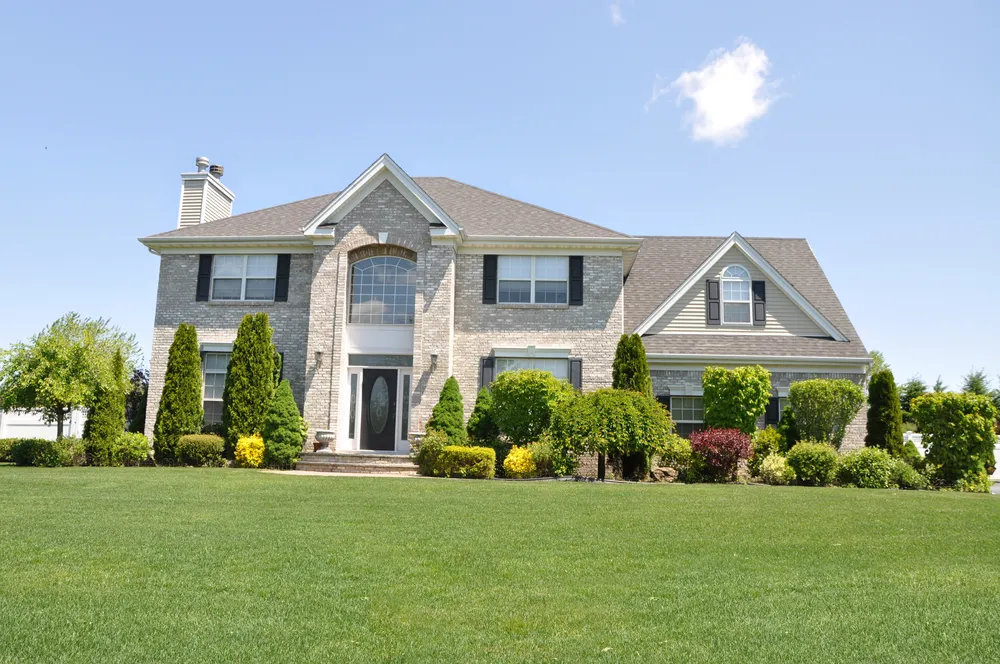
The counties north of Manhattan, Rockland, Westchester, Orange, Putnam, and Dutchess in New York, plus Bergen and Passaic in New Jersey, function as a single interconnected housing market for buyers leaving the city. But what begins as a search within a 30-mile radius frequently stretches to 50 miles or more, driven by limited inventory and price constraints that force buyers to recalibrate where they’re willing to live.
Diane De La Cruz, a Realtor with eXp Realty licensed in both New York and New Jersey, works across this multi-county footprint daily. Buyers who start looking in one county routinely end up purchasing in another – or in another state – because the homes available at their budget aren’t where they expected to find them. “What starts out as a 30-mile radius becomes perhaps a 50-mile radius,” she says. “A lot of people work remotely now. Perhaps they go hybrid, perhaps they go into the office maybe once or twice a week, and they would like to have a home that is more spacious, that has more acreage.”
The Search Radius Keeps Expanding
The pattern is straightforward: buyers priced out of Manhattan, Brooklyn, or Queens move north looking for more space at lower costs. But even in the suburbs, tight inventory and specific location preferences create friction. One recent client – a family of five – insisted on a particular town, rejected three accepted offers after changing their minds, and ultimately signed contracts only after weeks of persistent searching.
“When people are so specific about a city, that limits the inventory, which is already limited,” De La Cruz says. A buyer starts in Westchester, discovers pricing exceeds their budget, and begins looking at Rockland County or across the border into New Jersey. De La Cruz describes a current client in the Yonkers area who is beginning to realize she may have to move further out from the city than she originally planned.
De La Cruz frames the northern suburbs as a direct alternative to Long Island for city workers seeking suburban life. Both serve the same function: a commutable distance to Manhattan with more residential space, but the northern corridor offers a geographic advantage for buyers willing to cross state lines, opening up inventory in multiple jurisdictions simultaneously. Her dual licensing in New York and New Jersey allows her to show properties on both sides of the border without referring clients to another agent.
What’s Slowing Transactions Down
Beyond the search itself, the closing process in New York’s suburban markets carries its own friction. Title searches routinely take four to six weeks, according to De La Cruz, and minor issues can stall transactions well beyond that timeline. She describes a current deal delayed six weeks because a seller pruned a tree without notifying the building department, an issue she calls “very insignificant and very silly” but one that required a building inspector’s review.
The downstream consequences for buyers financing with a mortgage are concrete. Rate locks expire, and buyers who secured favorable terms at the start of their transaction may face higher rates by the time the title clears. “If you’re approaching 45 days, chances are your rate is going to expire,” De La Cruz says. “You might have been locked in at a lower rate, and now the rates are a little bit higher. So there’s a whole thing about paying for an extension to get that locked-in rate.”
For buyers in this market, the lesson is that purchase timelines in New York’s northern suburbs are not set by the buyer’s readiness alone. Municipal processes and title searches dictate the schedule, and financing terms can shift underneath a deal before it reaches the closing table.
Managing Expectations
A recurring challenge over the past six to twelve months involves buyer expectations colliding with reality at the property level. Virtual staging, AI-generated renderings, and social media marketing create a polished version of listings that doesn’t hold up on a walkthrough.
“Social media makes things look so much prettier than they really are,” De La Cruz says. “Sometimes people’s expectations don’t always land when they reach the property.” The gap between digital presentation and physical condition has become a consistent source of buyer disappointment, particularly as staging tools grow more sophisticated.
De La Cruz’s response is tactical: offering buyers concrete alternatives when a property falls short of their expectations. She walks clients through what can be changed, pointing out which walls aren’t load-bearing, where a house can be expanded, whether a bi-level ranch could be converted into a mother-daughter layout with a second kitchen. The approach treats imperfect inventory as raw material rather than a disqualifier, which matters in a market where waiting for the perfect listing means competing against other buyers for a shrinking pool of homes.
Where Things Stand
Economic uncertainty is making some buyers more hesitant to commit, according to De La Cruz. But she sees the fundamental demand equation as unchanged in the northern suburbs. The area remains a high-income market positioned as the suburban alternative to Manhattan, and the population of city workers seeking more space has not diminished.
“People always need somewhere to live,” she says. “Our sales prices continuously are going up. I don’t foresee them going down because of where we are.”
For buyers currently searching in this corridor, the practical reality is that flexibility on location – not just on price – determines how quickly a deal gets done. Those who fix on a single town face the same inventory constraints De La Cruz’s family-of-five clients encountered: multiple failed offers and extended timelines. Those willing to cross county or state lines find more options and less competition for each one.
About the Expert: Diane De La Cruz is a Realtor with eXp Realty, licensed in both New York and New Jersey, serving the multi-county suburban corridor north of Manhattan including Rockland, Westchester, Orange, Putnam, and Dutchess counties in New York and Bergen and Passaic counties in New Jersey.
This article is based on information provided by the expert source cited above. It is intended for general informational purposes only and does not constitute legal, financial, or real estate advice. Readers should conduct their own research and consult qualified professionals before making any real estate or financial decisions.