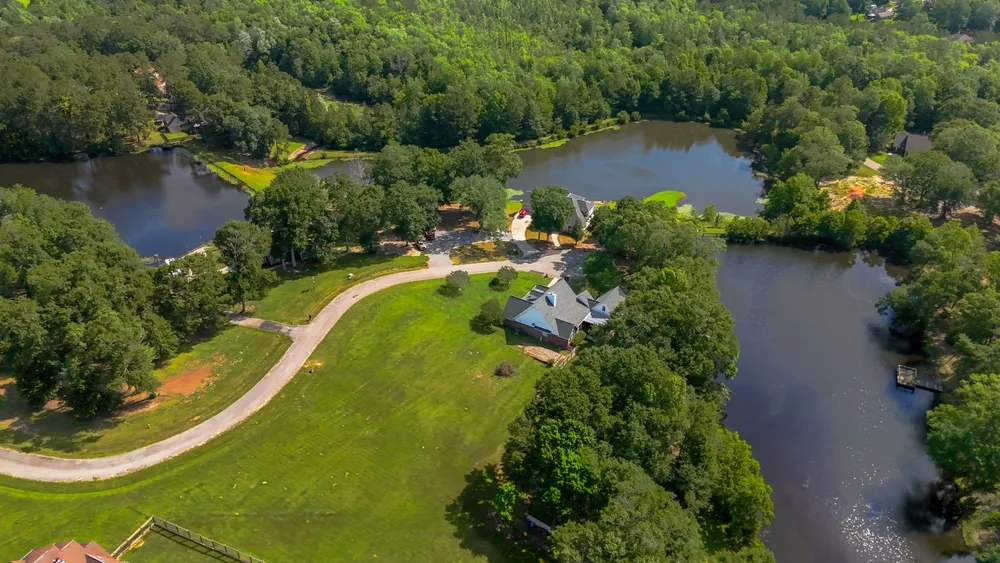
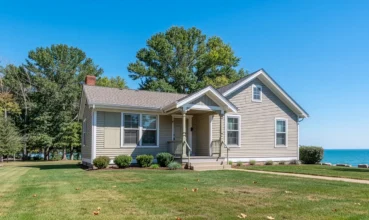
Harrison County, Mississippi holds zoning authority over its unincorporated areas, something only one or two of the state’s 82 counties can claim. That distinction is becoming increasingly relevant as residential development pressure pushes northward from the coast’s municipalities into semi-rural territory where residents on three- and five-acre lots are organized to resist higher-density projects.
The county’s $15 million commitment to road reconstruction, including a bridge over Interstate 10, helped land a Buc-ee’s travel center that local officials view as an anchor for broader commercial expansion in west Harrison County. But the same infrastructure investments that attract commercial tenants along the interstate corridor are reshaping residential development math in ways that complicate the county’s land use decisions.
Post-Storm Infrastructure
After Hurricane Katrina, Harrison County received federal CDBG grants that funded community water and sewer systems in areas that had previously been rural. That infrastructure made smaller lot sizes feasible in places where large-estate living had been the norm.
“Having that water and sewer available allows for smaller lots, and that’s where the confrontation comes in,” says Marlin Ladner, District 3 Supervisor and Board President of the Harrison County Board of Supervisors. Residents on larger lots want to maintain their existing density, but the physical infrastructure now supports something different.
Ladner describes the pattern as a gradient: developments closer to cities gain approval more easily, while the same density further into rural territory meets organized resistance from communities concerned about road strain, school capacity, wetland impact, and drainage. Higher-density subdivisions generate more revenue for developers, which means the financial incentive pushes projects toward exactly the areas where opposition is strongest.
Residential Demand
The rezoning requests crossing the board are predominantly residential. Ladner attributes the demand to a combination of factors: strong school systems in the unincorporated areas, an expanding sheriff’s department, and fire stations that the county now staffs in rural zones, an unusual service level for unincorporated territory anywhere in the state.
“People have a tendency to move to the more semi-rural area of the county if they have all those available accommodations,” Ladner says. Schools function as a draw for both families and prospective employers evaluating the area. According to Ladner, when industries or commercial activities consider relocating, schools are one of the factors they weigh.
The development is coming primarily from local builders rather than outside capital. Outside interest, Ladner says, is concentrated along the interstate corridor where commercial zoning already exists and conditional-use processes aren’t triggered.
The Conditional Use Process
Harrison County’s zoning ordinance requires subdivisions that aren’t permitted by right to go through a conditional use process. The zoning commission holds hearings, and affected residents can formally oppose projects they believe will diminish their quality of life. The process applies equally to large and small subdivisions.
Ladner says some communities have organized specifically to oppose subdivisions they view as encroaching on their existing way of life. The opposition tends to cite road capacity, environmental concerns around wetlands, and the mismatch between proposed lot sizes and existing neighboring properties.
Ladner himself voted against a recent Fire Tower Road subdivision near Pass Christian that the rest of the board approved. His concern was specific: the proposed lot sizes didn’t match the surrounding area, where other subdivisions had relatively large lots. “I’m more interested in these housing developments accommodating the existing landscape, for example, the size of lots,” he says.
For residents in these semi-rural areas, the conditional use hearing is the primary venue where they can influence whether a project proceeds. The outcome often depends on how close the proposed development sits to existing municipalities; proximity to a city boundary makes approval more likely, while distance from one makes resistance more effective.
The Growth Vector
Ladner identifies West Harrison County as the area most likely to see continued expansion, driven by available land and population growth in its smaller cities: Pass Christian, Long Beach, and D’Iberville. The Buc-ee’s location is already generating traffic congestion the county didn’t anticipate, a problem Ladner frames as a positive signal about demand.
The board is working toward what Ladner calls a “smart growth” zoning ordinance, one that can accommodate housing demand generated by economic development without overriding the character of existing communities. The county has not yet adopted that framework, and the current conditional-use process remains the primary mechanism for managing density conflicts case by case.
“We’re really looking at trying to develop a plan that would be smart growth, that can accommodate the communities and what those communities want, and at the same time hopefully generate economic development for the benefit of the communities and the tax base,” Ladner says.
The tension the county faces is straightforward: economic development requires workers, workers require housing, and housing at the density needed to serve that workforce conflicts with the land use expectations of people already living in the areas where buildable land remains. Until the smart growth ordinance takes shape, each subdivision request will continue to be resolved through the same hearing-by-hearing process, with outcomes determined largely by how far from a city line the project sits.
About the Expert: Marlin Ladner is District 3 Supervisor and Board President of the Harrison County Board of Supervisors in Mississippi, overseeing land use and zoning decisions in one of the only counties in the state with zoning authority over its unincorporated areas.
This article is based on information provided by the expert source cited above. It is intended for general informational purposes only and does not constitute legal, financial, or real estate advice. Readers should conduct their own research and consult qualified professionals before making any real estate or financial decisions.