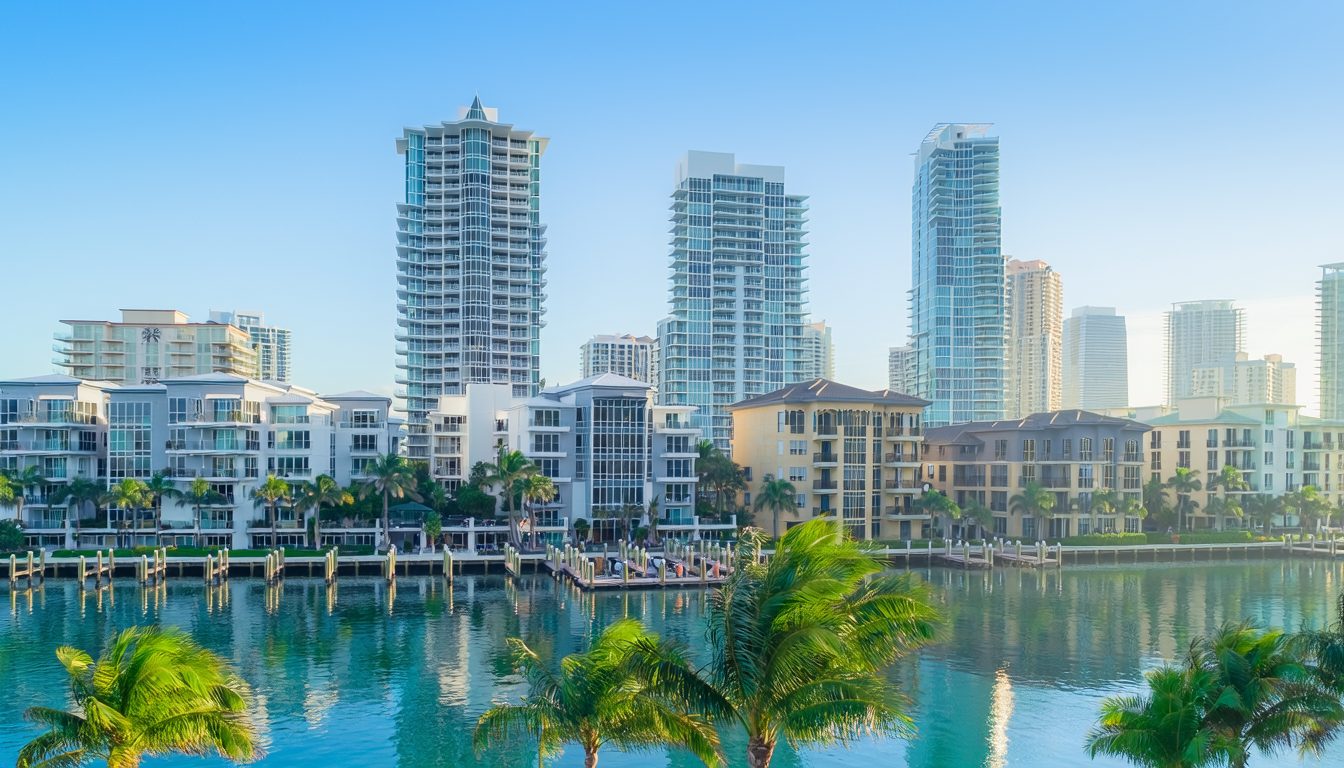
Across South Florida, condominium supply has been building since the state tightened safety rules after the 2021 building collapse in Surfside. In Broward County, that surplus has not tipped into crisis, but it has changed how transactions play out. Buyers have more units to choose from, and they have responded by refusing to overpay.
“I won’t call it trouble,” says Chad Bishop, team leader at The Chad Bishop Group with SERHANT. in Fort Lauderdale. “I would just say there’s a lot of inventory.” In that environment, he says, pricing determines whether a property sells within a few months or sits with no serious interest. “If you’re trying to get your house sold in under 90 days, overpricing just doesn’t work.”
That dynamic is unfolding alongside a shifting buyer pool, rising interest rates that are squeezing financed purchasers, and a newly approved state property tax change that is giving some buyers a reason to act before the end of the year.
Pricing Decides What Sells
Buyers today will pay at or below market value, Bishop says, and they skip listings that reach too high. “Buyers are just not even looking if it’s overpriced,” he says. Overpriced condos tend to draw only investors, and their offers can land far below the asking price. Units priced at or near market value still find buyers.
Single-family homes follow the same rule. “If you’re not pricing it right, it’s sitting,” Bishop says.
That matters for out-of-state investors used to markets where a modestly ambitious price still brings showings. In Broward County right now, Bishop describes a narrower margin: a listing priced near market value gets attention, and one priced well above it gets very little.
Financed Buyers Lose Ground
Cash buyers remain active, since rate changes do not affect what they can spend. Financed buyers, especially those shopping for second homes from the Northeast or Midwest, are feeling the squeeze. Higher mortgage rates raise monthly payments, so the same income now qualifies for a smaller loan, and many of these buyers have seen their budgets shrink noticeably over the past year.
That pressure is changing where buyers look more than what they buy. “Your price brings you where you are,” Bishop says. Buyers priced out of the waterfront are searching further west, away from the coast, which he does not consider a downgrade. The frustration is sharpest among those who have been searching for more than a year: prices did not fall, but their borrowing power did.
Hidden Waterfront Value Factors
Broward County’s waterfront market carries pricing variables that buyers from elsewhere rarely see coming. One of the biggest is whether a canal home sits behind a fixed bridge, which limits the height of boats that can pass beneath it, or a drawbridge that opens for larger vessels.
Bishop says a home behind a fixed bridge can be worth dramatically less than a comparable home with open water access, by his estimate, on the order of 30 percent. For owners of sailboats or larger yachts, water depth at low tide is another deciding factor, since a boat that cannot clear the bottom makes the dock unusable.
“If you don’t educate your buyer, they can get really, really upset with you,” Bishop says. Neither detail shows up in a typical listing, yet both help explain why two waterfront homes that look alike on paper can trade at very different prices.
Who’s Buying in Broward
The buyer pool is broadening. Bishop says Brazilian capital has become a notable presence in both Broward and Miami, a trend he expects to continue. Buyers priced out of Miami are moving north to Fort Lauderdale, Hollywood and Pompano Beach, and relocators from the Northeast and Midwest remain a steady pipeline. Northeastern buyers, he says, are often surprised by how much more space their money buys in Broward than in New York.
A local shift is adding activity too. As children of West Broward families finish school and leave home, their parents are downsizing from suburban single-family homes into waterfront condos, adding demand to a segment that otherwise has plenty of supply.
A New Tax Deadline
Ahead of Florida’s November election, Bishop said Amendment 3, which expands the state’s homestead property tax exemption, was already moving undecided buyers. “It is pushing people who are on the fence to buy just in case something does happen with Amendment 3 passing,” he said. Voters approved it, and the exemption, which shields part of a primary home’s value from local property taxes, will grow substantially over the next couple of years.
The catch is for newcomers. Buyers who are not Florida residents by the end of this year start with the current, smaller exemption and wait several years for the larger one, which makes year-end a real deadline for anyone relocating. The residency details are worth confirming with the county property appraiser or a tax professional.
A County Still Underestimated
Sitting between Miami and Palm Beach has long cost Broward County attention. Bishop says outsiders tend to picture a retirement destination, when younger families keep arriving, and local school ratings have been climbing. “It is not a market of old people,” he says. “It is very young and exciting.” He also points to Fort Lauderdale’s reputation as a yachting capital, a city he says has more yachts than anywhere else.
The coastline is changing as well. Pompano Beach has added luxury hotel brands along the ocean, according to Bishop, and Hollywood has passed rules opening its beachfront boardwalk area to more and higher-end hotels.
Looking ahead, Bishop expects the inflow to continue: more international money, particularly from Brazil, more Northeasterners and Midwesterners leaving cold winters behind, and more retirees as baby boomers age. What he would most like to see is a steady stream of younger buyers, whom he credits with lifting the county’s schools.
About The Expert: Chad Bishop leads The Chad Bishop Group with SERHANT. in Fort Lauderdale, Florida, focusing on residential sales across Broward County. He has worked in real estate full-time for about 12 years, after starting in commercial real estate.
This article is based on information provided by the expert source cited above. It is intended for general informational purposes only and does not constitute legal, financial, or real estate advice. Readers should conduct their own research and consult qualified professionals before making any real estate or financial decisions.