Most residential markets follow seasonal patterns shaped by school calendars and weather. Hampton Roads, Virginia, follows those too, but layered on top is a second cycle driven by military Permanent Change of Station orders, known as PCS moves. With Norfolk Naval Base, Oceana, Coast Guard installations, and Air Force facilities spread across the region, the area absorbs a steady churn of families arriving and departing on government timelines. That cycle is about to accelerate again, and the friction points it encounters reveal where the broader market stands heading into fall.
Christine Cahoon, a licensed Realtor with more than 20 years in the Hampton Roads market who leads a seven-agent team at The Cahoon Real Estate Team (Real Broker LLC), describes the rhythm in concrete terms. PCS orders typically drop about six months in advance. The next wave of arrivals begins in late September and runs through January, followed by a quieter stretch before the early spring market picks up in February.
A Budget That Doesn’t Match the Market
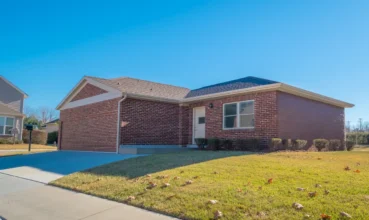
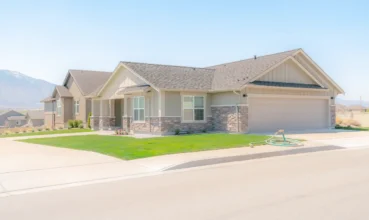
The gap between what military families can spend and what the local market demands is one of the clearest pressure points in Hampton Roads right now. Military buyers generally aim to stay within their Basic Allowance for Housing, or BAH. In the region, according to Christine, that translates to a budget of roughly $300,000. The problem is that the average unrenovated ranch-style home in Virginia Beach now lists at around $350,000.
Christine describes a recent transaction that illustrates the squeeze. A JAG lawyer relocating from California needed to stay near that $300,000 ceiling. The first property they pursued, in Portsmouth, fell apart when the appraisal flagged older windows that needed replacing and the seller refused to negotiate. The second attempt, in Newport News’s Hilton Village neighborhood, worked – but only because Cahoon negotiated full closing costs, a full repair list, and an additional $500 credit for a cracked window. The buyer put down $1,000 in earnest money, and the credits were large enough that he received $114 back at closing. “Who does that? Who buys a house for like no money?” was his response, Cahoon says.
That transaction required a seller willing to absorb high costs. Not every listing will accommodate that math, which means military buyers at the BAH threshold are working with a narrowing set of options.
The VA Appraisal Problem
Beyond price constraints, VA-backed transactions carry an appraisal process that Christine describes as a persistent source of friction. She recounts listing a home in Newport News where the sellers had renovated extensively: new countertops, appliances, flooring, ceiling fans, and toilets. The home had multiple offers and sold over list price. But the VA appraiser issued what is called a Tidewater notice, indicating the appraised value did not support the contract price. Christine attributes the shortfall partly to a square footage discrepancy in the MLS data: a sunroom behind the garage added roughly 500 to 600 square feet that prior listings had omitted, but says the appraiser did not appear to independently verify the measurements.
“They don’t want to be talked to. They do not want to answer any questions,” she says of VA appraisers. From a listing perspective, this friction means some sellers view VA-backed offers as riskier, which can disadvantage the military buyers the program is designed to help.
Fence-Sitting Is the Dominant Buyer Behavior
The military cycle injects structured demand into Hampton Roads, but even that demand is meeting resistance from the broader mood. Christine describes a $600,000 lakefront listing that has drawn significant online interest; roughly 15 users have saved or favorited the property on Homes.com, but it has produced only lowball or contingent offers in four weeks on the market. Several of those buyers subsequently pulled their own homes off the market, collapsing the deal chain entirely.
“There’s nothing that’s creating that sense of urgency to get them into the house,” Christine says.
What is selling comes down to two variables: price and condition. Homes that are well-prepared before listing, paint, carpet, flooring, and any deferred maintenance addressed in advance, are moving. Properties that skip that preparation are sitting.
Rate Expectations Are Compressing Timelines
With a Federal Reserve meeting approaching, Christine says the expectation in her market is that rates may increase. Her team’s response has been to accelerate buyer timelines. “As soon as I heard that, we started pushing all of our buyers, get them a house, lock them in now before rates go up,” she says.
Lender partnerships have helped offset some of the rate pressure. Christine says one lender her team works with offered a one-point rate buydown for one year plus a $1,500 closing cost credit starting in June, which she estimates saved her buyers between $2,000 and $4,000 each. Those programs, she says, are what move hesitant buyers from watching to writing offers.
School Calendars Are Adding a Third Timing Layer
Hampton Roads schools now start in mid-August rather than after Labor Day, and Christine says that shift has created a brief dead zone for listings. Parents spent the final weeks of summer on last vacations and beach days rather than house hunting. Now that school is underway, she says listings that sat stale for the past couple of weeks are seeing renewed activity. Her advice to sellers in that position: hold off on a price reduction, because the buyers may simply be arriving late rather than not arriving at all.
That timing overlap, PCS orders landing just as school-driven foot traffic returns, could give Hampton Roads sellers a compressed but active window through the fall. For military families arriving on government deadlines, the question is whether enough well-priced, move-in-ready inventory will be available to meet them.
About the Expert: Christine Cahoon is a licensed Realtor with more than 20 years in the Hampton Roads, Virginia market, who leads a seven-agent team at Real Broker LLC.
This article is based on information provided by the expert source cited above. It is intended for general informational purposes only and does not constitute legal, financial, or real estate advice. Readers should conduct their own research and consult qualified professionals before making any real estate or financial decisions.