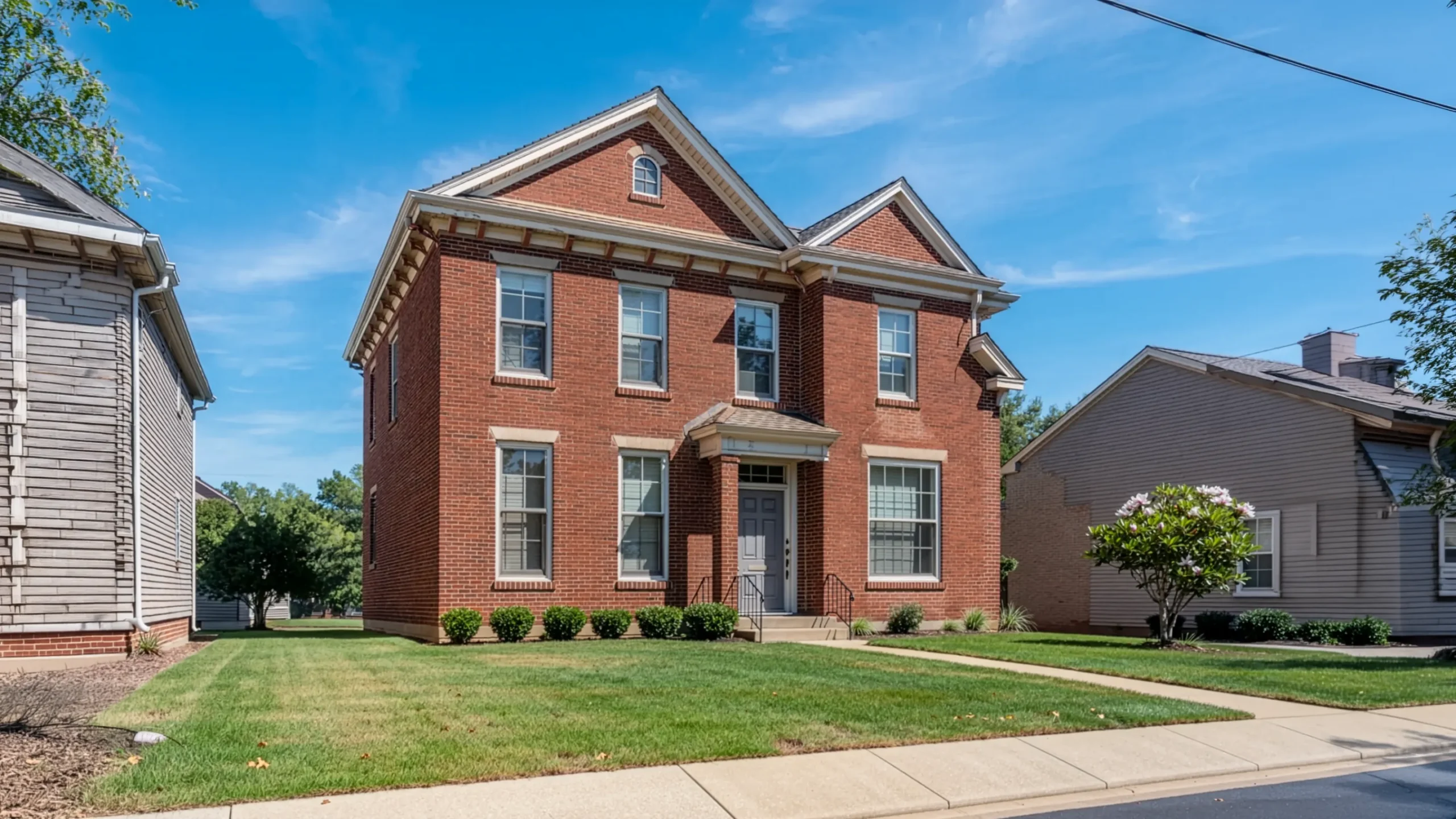
In Hampton Roads, Virginia, home to 13 military bases and every branch of service, the question behind a home purchase is not only whether the house works now, but what happens to it when orders arrive.
Erin Ward, who leads a residential team at HRVA Homes in Norfolk, says many military buyers in the region now use their VA loans to buy a home they live in while stationed and later hold as an investment. Her team builds that outcome into the purchase from the start, analyzing neighborhood-level appreciation and rental appreciation before clients make offers. “Anybody purchasing real estate should have that lens on,” Ward says.
That analysis starts with two baseline questions. What is the year-over-year appreciation for a given neighborhood, setting aside the COVID outlier period? And what does rental appreciation look like there? Ward says the second question is often skipped, though it is what gives a buyer insulation if the market turns. In her view, questions like these aren’t discussed enough in the region, and the industry needs to do a better job of raising them.
Why Neighborhood-Level Data Matters
The right data depends on what a family plans to do when orders come. A family that expects to sell needs a property that appreciates year over year. A family that may hold the property needs to know whether rents are appreciating too. Market-wide averages can’t answer either question when conditions vary block by block.
Ward describes the region as “fairly bubble-like” – a market where buyers can reliably see annual appreciation. But some neighborhoods outperform others significantly. Her team steers buyers toward areas with stronger historical appreciation, even when those areas are not the ones the buyer initially had in mind.
“I know you think this may be the neighborhood you want to be in, but I’ll be honest with you – it has lower appreciation than the house down the street in the next neighborhood,” Ward says of a typical client conversation. “Show the data. Don’t just have them rely on your words.”
Ward says the effect extends beyond a single transaction. Military families who learn to evaluate properties this way carry that framework to their next duty station. “We are now building smart investors for the next location that these military families move to,” she says. “They know the questions to ask.”
Ward points to a recent example: first-time buyers who purchased virtually at the height of the market four years ago, following the team’s data-driven guidance on neighborhood selection. When PCS orders sent them to the Florida Panhandle, they sold the house and used the equity to buy there. The sale and the purchase closed on the same day. That kind of coordination, Ward says, requires agents experienced in aligning sale and purchase timelines across states, along with a lender equipped to handle simultaneous closings.
VA Appraisal Myths
In Hampton Roads, where military buyers make up a large share of the market, sellers can’t afford to turn away VA-backed offers. But in markets with fewer military buyers, VA appraisals still carry a stigma that leads some sellers, and even some agents, to shy away from them.
Ward calls the fear “absolute nonsense.” The VA loan’s appraisal process gives buyers two chances to challenge a low valuation. The first is the Tidewater process, in which the buyer’s agent can submit comparable sales the appraiser hasn’t already used. The second is a formal reconsideration of value submitted to the VA itself. “No other loan type – do you have the opportunity to do that,” Ward says.
The VA also eased some of its minimum property requirements earlier this year. Those requirements were already similar to FHA’s, Ward notes, and in her experience a house in decent condition rarely has trouble meeting them. When something does come up, it is usually minor and easy to fix.
In a market where sellers worry about getting their asking price, Ward argues the VA loan may actually be the offer type that best protects them – precisely because the buyer has two formal avenues to defend the contract price if the appraisal comes in low.
Hampton Roads Pricing Right Now
Current conditions in Hampton Roads reflect the kind of split that makes broad labels – buyer’s market, seller’s market – less useful than they once were. Ward describes $300,000 to $450,000 as the current sweet spot. Once a house reaches the $450,000 range, she says, it had better be immaculate.
Even within the market’s strongest segments, results vary sharply from listing to listing. “We just closed two properties that had been on the market for days, had multiple offers, went under with no home inspection,” she says. Other listings sit for weeks. “There are only two things that matter – price and condition. You know immediately if you’ve overpriced.”
For buyers, Ward sees the current environment as more favorable than the low-rate period when bidding wars were routine. “I would rather buy in this market than go back to lower interest rates where I’m competing with 20 other people, paying more than the house is worth,” she says. “That really negates any interest rate savings.”
For sellers, the advantage is different: equity positions remain strong while competition from other listings is still relatively low. Ward describes a moment when buyers can still negotiate concessions, and sellers still face serious demand – conditions she says benefit both sides at once.
“Right now, there’s a win for each side,” she says.
Teams Built During COVID Are Breaking Apart
If military buyers depend on agents who know the data and the VA rules, the structure behind those agents matters too, and Ward sees much of the industry getting that structure wrong. She began noticing team dissolution about a year and a half ago, when several team leaders in a statewide mastermind group said they had decided to step back from their teams. The pattern pointed to a specific problem. Teams built during COVID, when transaction volume was high enough that almost anyone could close deals, were often led by agents who had not developed the leadership skills needed to sustain a team in a normal market.
“It exposed people who aren’t necessarily strong leaders,” Ward says. She pushes back against the industry’s default advice that every top-producing agent should start a team. “I don’t believe that’s true. If that’s why you’re starting a team, then you’re starting the team for all the wrong reasons.”
Ward also takes on a longstanding consumer belief: that working with a team means being “passed around” between agents. She says she has never seen it happen. In her view, the leverage and support network behind a team’s agents give buyers and sellers the availability they assume only a solo agent can provide.
About the Expert: Erin Ward leads a residential team at HRVA Homes in Norfolk, Virginia, serving military and civilian buyers across the Hampton Roads region.
This article is based on information provided by the expert source cited above. It is intended for general informational purposes only and does not constitute legal, financial, or real estate advice. Readers should conduct their own research and consult qualified professionals before making any real estate or financial decisions.