A year and a half to two years ago, listings in Dearborn Heights, Michigan routinely drew 20 to 30 offers. That kind of frenzy masks how a market actually works, who is buying, what is moving, and where the pressure points are. Now that inventory has increased and competition has cooled, the underlying dynamics of this Ford Motor Company bedroom community are easier to read, according to Dave Abdallah, a real estate professional who has worked the metro Detroit area for 38 years. The picture is one of steady demand split sharply by price, with pockets of the market still behaving as though supply never caught up.
Abdallah describes the current environment as “a more normal, more traditional, calmer market.” The cause, he says, was straightforward. “Just more inventory came on the market. It kind of balanced out the market.”
Homes That Sell Quickly
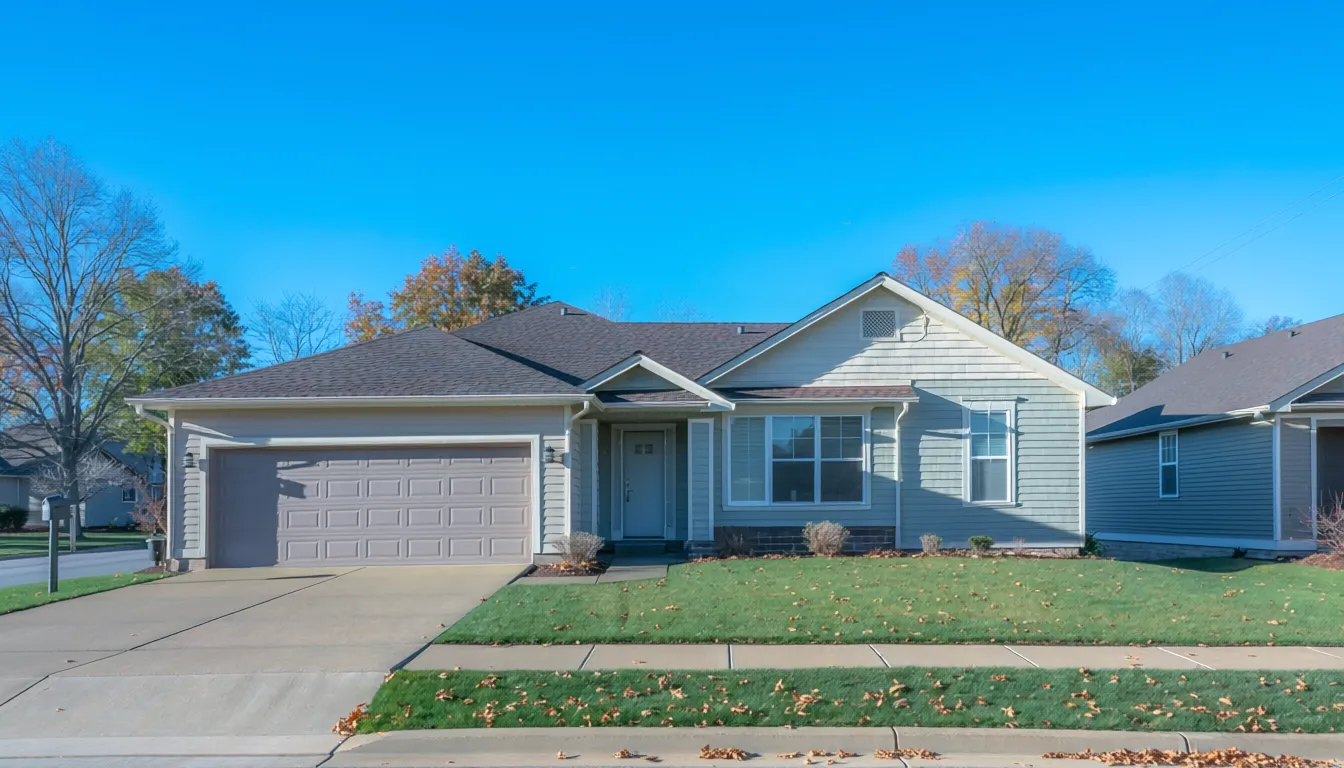
The cooling has not been even across price ranges. Homes priced between $200,000 and $400,000, the core of the first-time and second-time buyer segment that dominates the area, continue to sell at a healthy pace. Above $500,000, activity drops off. “It’s just much fewer buyers in that particular price point,” Abdallah says.
That split shows where the market’s energy actually concentrates. Dearborn Heights is primarily a community of entry-level and move-up buyers, and transaction volume at those prices has held up even as interest rate increases have introduced some hesitation. The high end is thinner by nature, though not absent. Abdallah says outsiders often do not realize “that there’s a lot of also very high-end homes here in the million to 3, 4, 5 million dollar range.” His team recently sold a property for close to $2 million, which he describes as likely the highest sale in Dearborn Heights history.
For buyers in the $200,000-to-$400,000 range, the practical shift is that they face less competition per listing than they did two years ago but still need to move quickly in desirable neighborhoods where inventory remains limited.
Sellers Are Pricing for An Older Market
One of the clearest signs the market has shifted is seller behavior. Pricing expectations have not caught up with the new reality. “They still think it’s the hot market of two years ago, so sometimes they price it a little bit high,” Abdallah says. The correction tends to happen over time in the market rather than through upfront adjustment; sellers try their price, recognize it does not hold, and reduce until a buyer engages.
That lag between expectation and market response is a familiar pattern in any market moving from a seller’s advantage to equilibrium. Abdallah puts it directly: “You gotta be more aggressive because the market is adjusted. No longer a hot seller’s market.”
For sellers who price correctly from the start, the current market still rewards well-positioned listings. But those who test aspirational prices risk watching their listings sit while correctly priced comparable homes sell around them.
West Dearborn and North Dearborn Heights
Not every neighborhood has cooled equally. West Dearborn and North Dearborn Heights continue to outperform surrounding areas, driven by what Abdallah describes as “high demand, low inventory.” School districts and parks are the primary factors pulling buyers toward specific neighborhoods, a pattern that holds across the broader area but concentrates most visibly in those two pockets.
For investors, Abdallah points elsewhere. South Dearborn Heights, he says, offers the strongest opportunity for rental-focused capital. “They rent out pretty well, and you’re able to pick up a home for 150, maybe 200,000,” he says, a price that makes the math work for buy-and-hold investors in a way that the higher-demand neighborhoods to the north and west do not.
The geographic split within a single municipality is sharp enough that buyers and investors are effectively operating in different markets depending on which part of Dearborn Heights they target.
What Keeps Deals Together Here
Failed transactions in this market come down primarily to mortgage approval, according to Abdallah. His team’s response has been to work exclusively with pre-approved buyers. “We make sure that failed deals are a rarity,” he says, a practice that becomes more important in a market where buyer hesitation from rate increases is already filtering some demand out of the pipeline.
That screening step is worth noting for buyers entering this market. Working with a lender to secure full pre-approval before making offers reduces the risk of a deal collapsing at the financing stage, a risk that Abdallah identifies as the most common cause of failed transactions in the area.
Demand Holds Despite National Headlines
Despite national coverage of buyer pullbacks, Abdallah says the Dearborn Heights area has not experienced a meaningful slowdown in demand. “There’s still high demand, so it’s been pretty good,” he says. He expects continued appreciation and sees no specific headwinds on the horizon for the area.
The Metro Detroit market’s connection to the Ford Motor Company and the automotive industry gives it a demand floor that is less sensitive to the sentiment shifts affecting markets where buyers are more discretionary. As long as the area’s employer base holds, the fundamentals Abdallah describes – strong schools, well-maintained parks, and affordable entry prices – continue to support buyer interest at the price points where most of the activity occurs.
At its peak, Abdallah’s team closed 462 home sales in a single year. Over a 38-year career, he has closed nearly 7,000 transactions totaling over $1.1 billion in sales. That volume, concentrated in one metro area, reflects the depth of repeat and referral demand in a market where most buyers are purchasing their first or second home, and where the next generation of buyers tends to come from the same community.
About the Expert: Dave Abdallah is a real estate professional who has worked the metro Detroit area, including Dearborn Heights, Michigan, for 38 years.
This article is based on information provided by the expert source cited above. It is intended for general informational purposes only and does not constitute legal, financial, or real estate advice. Readers should conduct their own research and consult qualified professionals before making any real estate or financial decisions.