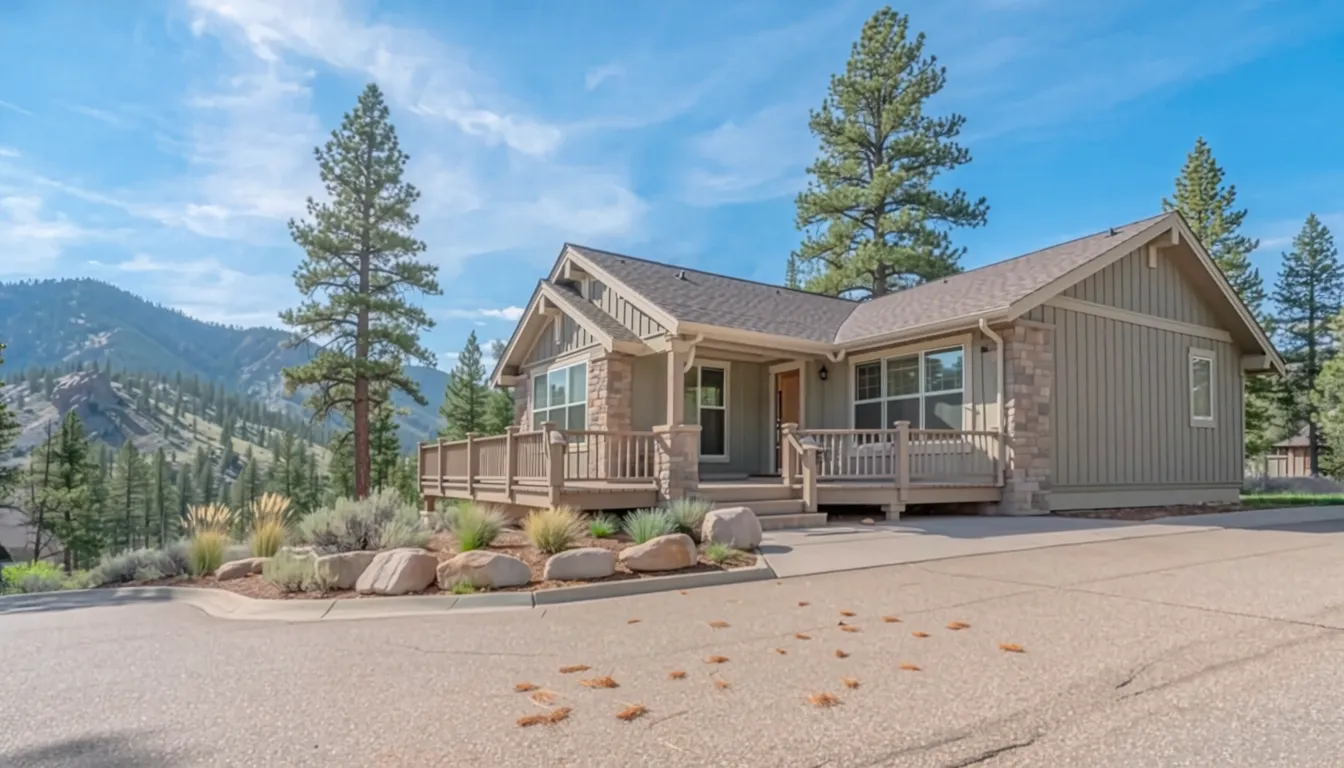
In most real estate markets, transaction volume tracks interest rates, job growth, and inventory. In Evergreen, Colorado – a mountain community roughly 30 minutes west of Denver, sitting between 7,500 and 8,500 feet in elevation – the pattern is different. Most buyers and sellers are acting on personal circumstances, not market timing, according to Jillian Petrash, who runs Jump Living, a boutique brokerage based in Evergreen covering Colorado’s Front Range foothills and the Denver metro area.
That distinction matters right now because general consumer sentiment about real estate is weak. Petrash describes it as “not the best.” But in Evergreen, transactions are still happening – driven by divorce, death, aging, health needs, and lifestyle decisions rather than confidence in pricing or rates. “There aren’t too many people moving because they think it sounds fun,” Petrash says. “It’s more one thing or another happened in life, and they’re having to make a move.”
The buyers entering her market are almost uniformly lifestyle-driven. The sellers leaving it are doing so because life demanded it.
Who’s Buying and Why
The typical Coloradan looking to buy in Evergreen is a Denver-area professional who wants mountain living without committing to the far side of the Eisenhower Tunnel, where weather is harsher and access to the metro area becomes considerably more difficult. Evergreen offers proximity to downtown Denver and the airport while still delivering what Petrash calls “a mountain vibe.”
A recent transaction illustrates the pattern: a Denver family traded a comparable home in the city for one in Evergreen, maintaining their Denver commutes but choosing a smaller community for their children. “They truly just swapped out one really nice house for another solely for the lifestyle,” Petrash says.
Buyers who start searching in Evergreen often end up considering nearby Conifer, where they can get more space for the same budget. Petrash says there is significant crossover between the two communities, along with Morrison. Golden, though nearby, draws a different buyer – one looking for proximity to Denver rather than a mountain setting.
Why Sellers Are Leaving
On the sell side, motivations are less aspirational. Elevation itself is a factor. At 7,500 to 8,500 feet, some residents eventually need to move to lower altitude for health reasons. “I’ve got some people right now that are moving down to Denver even just because it’s a little lower elevation,” Petrash says – in some cases simply to get off supplemental oxygen.
The broader shift toward buyers is visible in seller behavior. Concessions, credits toward closing costs, and acceptance of contingent offers – largely absent during the market’s more competitive stretch – are now part of the landscape. “Sellers are having to realize that that’s kind of part of the dynamic,” Petrash says. She adds that sellers are also adjusting to longer listing periods without treating them as a crisis.
Seasonality adds another layer. As winter approaches in the foothills, some sellers pull listings rather than show homes during the colder months, weighing whether to rent through winter or wait for spring.
Condition Is the Dividing Line
In a market that has shifted in buyers’ favor, the gap between homes that sell quickly and those that linger comes down to condition. Homes that need work are sitting. Move-in-ready properties still attract strong interest.
“Nobody is really wanting to take on a project,” Petrash says. “Everybody’s busy with work and kids and all the things. So the houses that are ready to go are the ones that are selling.”
That pattern extends to how deals fall apart. Petrash notes that while inspection issues are frequently cited as the reason a transaction terminates, the real cause is often buyer anxiety. “People blame a lot of things on inspection, but a lot of the time I think it’s really cold feet,” she says. A minor issue that would be straightforward to resolve can escalate in a buyer’s mind and lead to a terminated contract.
For sellers, the implication is direct: addressing deferred maintenance before listing reduces the risk of losing a buyer mid-transaction to anxiety rather than a genuine structural problem.
Insurance Has Become an Early Conversation
Property insurance in wildfire-prone mountain communities has moved from a late-stage closing detail to a front-of-mind issue. Petrash says she raises insurance as one of the first topics when evaluating properties with clients. “Start looking right away when we find properties,” she tells buyers. “It’s definitely one of the first things that we’re talking about.”
When buyers are proactive about insurance, Petrash says, it rarely derails a deal. The problems come when it is left until later in the process. She notes the situation may be improving slightly – insurance companies appear to be adjusting to the risk landscape – but the concern remains real, particularly for investors considering the foothills. Her advice is blunt: look for motivated sellers on homes that have been sitting, but investigate insurability before anything else. “You don’t want to get something that’s going to be hard to insure or super expensive to insure or impossible to insure,” she says.
Buyers Are Arriving With Better Questions
One development Petrash has noticed recently is a change in the quality of buyer questions. Buyers are feeding property listings into AI tools before showings and arriving with more pointed, specific inquiries than in prior years. “The questions that we’re getting from buyers are a lot different than they used to be,” she says. “Buyers are coming with better questions.”
For agents, that means the initial showing conversation starts at a higher level of specificity – buyers have already identified potential concerns and want direct answers rather than general overviews.
What Petrash Is Watching Next
Petrash is tracking two forces heading into the next year: interest rates, which remain a persistent concern for buyers across her market, and snowfall. A second consecutive dry winter could weaken the mountain lifestyle appeal that draws Denver professionals to the foothills – particularly skiing and outdoor recreation. “If we don’t get snow again, then all of a sudden all the things that people think of the Colorado mountains for – I feel like that’s going to be a bigger deal than we might think,” she says.
In a market where buyers are choosing a lifestyle rather than chasing appreciation, the quality of that lifestyle is not a secondary consideration. It is the foundation of demand.
About the Expert: Jillian Petrash runs Jump Living, a boutique brokerage based in Evergreen, Colorado, covering the Front Range foothills and the Denver metro area.
This article is based on information provided by the expert source cited above. It is intended for general informational purposes only and does not constitute legal, financial, or real estate advice. Readers should conduct their own research and consult qualified professionals before making any real estate or financial decisions.