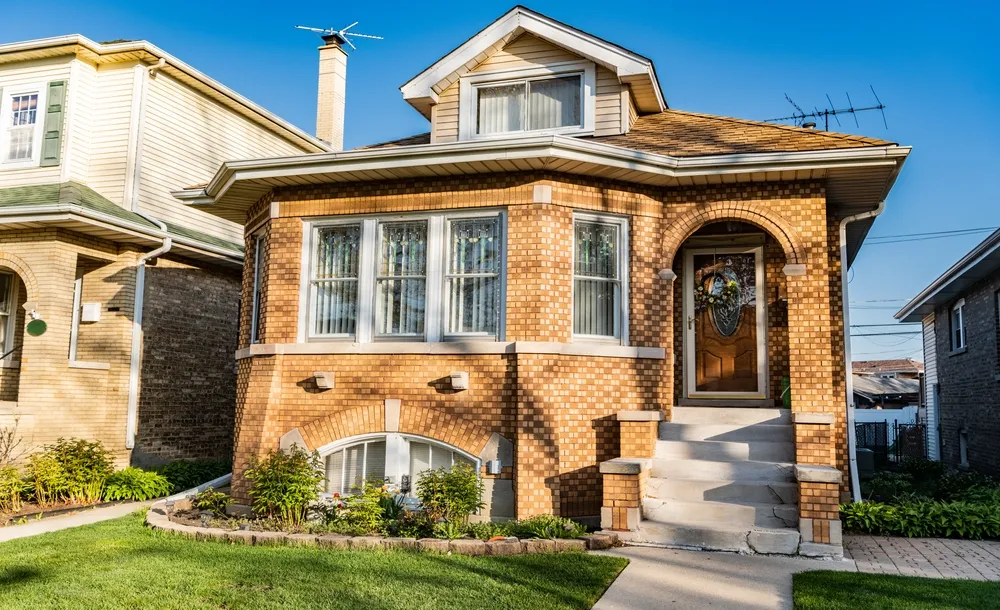
Chicago’s south suburban housing market presents an unusual tension: demand remains steady, appreciation runs between 3 and 5 percent annually, and inventory stays tight across price points. Yet within that same market, a growing number of homeowners are being forced to sell, not because values have dropped, but because property tax increases have made their homes unaffordable to keep.
The pattern is distinct from the foreclosure waves typically associated with market downturns. These are not overleveraged buyers caught in a correction. They are existing homeowners whose carrying costs have risen beyond what their incomes can support, according to Aaron Gaines, a Realtor with Keller Williams Preferred Realty who works across roughly 10 counties in the Chicago metro.
“We’re seeing folks in distress situations that have to exit their property or are being forced to exit,” Gaines says. “Those that can’t get their taxes appealed or lowered are unfortunately either forced to sell or they’re at a loss and have to get out.”
A Seller’s Market With Distress Underneath
The broader market dynamics in Chicagoland remain favorable for sellers. Inventory is constrained, buyer demand is consistent, and Gaines describes a market where buyers routinely pare their wish lists down to three non-negotiables and may only get one or two of those met.
But the tax pressure is creating a separate track of activity, pre-foreclosures, active foreclosures, and short sales running parallel to otherwise healthy transaction volume. Gaines notes increasing frequency in these situations and points to inflation and rising insurance premiums as compounding factors alongside property taxes.
“I’m going to a property today, and that’s currently their situation,” he says. “They can’t afford the house anymore, and so before they end up in foreclosure, they’re just going to sell the house.”
No pocket of the south suburbs appears shielded from this dynamic. Gaines says he cannot identify any area that sits outside the range of these economics.
Why Deals Fall Apart
When transactions collapse in this market, the causes cluster around carrying costs rather than purchase price. Taxes, HOA fees, and insurance premiums are the common culprits, all expenses that have risen and that buyers sometimes underestimate when calculating affordability.
A home that looks affordable based on mortgage payments may become unworkable once the full monthly obligation is calculated. Gaines says he is constantly interviewing lending partners and searching for programs that can help bridge the affordability gap for buyers who are otherwise qualified.
“We’re constantly reaching out to partners to be able to help us fill the gap there so that we can hopefully get more folks into homes,” Gaines says.
A Block-by-Block Market for Investors
For outside investors considering capital deployment in Chicago’s south suburbs, Gaines offers a pointed warning: broad-brush strategies will fail here.
“Chicagoland from an investor’s perspective is and in my opinion will always be block by block, very much hyper local,” he says. “You do have to get it more granular than zip codes.”
He points to the contrast between Lincoln Park, which he says is up 14 percent year over year, and Park Forest, two areas within the same metro producing entirely different results. Adjacent neighborhoods can have fundamentally different trajectories, and aggregated metro-level data obscures more than it reveals.
Investors also face a regulatory layer that varies by municipality. Gaines notes that several villages in the south suburbs are changing their rental standards and restricting new investors from renting properties within their boundaries. Knowing which municipalities allow rental activity, and which do not, is a prerequisite before deploying capital.
He identifies Harvey as one area with potential opportunity, citing a changing administration, but cautions that the pace of that change remains uncertain.
77 Communities, Not One City
Chicago proper contains 77 distinct communities, each with its own character and market conditions. The surrounding suburbs multiply that complexity further.
“People think that Chicago is just Chicago,” Gaines says. “But it’s 77 different communities, different pockets of culture and community. You can live in Chicagoland your entire life and still not get to all of the things that Chicagoland has to offer.”
For buyers and investors, this means no single data point, whether it is the metro appreciation rate, the average days on market, or the inventory count, applies uniformly. What sells quickly in one corridor may sit in another, and the drivers differ at a level that only granular, local tracking can capture. “If people try to broad-brush Chicago, they will be hurt in their investing,” Gaines says.
The market’s core tension, strong demand coexisting with rising distress, is itself a product of this hyper-local complexity. Appreciation holds in aggregate, but the homeowners absorbing the steepest tax increases are concentrated in specific south and west suburban corridors where incomes have not kept pace. For sellers in those areas, the choice is increasingly between exiting on their own terms or waiting until the situation forces a worse outcome.
About the Expert: Aaron Gaines is a Realtor with Keller Williams Preferred Realty, working across roughly 10 counties in the Chicago metro area, with a focus on the south suburbs.
This article is based on information provided by the expert source cited above. It is intended for general informational purposes only and does not constitute legal, financial, or real estate advice. Readers should conduct their own research and consult qualified professionals before making any real estate or financial decisions.