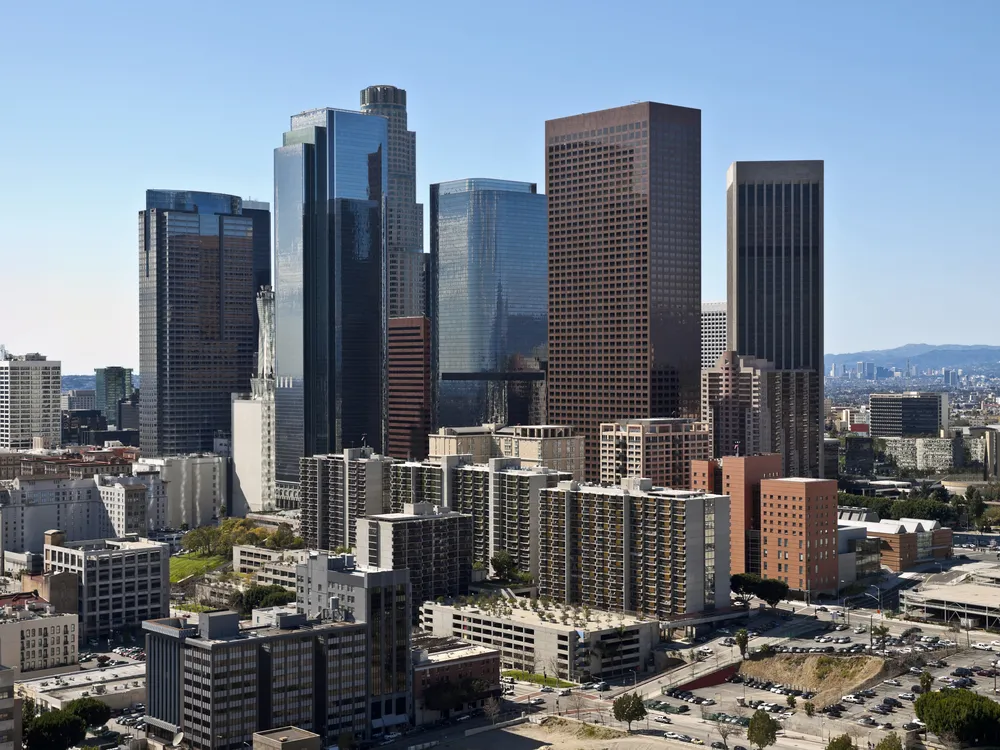
Inventory in central Los Angeles keeps growing, but the buyer pool is not growing with it. In neighborhoods like Koreatown, downtown LA, and surrounding submarkets, properties sit longer, open houses draw fewer visitors, and verbal offers come in well below asking – only to evaporate before negotiations begin, according to David Shin, a Realtor with Dream Realty & Investments Inc. based in Koreatown. The pattern points to a market where neither side is willing to move first, and the resulting stalemate is dragging transaction volumes down sharply.
Dream Realty is the top-producing brokerage across several local zip codes, and Shin says the firm’s transaction volumes are down significantly year over year since mortgage interest rates peaked in late 2023. That decline makes the brokerage a useful barometer for how the broader central LA market is performing, not just a single agent’s experience.
A Buyer’s Market Where Buyers Won’t Buy
The dynamic Shin describes is not a traditional buyer’s market where price cuts lead to transactions. Buyers have leverage but are not using it. They show up to open houses, float verbal offers well below asking, and then disengage rather than submit a written offer and negotiate.
“If the price is a million and they want to buy at 900,000, they think 100,000 is too much of a gap, so they don’t even make the effort,” Shin says. He encourages every interested buyer to submit an offer regardless of the perceived distance, but many simply move on.
The buyers he encounters now are not first-timers stretching into the market. They are experienced purchasers who have bought homes before, which makes them more patient and more willing to walk away. “They’re a little bit more savvy, and they’re taking their time,” he says. “If it doesn’t work out here, they just move on somewhere else.”
Sellers Chasing Offers That Have Already Left
On the listing side, Shin sees a pattern where initial pricing resistance creates a trap. One of his listings, priced in the mid-$1.5 million range, drew several verbal offers around $100,000 below asking shortly after going on the market. The seller refused to negotiate. A couple of months later, the seller would accept those offers, but the buyers are gone.
“Time on market is affecting things. If you don’t price it strategically and correctly in the beginning, it does present a trap,” he says. The result is a cycle of incremental price drops that chase momentum downward rather than creating it. Once a listing has sat too long, the team’s main option is to pull it off the market and relist at a lower price.
Shin currently has around nine to ten active listings. All are sitting. “We’re experiencing quiet times like not seen before,” he says, adding that conditions feel worse now than at any point since rates spiked in late 2023.
Interest Rate Sensitivity
The connection between rates and buyer activity is not abstract in this market – Shin can track it at the open-house level. In January and February of this year, when rates briefly dropped below 6 percent, his downtown LA listings saw a surprising surge in foot traffic. Then rates climbed back up, and the visitors disappeared.
“Once that wore off, it just went right back to that stagnant, no shows at the open houses,” Shin says.
Downtown LA’s high-density condo market has been hit particularly hard. HOA fees running $1,000 or more per month on top of mortgage costs make the total carrying cost prohibitive for average buyers, and prices there have dropped more than in surrounding areas.
The broader central LA market – condos and multifamily properties, is underperforming single-family homes. Residential neighborhoods with a more suburban feel, like Culver City and Hancock Park, still see demand. The more urbanized, higher-density areas are where activity has stalled most visibly.
What’s Working Now
For sellers still entering the market, Shin’s approach is straightforward: price correctly from the start and present the property in the best possible condition. His team handles renovations, cleaning, staging, and full marketing packages including video and 3D scans, a level of preparation he considers necessary rather than optional in the current environment.
Properties that price right from the beginning are the ones that sell. The statistics showing modest year-over-year price gains in Los Angeles reflect those correctly priced transactions, not the broader pool of listings sitting without offers.
“The ones that are selling are pricing right from the beginning, so they’re not doing so many price drops,” Shin says. “So the statistics are maybe a little flawed.”
His advice to both sides: engage. Buyers should submit offers even when the gap feels large, and sellers should treat early interest as the best interest they are likely to get. Shin says he sees both buyers and sellers growing fatigued, buyers tired of not finding what they want at an acceptable price, sellers tired of watching listings sit. The stalemate feeds on itself: each month of inactivity makes both sides more cautious, not less.
For sellers weighing whether to list now or wait, the calculus is simple in Shin’s framing. Peak season is already underway, and if the market does not pick up before the holiday slowdown begins later this year, the window for finding motivated buyers narrows further. Pricing right on day one remains the most direct path to a closed transaction, and the early offers, however far below asking they seem, may be the strongest a seller receives.
About the Expert: David Shin is a Realtor with Dream Realty & Investments Inc., serving central Los Angeles neighborhoods including Koreatown and downtown LA, where the firm is the top-producing brokerage across several local zip codes.
This article is based on information provided by the expert source cited above. It is intended for general informational purposes only and does not constitute legal, financial, or real estate advice. Readers should conduct their own research and consult qualified professionals before making any real estate or financial decisions.