A city of roughly 68,000 to 72,000 people does not typically support 34 simultaneous new-home developments. But Celina, Texas, one of the fastest-growing cities in the United States over the past five years, is operating at a pace that forces resale homeowners into direct competition with publicly traded builders who adjust pricing on weekly data cycles. The result is a market where, according to Myers, 72% of listed homes took a price reduction last month, where builders are offering 4% interest rates against a conventional market above 6.5%, and where the dynamics of supply have flipped from the frenzy of the pandemic years into something that requires a fundamentally different selling strategy.
The Supply Landscape
Celina is adding, by Myers’s estimate, roughly 1,000 new residents per month. In June alone, according to city permitting data cited by Myers, 286 building permits for houses were filed, nearly 10 per day. More than half of all home sales in the city are new construction. At the end of June, per Myers, the market sat at 5.7 months of supply, with a median days-on-market of 75.
That volume of new inventory creates persistent downward pressure on pricing. Wayne Myers, Team Lead at KW 1st Team and a 27-year real estate veteran with a decade in the Celina market, says builders are the most sophisticated sellers in any market. “These are publicly traded companies. They have economists and statisticians studying the market to see where they need to be next,” he says. “They make price adjustments based on weekly data, how many showings, how many online views.”
The incentive arsenal builders are deploying reflects that sophistication. Interest rate buydowns to 4%, bonuses for Realtors, and bundled extras like washers, dryers, and blinds, items that don’t typically come with a new home, are now standard. Even developers, who sell lots to builders, are offering agent incentives. “In my 27 years, I’ve never seen the developer offer real estate agents incentives,” Myers says.
What Resale Sellers Face
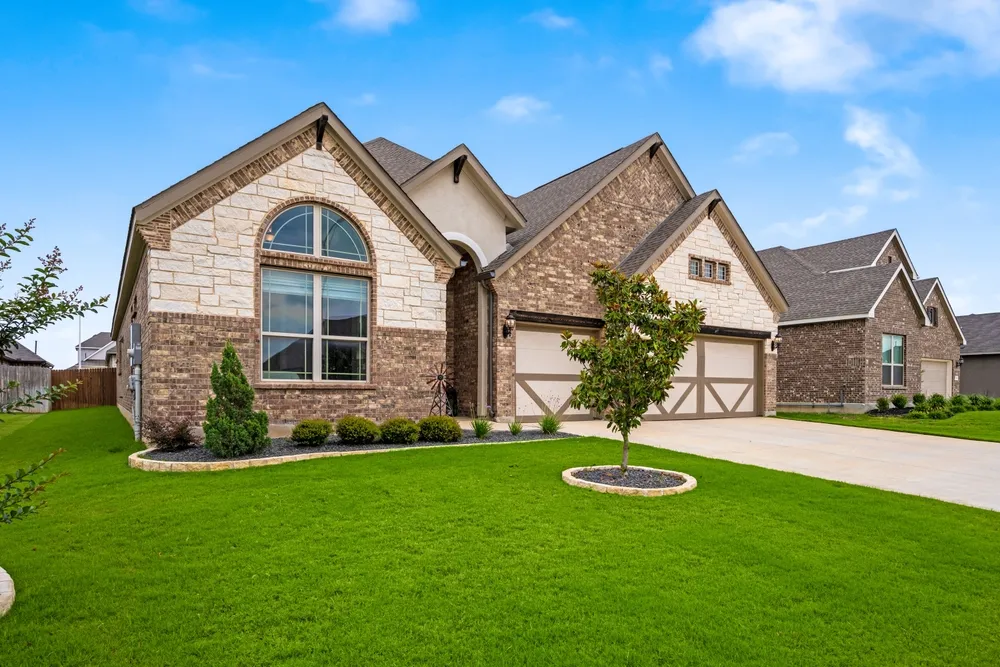
Existing homeowners are not passive observers of this competition. A recent transaction Myers closed involved $26,000 in concessions on a resale home, with the proceeds used to buy down the buyer’s interest rate. The home had a pool, a seasonal advantage that compresses days on market to under 30 during Texas summers, but the concession was still necessary to compete with builder pricing.
The challenge is particularly acute in Celina’s middle price bands. In one recent case, a home listed around $380,000 was competing against 105 active listings between $360,000 and $420,000. “When buyers have 105 choices in a particular price band, there’s not a sense of urgency,” Myers says. “Your house needs to be, the condition needs to be really up to par.”
Resale homes do carry structural advantages. Older developments typically sit on larger lots, and existing homes avoid the special tax districts, public improvement districts, or municipal utility districts that fund the infrastructure new developments require. But those advantages only matter if the home is priced correctly from the start.
Pricing Discipline and the Cost of Chasing
The gap between correct initial pricing and chasing the market is measurable. According to Myers, homes priced correctly from the outset sell in an average of 25 days in Celina. Homes that require a price reduction take an average of 100 days – four times as long – and typically end up at the same price they would have achieved with correct initial pricing. The difference is not financial outcome but duration and stress.
Myers says his team has increased advertising spend per listing, including retargeting campaigns timed to events like the FIFA World Cup, to compete for buyer attention. “We’re spending more on advertising per home than I’ve ever spent because the buyer’s choices are so many,” he says.
What’s Driving Demand
The buyer pool is fed by corporate relocation. The Dallas-Fort Worth metro hosts more corporate headquarters than any other U.S. city, and those relocations bring affluent buyers with relocation benefits who prioritize strong schools and newer housing stock. The scheduled completion of the Dallas North Tollway extension into Celina next year, currently stopping at Highway 380, is expected to compress commute times to Plano and Frisco, where many of those headquarters sit.
Commercial development is following the residential base. A Costco opening on August 26th will make Celina what Myers believes is the smallest city ever to receive one. A Home Depot, Walmart, and Lowe’s have already opened on Preston Road this year.
The Investment Lens
For investors evaluating the market, Myers draws a clear distinction by position. “If you bought your house two years ago and you’re selling, you’re probably not going to be happy with the price. But if you’re on the buy side, you’re going to be real excited because they’re down from two years ago.” Land, he argues, remains the strongest long-term play given shrinking supply: residential land runs approximately $100,000 per acre depending on infrastructure access, while commercial parcels on Preston Road approach $1 million per acre for smaller sites.
The variable Myers watches most closely is interest rates. “If we were to have a decrease in interest rates, that would help with affordability and may help us with our price decrease; that downward pressure on pricing we’re having,” he says. “Every month we’re watching the Fed to see if we can get that interest rate decrease.”
For sellers navigating this market, the calculus is straightforward: price correctly on day one, or spend 100 days arriving at the same number while competing against builders who recalibrate weekly.
About the Expert: Wayne Myers is Team Lead at KW 1st Team, with 27 years of real estate experience, including a decade focused on the Celina, Texas market.
This article is based on information provided by the expert source cited above. It is intended for general informational purposes only and does not constitute legal, financial, or real estate advice. Readers should conduct their own research and consult qualified professionals before making any real estate or financial decisions.