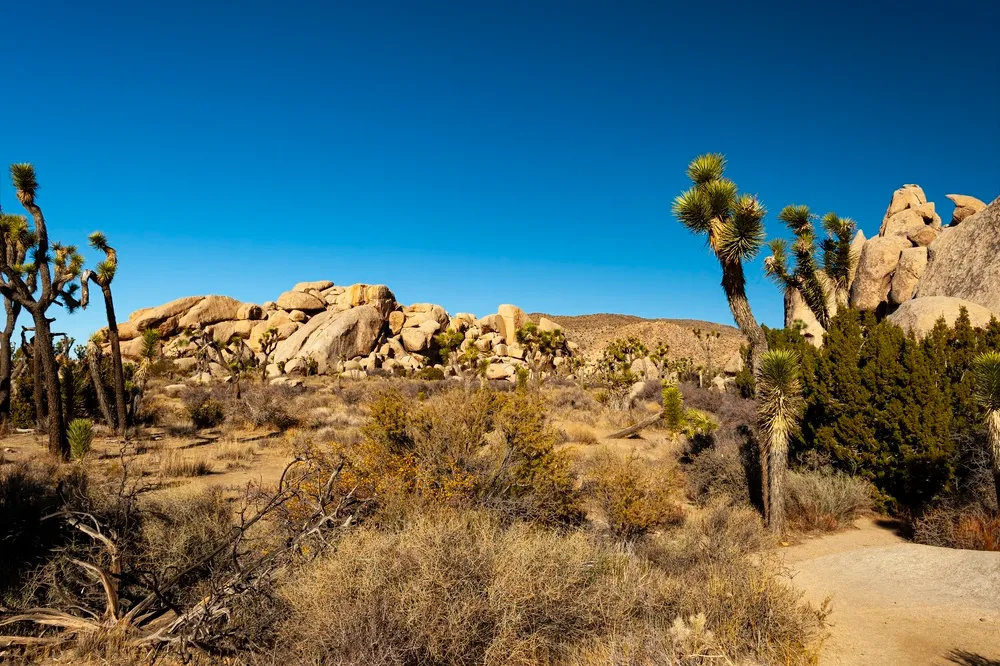
Most residential real estate markets are driven by people who need a place to live. California’s high desert, the stretch of communities surrounding Joshua Tree National Park, from Palm Springs southwest of the Morongo Valley, Yucca Valley, and Twentynine Palms, operates on a different ratio. Roughly 75 percent of buyers in this market are purchasing second homes, vacation rentals, or retirement properties, according to Madelaine Lavoie of Cherie Miller & Associates, which operates five offices across the region. That buyer composition shapes everything from what sells to what stalls, and it creates a market that responds to different pressures than the primary-residence markets most investors are accustomed to analyzing.
What’s Selling and What’s Sitting
Newer construction is moving fastest in the high desert right now, and not purely because of condition. Lavoie attributes the speed to a combination of factors: newer homes tend to be built on lots with stronger topography and views, which are precisely the features this buyer pool prioritizes. Meanwhile, many older properties with similar natural advantages are owner-occupied by long-term residents. “Sometimes people are in a house for 30 years, then you have to wait for it to go on the market,” she says.
That dynamic limits the supply of well-positioned inventory. Unique properties, those with distinctive architecture or strong visual settings, also move relatively quickly. The homes that sit longer tend to lack those distinguishing qualities, particularly in a market where buyers are choosing a lifestyle rather than a commute.
Two Markets Under One Roof
A common narrative holds that the Joshua Tree area is overbuilt with short-term rentals. Lavoie pushes back on that characterization. “If they were oversaturated, there would be nothing for sale. And we have plenty of houses for sale now,” she says. Occupancy, in her view, is a pricing problem more than a supply problem; properties listed at reasonable nightly rates rent; those priced too high don’t.
The short-term rental market and the traditional residential market have diverged into functionally separate types of housing. Properties purpose-built for Airbnb tend to minimize storage: small closets, no garages, no sheds. “People are coming with a suitcase, and then they leave,” Lavoie explains. Full-time residents want the opposite: closet space, a garage, storage for belongings. The two buyer pools largely stay in their own lanes rather than competing for the same inventory. For buyers worried about oversaturation dragging down property values, that separation means the performance of short-term rentals and traditional homes depends on different variables: nightly rate discipline for one, location and livability for the other.
Interest Rates as the Single Biggest Constraint
Buyer sentiment in the high desert is cautious but not fearful, and Lavoie identifies a single dominant cause. “The only thing is the interest rates. That is the reason we’re having a lull in the market,” she says. The local economy itself, she notes, remains fairly strong; complaints are scarce beyond the cost of borrowing.
The effects extend beyond transaction volume. Lavoie says lenders in the area are closing because loan volume has dropped to unsustainable levels. On the seller side, pricing expectations remain inflated. “The sellers are still trying to get yesterday’s glory, and we have to educate them that the market’s changed,” she says. Most sellers – she estimates 99 percent – are still paying the buyer’s agent compensation and often contributing to closing costs, a concession pattern that reflects the adjustment underway.
When deals do fall apart, the causes trace back to financing constraints: buyers unable to secure loans, or appraisals coming in below contract price. “We’ve had a lot of appraisals come in too low, and we’ve had to fight appraisals a bit,” Lavoie says. For buyers, that means building in room for appraisal gaps when structuring offers, and for sellers, it reinforces why pricing to current comparable sales rather than peak-market figures matters from the start.
A Market That Resists Remote Analysis
GPS is unreliable in roughly a quarter of the high desert. “If you have an out-of-town agent and you’re an out-of-towner, you’re going to get lost in the desert,” Lavoie says. That detail illustrates a broader reality: this is not a market that can be evaluated from a screen.
The region spans communities with meaningfully different climates, price points, and buyer preferences. Palm Springs operates differently from Twentynine Palms. Some buyers want paved roads and neighbors; others want five acres and solitude. Lavoie says buyer preferences in the area are highly personal; the variety of neighborhoods, from dense residential streets to remote parcels, means there is inventory for nearly every type of buyer, but matching them correctly requires knowing the terrain.
With over 3 million visitors a year flowing through Joshua Tree National Park, according to Lavoie, the demand drivers are tourism, outdoor recreation, and retirement, not employment centers or school districts. That makes the high desert less sensitive to job-market swings than metro areas, but more exposed to discretionary spending patterns. When borrowing costs rise, buyers who don’t need a home are the first to pause.
For investors evaluating the area, Lavoie’s advice is direct: avoid overpaying, prioritize strong locations, and confirm that rental income can cover carrying costs. “Staying in better locations is good advice,” she says. “And being in a market where the income on the house would meet their expenses, if they’re looking at it as an investment.”
In a market where three-quarters of buyers are choosing to purchase rather than needing to, the distinction between a lull and a correction matters. The high desert’s demand base hasn’t disappeared; it has paused, waiting for borrowing costs to come down. The properties that continue to move are the ones that justify discretionary spending on their own terms: strong locations, distinctive settings, and housing suited to how the buyer actually intends to use it.
About the Expert: Madelaine Lavoie is a real estate agent with Cherie Miller & Associates, covering California’s high desert region around Joshua Tree National Park.
This article is based on information provided by the expert source cited above. It is intended for general informational purposes only and does not constitute legal, financial, or real estate advice. Readers should conduct their own research and consult qualified professionals before making any real estate or financial decisions.