The narrative around South Florida real estate has long centered on Miami’s waterfront towers and celebrity-studded islands. But buyers seeking space, privacy, and value are increasingly looking to western Broward County, and developers are following them there.
With 361 residential sales above $10 million recorded across South Florida in 2025, the second-highest annual total on record, behind only 2021’s pandemic-era surge, demand at the top of the market remains strong. That translates to roughly one ultra-luxury home sold per day, approximately twice the pace of five years ago.
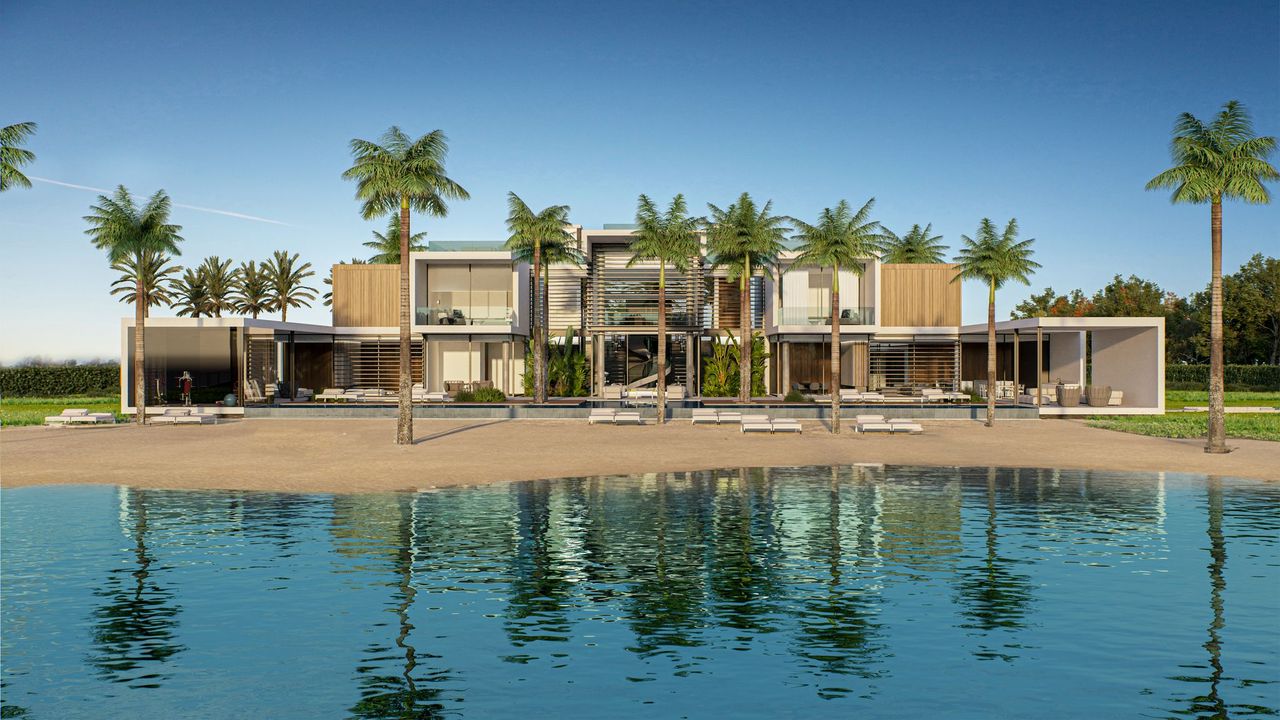
One project capitalizing on that momentum is Akai Estates, a boutique luxury development in Southwest Ranches with an entry price of $9.4 million. Representing the project on the sales side is The Sklar Team, a family-run operation that joined forces with the Jills Zeder Group, consistently ranked the top real estate team in the country, at the end of 2023.
Cody Sklar, Head of Operations and Real Estate Agent with The Sklar Team, says the partnership was driven by the Jills Zeder Group’s national reach and deep network of high-net-worth connections. “We have two family businesses on the sales side working together, and the synergy has been great,” he says.
The broader ultra-luxury segment has been the strongest part of the market. According to Sklar, sales above $10 million picked up significantly in 2025, even as activity below that threshold remained uneven. Danny Hertzberg of the Jills Zeder Group recently closed a $170 million sale at 7 Indian Creek, the highest recorded in Miami’s history.
The Case for Southwest Ranches
What draws buyers to western Broward County is a combination of factors that are difficult to replicate elsewhere in South Florida. Land parcels of two to four acres with full privacy, 24/7 armed security, and room for amenities like sports courts are increasingly scarce. Unlike Star Island or waterfront Miami, where comparable privacy comes at a significantly higher price, Southwest Ranches offers a different value equation.
The township has also attracted a notable resident base. Figures like Gisele Bündchen and Dwayne Johnson have chosen the area, reinforcing its appeal among buyers who want the Miami lifestyle without the density. And the Everglades boundary to the west creates a natural supply limit that no amount of development can overcome.
“The land prices in Southwest Ranches have been really skyrocketing, and that demand is deepening — it’s not just widening,” Sklar says. “Once it’s gone, it’s gone.”
Who Is Actually Buying
The buyer profile in this segment has broadened well beyond the retirement-and-sunshine stereotype that once defined South Florida’s appeal. Hedge fund managers, private equity partners, family offices, and senior executives from financial and technology firms now represent a meaningful share of inbound demand. Ken Griffin’s well-documented relocation to Miami and the subsequent migration of financial services firms to Brickell helped establish the region as a legitimate base for institutional-grade wealth.
Sklar notes that while weather and lifestyle remain genuine draws, a growing share of ultra-luxury buyers are purchasing near where they work. “We’re seeing a steady stream of high-end buyers looking for luxury properties close to where they work,” he says.
The geographic origin of buyers remains concentrated. New York and California continue to drive the bulk of relocations, with state income tax savings and a more business-friendly regulatory environment cited as consistent motivators. International buyers add another layer: in 2025, approximately 15% of Miami-area home purchases were made by foreign buyers, compared to roughly 2% nationally. Miami continues to rank first in the United States for international real estate investment.
Cash Dominates at the Top
One structural difference between today’s market and the period leading up to the 2008 correction is the prevalence of all-cash transactions. Miami is widely cited as America’s top metro for cash home sales, with estimates placing the share of cash deals at roughly 38–39%, compared to around 30% nationally. That reduces the leverage-driven vulnerability that characterized the last major downturn.
At the ultra-luxury price point, buyer behavior tends to be measured rather than reactive. Sklar describes these buyers as calculated, willing to take their time comparing options before committing. The dominance of cash means interest rate movements have more of a psychological than a mechanical effect at the top end. However, any easing in rates is expected to unlock additional activity in the $1 million to $9 million range, adding breadth without disrupting the upper tier.
“South Florida is no longer a cyclical play; it’s matured into a core luxury market with global relevance,” Sklar says.
Digital Strategy Meets High-Touch Sales
Reaching ultra-luxury buyers requires a different kind of marketing. The Sklar Team has invested heavily in digital infrastructure, from SEO and CRM workflows to paid advertising across Google, Meta, and YouTube, to support what remains an inherently personal sales process.
The team has leaned into video content as a discovery tool. A documentary-style feature on Akai Estates’ architect, Vasco Vieira, directly contributed to a sale. “These videos reach people,” Sklar says. “They tell stories.”
At this price point, digital content generates initial interest, but the final decision still requires a physical experience. Buyers at this level need to walk the property and feel the space before committing, and that process takes time.
What to Watch in the Year Ahead
Two variables stand out heading into the remainder of 2026. The first is the trajectory of mortgage rates. Current projections point toward a 30-year fixed rate of approximately 5.8% by year-end, not a dramatic drop, but enough to meaningfully stimulate activity in the mid-luxury segment and support broader market momentum.
The second is the durability of international buyer demand. With foreign purchasers representing a disproportionate share of Miami-area transactions relative to national norms, any change in global capital flows or visa policy could have an outsized local effect. For now, that demand appears stable, supported by Florida’s tax environment, lifestyle appeal, and the absence of a state income tax.
For developers and investors evaluating where to deploy capital in South Florida, the combination of structural scarcity, sustained demand, and a maturing buyer base suggests a market that is more durable than cyclical. The open question is whether the supply of genuinely differentiated properties can keep pace with those arriving to claim them.
About the Expert: Cody Sklar is Head of Operations and Real Estate Agent at The Sklar Team, a luxury real estate group partnered with the Jills Zeder Group serving the South Florida ultra-luxury market.
This article is intended for informational purposes only and does not constitute legal, financial, or investment advice. The views and opinions expressed herein reflect those of the individuals quoted and do not represent an endorsement of any company, product, or service mentioned. Readers should conduct their own due diligence and consult qualified professionals before making any investment decisions.