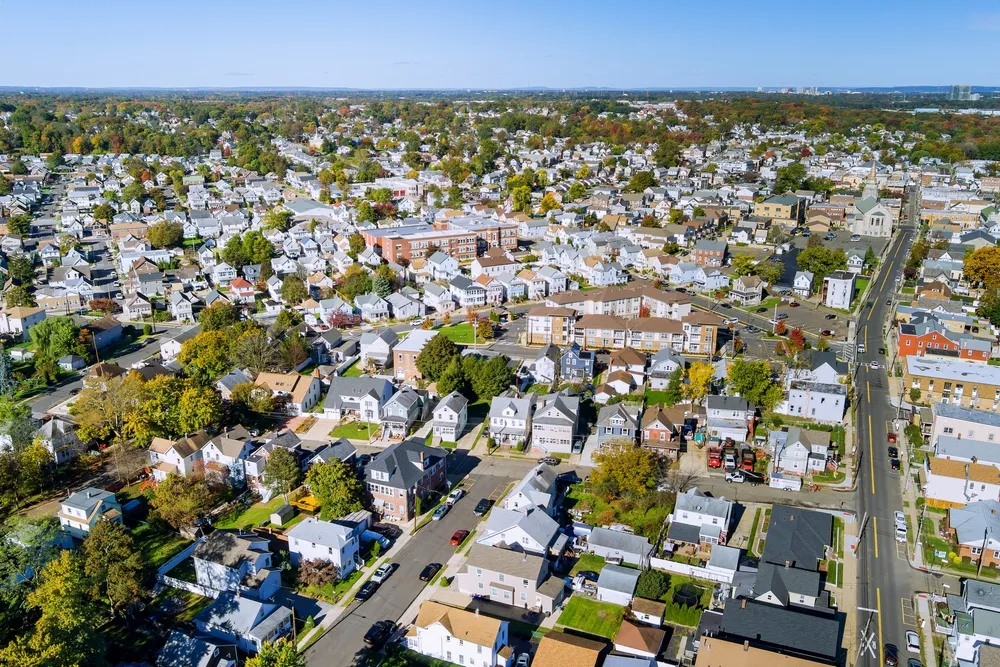
The math for buying a home in northern New Jersey’s commuter belt has shifted considerably over the past few years. In Bergen and Hudson County, the stretch of suburbs and urban centers sitting one to five miles across the Hudson River from Manhattan, median sale prices in the northern Bergen County suburbs now land between $850,000 and $900,000, according to Scott Selleck, Broker / Sales Associate and Team Lead at The Selleck Group, Keller Williams City Views Realty, who has sold over 500 transactions in the area since 1993. With mortgage rates hovering near six and three-quarters percent, a buyer putting $150,000 to $200,000 down still faces a monthly payment approaching $7,000. The result is a market where dual-income professional households and international cash buyers dominate, and entry-level purchasers face fierce competition for limited stock.
Selleck describes a market running on one to two months of inventory, with homes routinely selling 15 to 20 percent over asking price.
Who’s Buying and What It Takes
The buyer pool breaks into distinct tiers. At the entry level, towns like Ridgefield Park, where homes start around $550,000 to $600,000, young dual-income couples are stretching to compete. Selleck describes a recent transaction involving first-time buyers in their mid-twenties who had to escalate from a $535,000 ask to $570,000 to secure a property, putting 20 percent down in a competitive bidding environment.
At the next tier, executive couples are purchasing in towns like Leonia, where a recent sale closed at $980,000. Qualifying at that price requires household income well above $300,000. “You got to be making together over $ 300,000 to be able to qualify,” Selleck says.
International cash buyers represent another significant segment. The area’s proximity to New York’s financial district draws professionals relocating for corporate headquarters roles, and many transact without financing.
Condition Determines Speed of Sale
What separates a seven-day sale from a listing that lingers comes down to condition and pricing accuracy. In Leonia’s single-family market, move-in-ready homes at market price trigger immediate bidding wars. Older colonials needing $150,000 to $200,000 in renovation, estate sales, and properties where aging owners deferred maintenance sit unless priced to reflect that gap.
“Buyers in this era now, a lot of them don’t want to do a lot of work if they don’t have to,” Selleck says. “They’ll pay a premium to purchase a home that’s more turnkey.”
Fort Lee presents a more complicated picture. Roughly 50 to 60 percent of its housing stock consists of condos and co-ops, high-rise and mid-rise buildings, many dating to the 1980s. The single-family segment remains strong, but the condo market is softer because HOA fees and special assessments inflate carrying costs unpredictably. Two buildings in Fort Lee can look identical and carry the same sale price but impose entirely different monthly costs depending on how they are managed, according to Selleck.
The Investment Calculus
For investors considering Bergen and Hudson County, returns are compressed. Bergen County’s cap rates run around 4 to 5 percent, a function of high acquisition costs in a market where per-unit prices have climbed from $30,000 two decades ago to $85,000 to $150,000 today.
Hudson County’s multifamily stock offers somewhat better prospects. The area south of Bergen County features a more urban market where 60 percent of residents live in apartment buildings of 10-plus units. But Selleck, who spent three years selling apartment buildings after opening a Marcus & Millichap office in Fort Lee, is candid about the opportunity cost: “You can probably make 6 to 8 percent in a passive portfolio without managing anything. If you go pick up one of these investments, you have to do work to it, you have to manage it, you have to run it.”
The stock market’s recent strength compounds the challenge. An investor deploying capital into a Bergen or Hudson County multifamily property must accept that the return may not exceed what a passive portfolio delivers, while requiring active management, maintenance, and tenant oversight.
Seller Concessions Are Appearing
Late summer has introduced some softening. Selleck estimates 30 to 40 percent of sellers are looking at price reductions to avoid carrying properties into winter. But the pattern is geographic rather than uniform. Within 40 minutes of Manhattan, conditions remain aggressive and seller-favorable. Move further west toward Sussex County or south past Hudson County, and sellers must offer more flexibility.
“There are pockets that are acting as strong as two years ago, and it’s as tight of inventory as two years ago, and the sellers don’t have to give concessions,” Selleck says.
The New Jersey-to-Florida Pipeline
One reliable transaction pattern involves long-term Bergen and Hudson County homeowners, typically empty nesters with 20-plus years of equity, selling and relocating to Florida for tax savings. The calculus looks attractive on paper: sell a paid-off home in New Jersey, buy something comparable in northern Florida for meaningfully less, pocket the difference, eliminate state income tax, and cut property taxes substantially.
But homeowners insurance in Florida, wind, flood, and standard coverage combined, can run significantly more annually than in New Jersey, narrowing the savings considerably. Actual insurance and tax costs vary widely by county, elevation, and roof age, so buyers should confirm current numbers with a licensed Florida insurance agent and their CPA before running the math. “You got to look at the numbers and stack them next to each other because although you’ll save on property taxes, your overall payment, the homeowners insurance and the wind insurance is going to eat into that,” Selleck says.
Selleck runs what he calls a NJ to FL Transition Plan for clients considering the move, a concierge breakdown coordinating a CPA, insurance company, mover, and Keller Williams partners in Florida to lay out the real numbers side by side. The goal is to ensure clients understand the actual net savings before committing rather than making assumptions based on headline tax differences alone.
About the Expert: Scott Selleck is a Broker / Sales Associate at The Selleck Group, Keller Williams City Views Realty, covering Bergen and Hudson County, New Jersey, since 1993.
This article is based on information provided by the expert source cited above. It is intended for general informational purposes only and does not constitute legal, financial, or real estate advice. Readers should conduct their own research and consult qualified professionals before making any real estate or financial decisions.