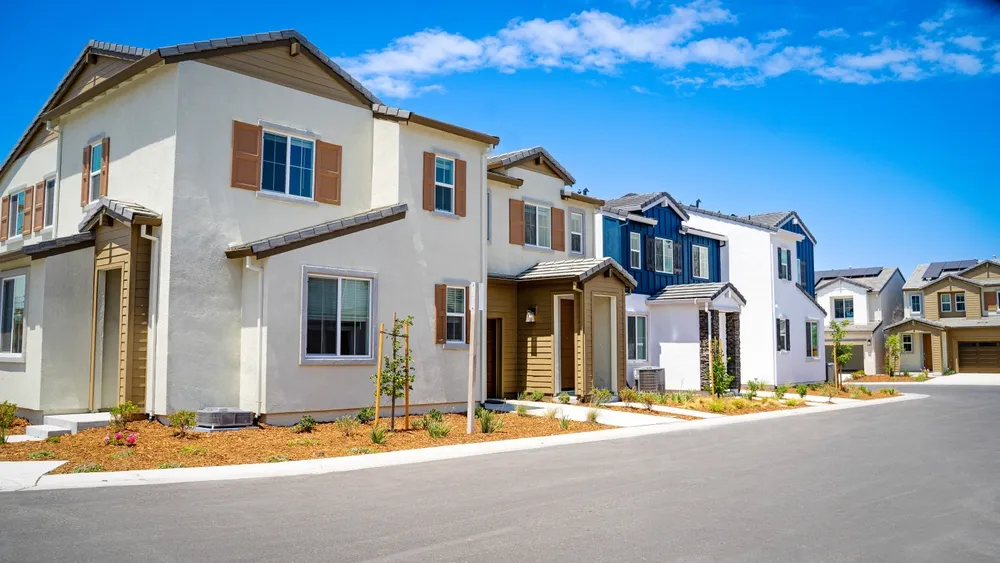
Bakersfield’s housing market sits in an unusual position for California: median prices around $400,000, rising inventory, and builders actively offering credits and rate buydowns to attract first-time buyers. The result is a market where resale sellers who ignore what’s happening next door, sometimes literally next door to a new construction community, are watching their listings sit.
Ernesto Osuna, Broker/Owner of D Best Realty Inc., a Bakersfield-based firm founded in 1985 that offers brokerage, property management, and financing services, says the dynamic is straightforward. Buyers comparing a resale home to a new build offering $20,000 in credits will choose the builder unless the resale seller matches those terms. “Now that homeowner in a way is forced to also offer incentives,” Osuna says. “Or else their home is probably not going to sell.”
Builders Are Setting the Terms
The competitive pressure is direct. Builders in Bakersfield are offering credits of $20,000 or more, allowing buyers to buy down their interest rate and reduce monthly payments on a brand-new home. For first-time buyers already stretched by rates in the 6% to 7% range, that math is hard to ignore.
Osuna says resale sellers who price correctly and present a well-maintained home can still sell quickly, even in this environment. But those who push above what comparable sales support find themselves losing time and leverage. “If you have a nice house that’s priced well, it’s going to sell right away, and you won’t need to give out any concessions,” he says. The problem is that many homeowners want more than their home is currently worth, and the listing sits longer than expected as a result.
Once a listing passes 30 or 40 days, buyers gain negotiating power. Osuna says his team actively coaches buyers to look for those aging listings as opportunities to request closing cost credits or price reductions.
Price Still Determines Speed
Rather than pointing to specific neighborhoods or property types that move faster, Osuna frames the market’s sorting mechanism as almost entirely price-driven. Homes priced below the median – in the $200,000 to $300,000 range – tend to sell more quickly. Desirable west-side zip codes like 93311, 93312, and 93314 attract demand because of school quality, amenities, and proximity to shopping. But even in those areas, overpricing stalls a sale.
“If you have a home in a very desired location, but it’s overpriced, it’s not going to sell,” Osuna says.
For resale sellers competing against builder incentives, the implication is clear: pricing at or slightly below comparable sales is no longer optional. A home priced above what buyers are already paying in the same neighborhood will lose to a new build offering credits, regardless of location.
A Flat Market With Early Stress Signals
Prices and rates in Bakersfield have held steady over the past 12 months, with no meaningful movement in either direction, according to Osuna. He expects that stability to persist for at least the next year, though he is cautious about predictions beyond that window. “We’re analyzing the market every three months,” he says. “But we did that for the last 12 months, and it’s just stayed flat.”
One trend he is watching: a rise in short sales from owners who purchased between 2023 and 2025 and now find themselves without enough equity to sell. Their home values have not appreciated enough to cover the cost of a sale. “They want to sell it, and they don’t have enough equity,” Osuna says. “So now they’re either upside down on the equity, having to pay some out-of-pocket expenses, or we always explore the option: can you rent this home and then keep it for another three, five years and then sell it?”
If short sales increase further, they could add downward pricing pressure in neighborhoods where recent buyers are concentrated, compounding the challenge for resale sellers already competing with builder incentives.
What Out-of-Town Investors Miss
Bakersfield draws relocators from Los Angeles, Fresno, and coastal California, along with investors looking for long-term rental income. Osuna says the most common mistake he sees from investors is being attracted to a low purchase price without running the rental math.
“You may be focused on the fact that you have a property here that’s selling at $350,000 and you’re attracted to that number,” he says. “But then you can’t get the money back in the rents because the tenant probably lived there for 10-plus years and the rents are typically lower than what they should be.” Investors need to verify that rental income covers the mortgage before committing, regardless of how appealing the purchase price appears.
The same discipline applies to relocating families. Bakersfield’s central location, roughly 90 minutes from both Los Angeles and the coast – and its slower pace attract buyers priced out of larger metros. But Osuna says the city’s appeal depends on understanding what it offers rather than assuming it mirrors those larger markets.
The Rate Waiting Game
For buyers weighing whether to hold off for lower rates, Osuna offers a counterpoint. A rate drop would bring a wave of competing buyers into the market simultaneously, pushing prices up. “If you’re waiting for the rates to go down, just be ready to compete against everybody else for that same house,” he says.
His framing resets the calculation: the monthly payment at today’s rate, on today’s price, may be more favorable than a lower rate applied to a higher purchase price in a more competitive market. Buyers who can afford current payments and find a home that meets their needs face less competition now than they likely will if rates decline.
In a market where builders are subsidizing buyer costs, inventory is rising, and sellers are granting concessions on aging listings, the buyers with the most leverage are those willing to act while others wait.
About the Expert: Ernesto Osuna is a Broker/Owner of D Best Realty Inc., a Bakersfield, California firm founded in 1985. The firm offers brokerage, property management, and financing services to clients throughout the Bakersfield area.
This article is based on information provided by the expert source cited above. It is intended for general informational purposes only and does not constitute legal, financial, or real estate advice. Readers should conduct their own research and consult qualified professionals before making any real estate or financial decisions.