The typical Austin homebuyer profile has shifted. While the city’s reputation as a tech magnet still holds, a growing segment of the market is driven not by young professionals chasing career growth but by empty nesters and retirees assembling households under one roof, buying homes large enough to accommodate adult children and grandchildren who aren’t yet in a position to buy on their own.
This pattern is reshaping where and what people buy in the Austin metro, pushing demand toward outlying communities where square footage is affordable enough to support three generations, and away from Central Austin, where $725,000 buys 1,100 square feet. According to Kelli Anderson, a Realtor with Gregg’s Team Real Estate Group at Keller Williams who works primarily in the Lakeway area northwest of Austin, Austin has recorded 3,259 sales so far in 2026, an 8.3% increase over the same period last year, suggesting the market is active even as buyer caution rises.
Affordability Is Pulling Demand to the Edges
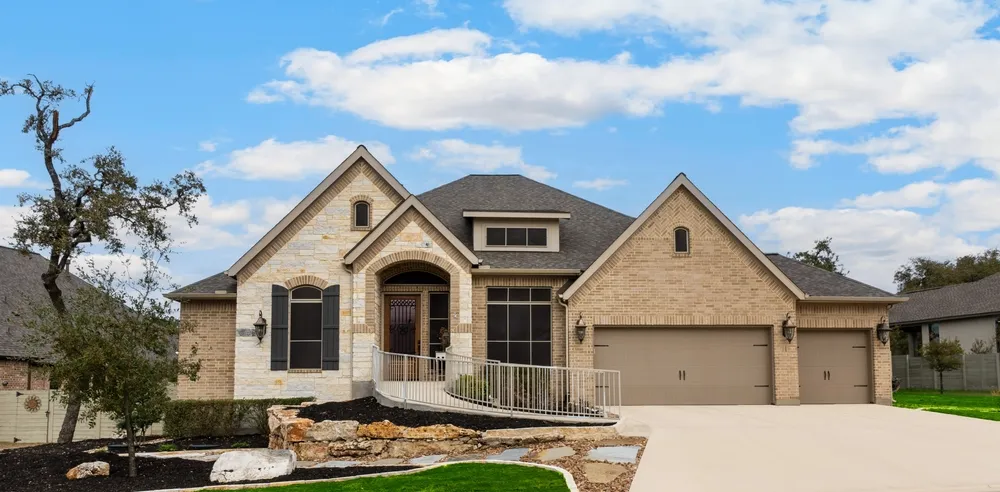
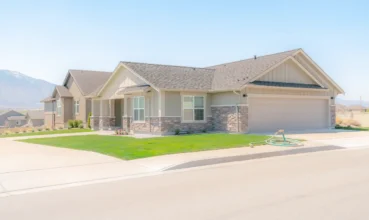
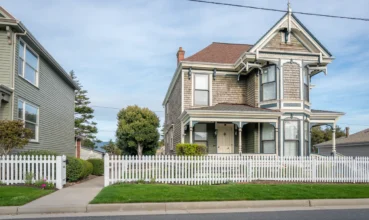
The price gap between Central Austin and its surrounding communities is wide enough to change the type of property a buyer can afford. A multigenerational household looking for space gravitates toward areas like Kyle to the south or Leander to the north, both roughly 30 minutes from downtown, where the same budget stretches further.
“The majority of them want to stay just on the outskirts of Austin and get something a little bigger so that there’s room for their family to come back,” Anderson says.
A recent deal she closed in Kyle, a $750,000 home for empty nesters whose daughter and three grandchildren are living with them, illustrates the calculation. The buyers prioritized space and affordability over proximity to the urban core. Anderson notes that Leander is still in early growth stages and remains affordable relative to the metro, while East Austin and Westlake are the areas she sees outperforming the broader market.
For buyers on fixed retirement income assembling multigenerational households, the ability to find a home 30 minutes outside the city center that accommodates multiple generations at a fraction of Central Austin prices is what makes the purchase possible at all.
Sellers Are Giving Ground
The leverage has shifted toward buyers. According to Anderson, 40% of Austin homes have experienced price reductions in the last month, with cuts ranging from 3 to 6% depending on days on market. Price reductions aren’t the only concession sellers are making.
“Anytime I’m representing a buyer, I’m always going in asking at price with up to $20,000 in concessions,” she says. “We may not get the whole $20,000, but right now in this market, we’re at minimum getting $10,000 to $15,000 in concessions.”
For multigenerational households stretching budgets to accommodate larger homes, these concessions can cover closing costs or buy down interest rates, a direct reduction in monthly carrying costs that matters more on a fixed income than a slightly lower purchase price would.
New Construction Has Stalled
One dynamic specific to Austin right now is the intersection of paused new construction and a wave of nearly new homes entering the resale market. Anderson says builders have largely stopped new starts because existing inventory is sufficient for current demand, and some are discounting remaining units to move them.
At the same time, homeowners who bought new construction during 2021 and 2022 are now listing those homes, properties only a few years old, selling at prices below what new construction would cost today. Anderson compares it to buying a recent-model-year car versus a brand new one: “It’s kind of like buying a 2024 car versus buying a 2026. The 2026 car is going to cost so much more, but a 2024 is practically brand new.”
Resale inventory of recent vintage effectively substitutes for new builds at a lower cost, keeping buyer options open even as construction pipelines slow. For multigenerational buyers who need larger homes, this means more choices in the size and condition range they’re targeting without paying the premium attached to ground-up construction.
The Younger Cohort Isn’t Buying
While empty nesters and retirees are active, Austin’s 20-to-28-year-old population is largely sitting out the purchase market. Anderson describes this cohort as “very skeptical about buying right now” and notes that interest rates approaching 7% have made them more cautious. She works with many of them as lease clients instead.
One recent conversion illustrates her approach: a lease client willing to pay $5,000 a month in rent who ultimately purchased a $725,000 downtown condo after Anderson walked through the equity-building comparison. “That $5,000, you’re putting it back in your pocket instead of pouring into somebody else’s equity,” she says.
This generational divide, older buyers actively purchasing while younger ones rent – reinforces the multigenerational household trend. When adult children can’t or won’t buy, parents accommodate them by purchasing larger homes on the metro’s edges.
Volume Is Up, Despite the Caution
The broader mood is cautious but not frozen. Anderson describes the market as balanced, with enough inventory for buyers and enough demand to keep sales moving. “People are still buying despite the interest rates,” she says. “The best time to buy is now, not a year from now when the prices are even higher.”
Austin’s prices remain higher than Houston, Dallas, or San Antonio, according to Anderson – comparable only to Dallas – which makes the surrounding communities’ relative affordability even more significant for buyers stretching to accommodate larger households.
Looking ahead, Anderson says she is watching which companies bring large facilities to the Austin area, citing Tesla’s planned center as one example, and tracking whether housing development follows those employment hubs over the next five to ten years. “Investors are looking specifically for those particular areas to make sure that they’re spending their money in the right place and that it’s going to bring long-term benefits,” she says. If those facilities materialize, the communities positioned near them stand to see the same growth trajectory that areas like Leander are experiencing now, creating the next wave of affordable options for buyers who need space more than proximity.
About the Expert: Kelli Anderson is a Realtor with Gregg’s Team Real Estate Group at Keller Williams, working primarily in the Lakeway area northwest of Austin, Texas.
This article is based on information provided by the expert source cited above. It is intended for general informational purposes only and does not constitute legal, financial, or real estate advice. Readers should conduct their own research and consult qualified professionals before making any real estate or financial decisions.