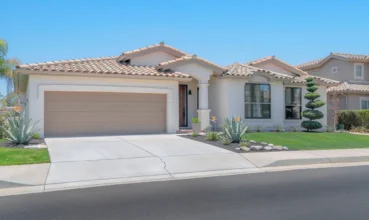
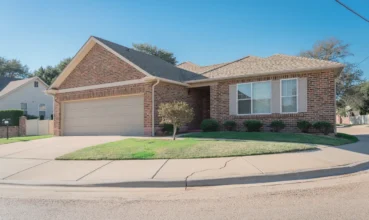
The suburbs southwest of Dallas have quietly become one of the more accessible entry points into Texas homeownership. While much of the national conversation around real estate remains focused on affordability challenges and rate uncertainty, markets like Duncanville and Cedar Hill are drawing steady buyer interest, driven by competitive price points, growing inventory, and a notable change in buyer psychology that has been building for the past year.
Steven Nieves, founder of The Real Estate Market Experts, has been working this corridor for nearly three decades. His firm, which went independent in 2015, focuses primarily on South Dallas and South Ellis County, with a particular emphasis on guiding first-time buyers through the purchase process. From his vantage point, the market in mid-2026 looks meaningfully different from where things stood twelve months ago.
A Market Finding Its Footing
The most notable change Nieves points to is buyer confidence. For much of the past two years, many prospective buyers held out hope that mortgage rates would return to the historic lows of 2020 and 2021. That wait-and-see posture has largely given way to acceptance.
Buyers now recognize that rates won’t return to pandemic-era levels and that prices continue to climb. “There’s a lot of confidence in the market now to purchase homes,” Nieves says.
The area’s price structure supports that confidence. The average transaction in Nieves’ core market runs between the high three hundreds and the mid four hundreds, a range that keeps the buyer pool relatively broad and sustains healthy turnover. At roughly three and a half months of supply, the market still favors sellers at the entry level, while giving buyers more negotiating room as prices climb toward the $600,000 range and above.
Move-Up Buyers Are Done Settling
Beyond first-timers, Nieves has observed a meaningful uptick in move-up activity. Homeowners who purchased during the competitive 2020–2021 market, often making compromises on space, layout, or location just to secure something, are now making the trade they originally wanted.
These buyers are selling to get a bigger yard, switch from a two-story to a one-story, or add living space. “Move-up buyers are actually buying what they want instead of settling on what they did the last four or five years,” Nieves says.
This segment is transacting even with rates above historical norms, suggesting that lifestyle fit is outweighing financing friction for buyers who already have equity to work with.
Relocation Demand Filling the Gap
Remote-work relocation continues to bring new households into the southwest Dallas suburbs. As distributed work arrangements have persisted into 2026, buyers from higher-cost metros are migrating toward markets where their dollar stretches further.
The value-per-square-foot equation, combined with Texas’s lack of a state income tax, has made the area a practical choice for families seeking space and affordability. “We’re seeing a lot of relocations, people working from home moving to our market because you get more house per square foot,” Nieves says. Property tax rates tend to catch out-of-state buyers off guard initially, but the overall cost calculus still works in the area’s favor.
Where the Market Slows Down
Not every price tier is moving at the same pace. Homes priced above $750,000 are sitting longer, with supply in that tier stretching to seven or eight months. The more immediate pressure point, however, is the $500,000-$600,000 range for smaller or spec builders who lack the incentive budgets of national homebuilders.
National builders in this price range are paying all closing costs, buying down rates, and offering $20,000 in upgrade incentives. Nieves says his team spends significant time educating resale sellers that they must compete with these offers. “When they’re in the same price point as builders five or ten miles away, you have to match their incentives,” he explains.
Sellers who adjust pricing or offer comparable concessions are moving their properties. Those who don’t are watching the days-on-market climb. For spec builders without the financial flexibility of a Lennar or D.R. Horton, the competitive gap is proving difficult to bridge.
Creative Financing as a Closing Tool
One area where Nieves’ team has developed a clear operational edge is in financing solutions for buyers who don’t fit conventional lending profiles. Rate buydown programs, including 3-2-1 structures and first-year rate locks set one percent below market, have helped make monthly payments more manageable for buyers entering now rather than waiting.
For buyers with non-traditional income documentation, debt-service coverage ratio loans, which qualify borrowers based on a property’s rental income potential rather than personal earnings, have opened doors that standard underwriting would close. Nieves explains that with 20% down and a home that appraises at a rental market rate sufficient to cover the mortgage, approval is based primarily on assets and credit. The firm also works with ITIN-based lending programs for buyers without Social Security numbers who can demonstrate two years of tax payment history, with down payment requirements starting at three and a half percent.
The practical impact of knowing these programs showed up in a recent transaction where a deal nearly collapsed over a plumbing issue. Rather than let it fall apart, Nieves brought in his own contractors to complete the work at reduced cost, keeping the deal alive for a single mother purchasing her first home.
A Full-Service Model Built Around Client Outcomes
That transaction reflects a broader service model the firm has built over time. Beyond brokerage, the team maintains a network of contractors, roofers, and remodeling professionals, allowing them to intervene when a property’s condition threatens a deal or a client’s financial position.
A past client who purchased a home in 2014 for $150,000 illustrates the approach. After losing her job, she faced the prospect of selling a home that needed a roof, HVAC replacement, paint, flooring, and fixtures. As-is, the property would have fetched around $170,000. Real Estate Market Experts fronted the full cost of the renovation, covered a mortgage payment while the work was completed, and sold the home for $320,000 in a single weekend. After paying off her remaining mortgage balance of $114,000, she walked away with $77,000 more than the as-is sale would have produced.
The Outlook for the Rest of 2026
Looking ahead, Nieves sees the market continuing along its current trajectory, with modest improvement possible if rates ease further. The entry-level segment remains the most active, and investor appetite for buy-and-hold products has cooled somewhat, creating less competition for owner-occupant buyers in the sub-$400,000 range.
For investors still looking to deploy capital in the area, the guidance is straightforward: target three-bedroom, two-bath homes with a two-car garage priced at or below $400,000, price and present them correctly, and expect a contract within 60 days.
The southwest Dallas suburbs won’t make headlines the way some higher-profile Texas markets do. But for buyers priced out of those markets, and for the professionals who know how to navigate the local landscape, the fundamentals here remain quietly solid.
About the Article: Steven Nieves is the Founder and Lead Realtor at The Real Estate Market Experts, LLC, focused on residential real estate in South Dallas and South Ellis County, Texas. His practice emphasizes specialized mortgage program knowledge, including DSCR loans, ITIN financing, and rate buydown structures for self-employed, investor, and immigrant buyer segments.
This article is based on information provided by the expert source cited above. It is intended for general informational purposes only and does not constitute legal, financial, or real estate advice. Readers should conduct their own research and consult qualified professionals before making any real estate or financial decisions.