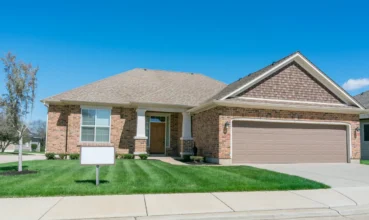
Look at a home listing in Des Moines today, and AI has likely influenced everything from the price to the photos and description. If you’re applying for a mortgage or screening a rental, algorithms are involved there as well.
Scott Wendl, broker/owner of RE/MAX Precision in Des Moines, has worked in the market for 30 years and now relies on AI almost daily. He uses it to estimate home values and draft client emails, but emphasizes that AI is just a tool. “It’s great just to help out,” Wendl says, but it works best when combined with local expertise and an understanding of its limitations.
Here’s how AI is changing the way homes are bought, sold, and rented in Des Moines — and what buyers, sellers, and renters need to know.
Pricing Homes
AI-powered pricing tools analyze thousands of recent sales and appreciation rates to suggest listing prices within seconds. Wendl regularly tests these tools by running scenarios, such as estimating today’s value for a home bought six years ago with 4% annual appreciation. He finds that AI often comes close to current market values, but he never relies on a single estimate. Instead, he compares results from multiple sources — including Zillow, Realtor.com, Redfin, and the National Association of Realtors’ RPR tool — to ensure the number makes sense.
AI speeds up the pricing process and provides a data-driven starting point, but it can overlook important context, such as a busy street, upcoming construction, or an awkward layout. Wendl advises always confirming AI-generated prices with a local agent or appraiser who understands the neighborhood.
Marketing Listings
AI now generates listing descriptions, selects photos, and creates virtual staging with minimal input. Listings appear more polished and consistent than ever before. However, this uniformity can make it harder for buyers to spot red flags or distinguish truly exceptional homes from those that are well presented online.
Wendl notes that when every listing is perfectly worded, and every room looks professionally staged, it’s more difficult to tell which homes stand out for the right reasons. He recommends visiting homes in person, asking detailed questions, and not relying solely on online listings to make decisions.
Financing: Quicker Pre-Approvals
AI-driven pre-approvals can be completed in minutes, and some lenders use algorithms to review nontraditional income sources such as gig work. This can help buyers who might otherwise struggle with traditional underwriting.
However, Wendl cautions that AI can miss financial context a human underwriter would catch, such as one-time expenses or specific explanations for credit history issues. He advises reviewing your own credit report and financial documents before applying, and requesting a manual review if something is flagged incorrectly.
Rental Screening: Speed and Risk of Error
Des Moines landlords are increasingly using AI to screen rental applications and run background checks quickly. This speeds up the process and helps fill vacancies faster. However, automated screening tools can make mistakes or reinforce hidden biases. A renter could be flagged as a risk due to a data error, potentially costing them an apartment until a human intervenes.
Applicants should check their own credit and background information before applying and request a manual review if denied for reasons that don’t make sense.
Search Tools: Better Matches
AI-powered search tools let buyers describe what they want — such as “three bedrooms, walkable to coffee shop, under $500,000, needs a yard” — and receive a shortlist of relevant homes. This approach saves time and can highlight properties that might be missed with traditional keyword searches.
However, AI cannot capture neighborhood quirks, noise levels, or the feel of a space. Wendl recommends using AI tools to narrow your search, but always visiting homes in person before making a decision.
Where Human Expertise Still Matters
AI has improved efficiency, but it does not replace experience or local knowledge. Human agents excel at:
- Spotting issues AI misses, such as unusual layouts, future development plans, or subtle neighborhood drawbacks.
- Negotiating effectively, understanding when to push or walk away, and reading the other side’s intentions.
- Personalizing the search and finding creative solutions when deals run into obstacles.
Your AI Checklist: How to Stay Informed and Protected
Before relying on AI for your home search, loan, or listing, take these steps:
- Double-check price or rent estimates with a local agent or a second opinion.
- Ask how your data is used and whether you can opt out.
- Review your credit and background information for errors before applying for a loan or rental.
- Look for clear disclosures about how AI makes decisions, especially for screening or pricing.
- If you see patterns or results that don’t make sense, request a manual review.
The Bottom Line
AI is reshaping how homes are found, priced, and sold in Des Moines — often making processes faster and more efficient, but sometimes introducing new risks. The best results come from blending technology with local expertise. Use AI to work smarter and faster, but rely on human judgment to make the final call.
About the Expert: Scott Wendl is Broker/Owner of RE/MAX Precision in Des Moines, Iowa. With 30 years in the market, he focuses on first-time buyers, resale transactions, and investment properties. He has served as president of both the local and state REALTOR boards and consistently ranks among the top 2% of agents in Des Moines.
This article is intended for informational purposes only and does not constitute legal, financial, or investment advice. The views and opinions expressed herein reflect those of the individuals quoted and do not represent an endorsement of any company, product, or service mentioned. Readers should conduct their own due diligence and consult qualified professionals before making any investment decisions.