

While many investors remained skeptical of San Francisco’s recovery prospects throughout 2024, one multifamily investment firm was already positioning itself to capitalize on the marke...

From Construction to Physician Wealth: How One Investor Found His Niche in High-Income Real Estate Education

Written by:
Date:
25 Aug 2025
Share via Facebook

Share via Linkedin

Share via X

Copy to clipboard

The real estate investment landscape has changed significantly over the past two decades, with specialized niches emerging to serve distinct professional communities. Among these, physician-focused real estate investing has gained traction, driven by the unique financial profiles and challenges facing medical professionals.
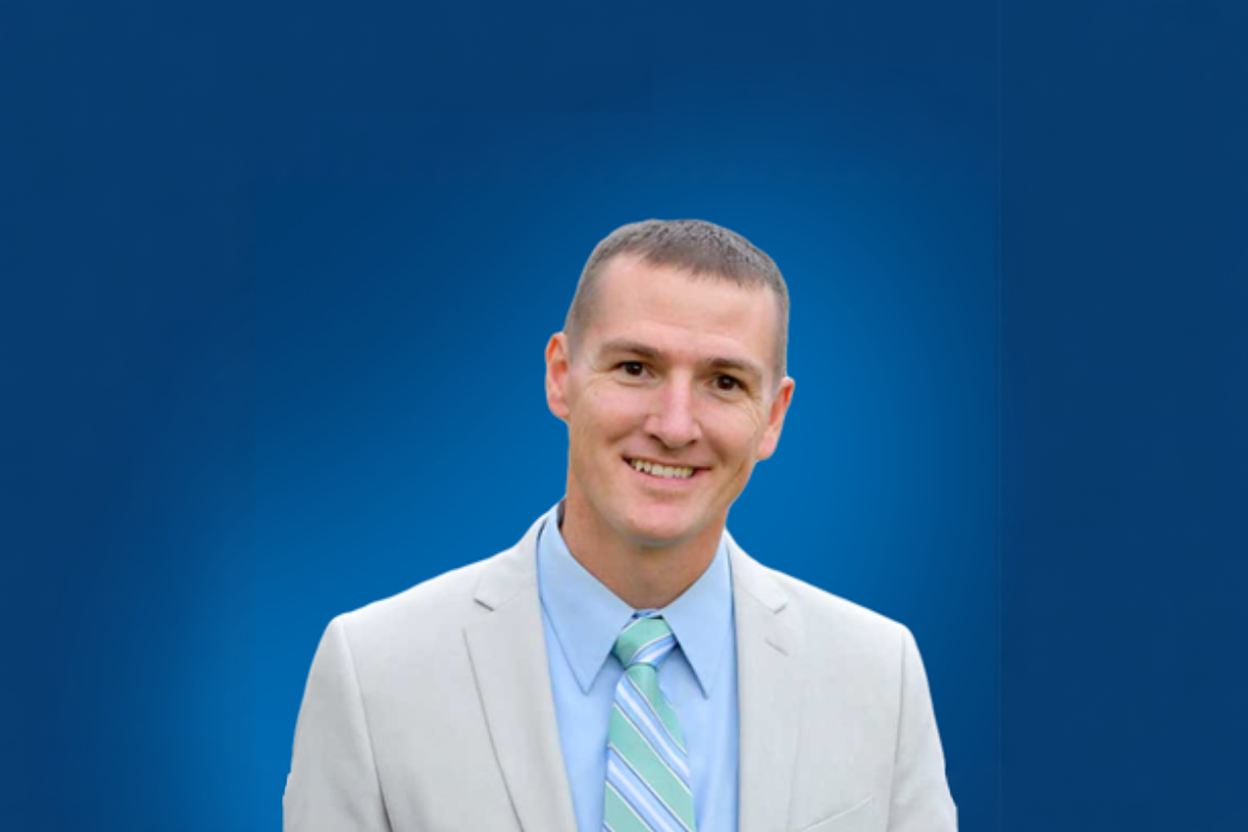
Brett Riggins, co-founder of Physician Wealth Systems, represents this shift. His journey from construction engineering to real estate business leader illustrates how market disruptions can create opportunities for those willing to adapt their business models.
Learning Through Market Turbulence
Riggins’ entry into real estate came at one of the most challenging periods in recent market history. “I bought my first house in ’07, in ’08, which was right in the States,” he recalls. “There was a massive shift in the market, and I had bought my first rental at that time.”
What was intended as a simple flip became a two-year education in market volatility. The property was a foreclosure that seemed straightforward, clean out the trash, cut the grass, and sell. Instead, everything that could go wrong did. “Even the school where I had bought this house shut down. They closed their doors. There’s no longer a school in the city where I had bought this house.”
Rather than walking away, Riggins held onto the property and learned property management the hard way. “I learned how not to be a property manager with that first one—screening tenants, collecting money,” he explains. The experience provided foundational knowledge that would prove invaluable years later.
Building Systems and Scale
After that initial setback, Riggins took nearly a decade to re-enter the market, returning around 2016 with a more systematic approach. “From that point on, we started investing ourselves. We got the right people around us. Learned about OPM, other people’s money, how to communicate that properly, systems, processes, procedures, SOPs.”
This systematic approach enabled rapid scaling. “We were doing six flips at a time, ultimately taking these bubbles of capital and leveraging ways for us to hold some of these properties, cherry pick them and build our own portfolio through that process.”
The business grew to include 13 employees and nationwide operations, with six-figure monthly marketing budgets supporting wholesale operations across multiple markets.
Market Disruption Creates Opportunity
The turning point came when interest rates doubled in a 12-month period, fundamentally altering the investment landscape. “We watched the cost of money double, literally double in 12 months. That shook our industry,” Riggins notes.
The impact was immediate and severe. Hedge funds that had been reliable buyers began dropping contracts, sometimes leaving $10,000 on the table without hesitation. “We had six-figure wholesale contracts that were dropping, and they would drop and leave 10k on the table, no problem, but that hurt us.”
This market disruption forced a strategic pivot. Riggins realized that some of his private money lenders were physicians who consistently asked about accessing similar deals. “They would always ask me, ‘Hey, Brett, where can we get deals like this?’ Because it was just debt relationship, double digit return secured by local real estate.”
The Birth of Physician Wealth Systems
The solution emerged during a drive to a mastermind event. “I had the idea of, what if we just took our machines, our systems, our processes, our experience, and created this opportunity to plug the physicians in—high income earners—into what we’re already doing.”
This approach solved multiple problems simultaneously. Instead of constantly seeking new buyers in different markets, the physicians became the buyers. The business model shifted from wholesale to full-service BRRRR (Buy, Rehab, Rent, Refinance, Repeat) implementation.
“We were targeting to do 12 properties in 12 months for each client,” Riggins explains. “We would find it, we would acquire, we would put it in paper, we would hold basically wholesale it, assign it to them at the table, control all the renovations, get it stabilized, get it with the property management company, get the tenant in there, connect them with a resource for lending, get it refinanced.”
The Physician Investment Challenge
Working with physicians revealed unique challenges that distinguish them from other high-income professionals. “Time is definitely one, being targeted by money managers,” Riggins observes. However, the most significant difference lies in risk tolerance and decision-making processes.
“If you think of a physician, they’re trained to do A, B and C. If something happens in A, I got to go to B. There’s steps that has to happen in order to mitigate risk, because our lives depend on their decision making, their ability to follow process, analyze systems, analyze information and create a solution that keeps us healthy and keeps us alive.”
This systematic approach to risk management, while essential in medicine, can create challenges in real estate investing. “As an entrepreneur and as a real estate investor, that’s a little bit different. I can take these decisions and directions, and sometimes I have to act without all the information that I need to have 100% known outcome.”
Market Performance and Targets
Physician Wealth Systems operates with specific performance metrics designed to appeal to high-income professionals seeking passive income. The company targets 12% adjusted returns, accounting for 5% maintenance, 5% vacancy, and 10% property management fees, along with insurance and taxes.
“We’re targeting $200 per door per month on that net adjusted, taking all these things away,” Riggins explains. These targets require precise acquisition strategies where “acquisitions are only math, it comes down to equation for us.”
“The business model proved sustainable but intentionally limited in scale. Currently working with eight clients,” Riggins notes, “It wasn’t a lot that we were working with, they just didn’t make sense to go bigger for us.”
Regional Market Dynamics
The company’s operations span Michigan, South Carolina, and Tennessee, with Memphis serving as a major market. However, recent demographic shifts have created new challenges.
“The market has, I believe, been affected by the exodus, the mass exodus of potentially the Hispanic culture in that area, and that has drastically affected the rental market,” Riggins observes. “Now there are so many rentals available, all of a sudden there’s so many rentals available, driving down rent prices.”
This shift demonstrates how local demographic changes can rapidly alter investment fundamentals. “This is also going to drive down market prices, the sale values, because if we have investors who say, ‘Hey, this property is, I’m not making any money on the property, sell it.'”
Interest Rate Sensitivity
The business model’s sensitivity to interest rates reflects broader market dynamics. “A half of a point in interest rate drastically affects what we can offer on the front end,” Riggins explains. This sensitivity creates both challenges and opportunities.
Looking ahead, he anticipates that even modest rate decreases could unlock significant activity. “If I can do my DSCRs at 6.5%, I mean, my whole, I’m turning my whole portfolio. I’m burning again, my buying power comes up.”
The psychological impact may be as important as the mathematical one. “Maybe it’s more of a psychological thing where, okay, I can get off my hands. I don’t have to be afraid of the FOMO of what’s going to happen.”
Operational Focus Over Market Timing
Rather than worrying about regulatory changes or market disruptions, Riggins focuses on operational excellence. “The thing that would keep me up at night would be as an operator, how are my assets performing? As a business owner, how is my business performing?”
This philosophy extends to property management oversight. “Property managers need to be managed. How is that happening?” The emphasis on systems and accountability reflects lessons learned from early experiences.
“Real estate makes so much money that you have no idea how much money you’re losing,” he notes. “My business doesn’t rely on the government, my assets don’t rely on the government or regulatory change or interest rate or none of that. It relies on me as an operator.”
Educational Outreach Through Media
The Real Estate Mogul MD podcast serves as both a business development tool and educational platform. “It was my ability to connect with physicians, right to come across to say, ‘Hey, I just want to learn where can we bring you value.'”
The show features not only physician investors but also capital raisers, mindset coaches, and entrepreneur coaches. “It’s just this way of gathering all this information, bringing the worlds together and help share the experience and stories of other people.”
Future Market Outlook
Looking ahead six to twelve months, Riggins anticipates continued market stagnation until psychological barriers break down. “What I’d love to see is people getting off their hands. I know that there’s money out there to be spent.”
The key catalyst may be modest interest rate relief. “It could be a quarter, it could be a half. Would be amazing in the next 12 months when we see the world come back to that.”
For real estate professionals and investors, Brett Riggins’ evolution from construction worker to specialized investment advisor illustrates how market disruptions can create opportunities for those willing to adapt their business models and serve underserved niches. His focus on systems, relationships, and operational excellence provides a template for building sustainable investment businesses in volatile markets.
The physician-focused real estate investment space represents a growing segment where specialized knowledge and tailored service models can command premium positioning, showing that successful real estate businesses often emerge from solving specific problems for defined market segments.
Similar Articles
Explore similar articles from Our Team of Experts.