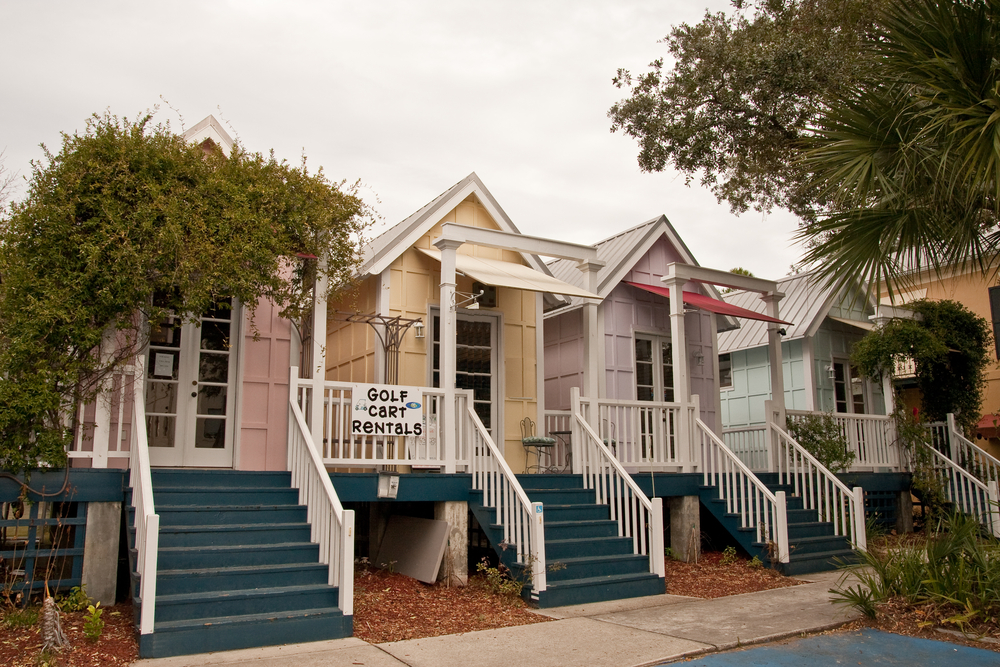
Skyrocketing insurance premiums in Florida are wiping out cash flow on rental properties that would otherwise be sound investments. John Bastidas, President and Founder of DSCR Investor Loanz, says the insurance crisis has changed the investment landscape in one of the country’s busiest real estate markets. For many investors, the numbers no longer work. They are either leaving Florida or turning to niche strategies, such as buying hurricane-damaged properties at deep discounts.
“In Florida specifically, it’s been hit the hardest,” Bastidas says. “You haven’t seen a lot of people even touch Florida because the cash flow is not there. The insurance is so high that it kills the cash flow in the deal.”
Bastidas runs a mortgage brokerage in Orlando, Florida, that arranges DSCR loans in 39 states. He reports a clear drop in investor activity in Florida over the past year. The decline is not driven by falling property values or weak rental demand. Insurance costs have become the deciding factor in whether an investment is feasible.
Investors Flee to Midwest, Northeast
As insurance costs in Florida become unpredictable, investors are redirecting capital to the Midwest and Northeast, where expenses are more stable and cash flow is more attainable. Bastidas notes increased lending activity in St. Louis, Missouri; Columbus, Ohio; Cleveland, Ohio; and Keene, New Hampshire, where investors are buying duplexes and triplexes for $140,000 to $150,000.
Many investors who had been waiting on the sidelines are now entering these more affordable markets. “They’re starting small with a duplex or triplex, in markets where the price points are lighter and lower,” Bastidas says.
Some of these buyers still live in Florida but are choosing to invest remotely in the Midwest because the returns are better. Bastidas cites a client who recently bought a triplex in Milwaukee, Wisconsin, citing the combination of a lower purchase price and manageable insurance costs — returns that are now difficult to achieve in Florida.
This shift in capital reflects a new risk calculation among rental investors. Investors are unwilling to accept the uncertainty and volatility of insurance costs in coastal markets, even when those areas offer stronger rental demand or higher appreciation potential. Predictable cash flow now drives decisions, with insurance costs often determining whether a deal works.
Florida Hurricane Properties Attract Builders
One of the few remaining areas of opportunity in Florida is hurricane-damaged properties. Builders are buying these homes at steep discounts, rebuilding them to current code, and reselling. After multiple hurricanes struck Florida in 2024, FEMA labeled some properties uninhabitable, requiring full reconstruction before occupancy.
“There are some properties FEMA has labeled uninhabitable. You have to rebuild,” Bastidas explains. Builders are acquiring these homes from former owners who have left Florida and are unwilling or unable to finance a rebuild. The builders then bring the properties up to the latest hurricane-resistant standards and return them to market, often priced between $1.4 million and $1.5 million.
This strategy works because builders acquire distressed properties at a fraction of their value and add significant value through reconstruction. However, it is a small, specialized segment that requires construction expertise and substantial capital. For most traditional buy-and-hold investors, the broader insurance crisis continues to undermine returns.
Insurance Decides Florida Deal Viability
Insurance is no longer a routine line item for investors in Florida. It is now the primary variable determining whether a deal is viable. Bastidas says this has forced investors to reconsider where they buy and how they evaluate opportunities. Properties that were attractive two years ago are now unworkable once insurance costs are factored in.
“If you look at any area that we target, there’s a deficit in homes on the market. The available ones are usually not the ones people want to buy,” Bastidas says. “Investors are very picky about where they want to buy.”
This selectivity is about protecting cash flow. Investors are unwilling to take on properties where insurance expenses create uncertainty or eliminate profit. This concern is especially acute for newer investors, who want properties with clear, predictable economics.
Lenders also face new challenges. Traditional underwriting based on property value, rental income, and borrower credit now requires a thorough review of insurance exposure. Bastidas emphasizes that lenders must assess not only current insurance costs but also anticipate future increases and the likelihood of continued volatility. As climate risks increase, the dynamics making Florida less attractive for investors are likely to emerge in other coastal regions as well.
Tracking Micro Trends for Opportunity
To help investors navigate these changes, Bastidas’s firm tracks micro-level trends to identify markets where cash flow remains possible. This includes monitoring job growth and commercial activity, such as new facilities by major employers like Amazon and Publix, as well as new Starbucks locations. These signals indicate areas where rental demand is likely to remain strong.
“I focus on where they’re building Starbucks — little things like that,” Bastidas says. “If those companies are moving in, they have a lot more data and resources. So I look for those micro trends.”
DSCR Investor Loanz also tracks macroeconomic factors that influence interest rates, including oil prices, inflation, and geopolitical events. Bastidas notes that a spike in interest rates in late March 2025, triggered by tensions in the Middle East, caused many investors to pause planned refinances while waiting for rates to settle. Bastidas attributes his firm’s 95% close rate to this dual focus on broad economic trends and detailed local market dynamics.
Florida Market Outlook for Investors
The Florida rental property market is now defined by risk aversion and a focus on cash flow. Insurance costs have become the single largest obstacle for both investors and lenders, outweighing traditional concerns about property values or rental demand. Until insurance premiums stabilize, investors are likely to keep moving capital to markets where expenses are predictable and returns can be modeled with confidence.
For those still considering Florida, the only viable strategies are specialized, such as rebuilding hurricane-damaged homes, or limited to situations where insurance costs can be tightly controlled. For most investors, the era of reliable cash flow in Florida real estate is over for now. The lessons learned are already shaping investment strategies in other climate-exposed markets.
Investors and lenders must adapt by prioritizing predictable expenses and thorough due diligence. The next wave of opportunity will belong to those who can identify where risk is rising and where the numbers still work.