


New report reveals 10 innovative trends transforming luxury living spaces, blending artistry, technology, and sustainability in high-end interiors. ASTANA, KAZAKHSTAN, August 28, 2024 /EINPr...

Flight to Quality Reshapes London's Premium Flex Market as Vallist Reports Strong Early Demand

Written by:
Date:
09 Feb 2026
Share via Facebook

Share via Linkedin

Share via X

Copy to clipboard

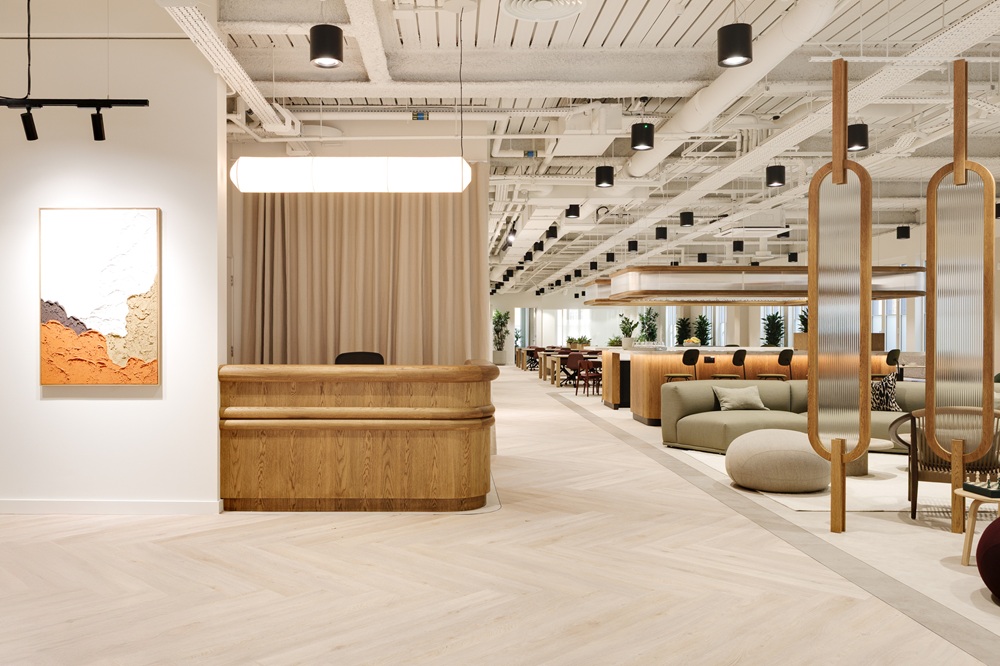
One month into operations at Finlaison House in Holborn, Vallist founder Alex Passler is witnessing a market shift that’s exceeded even his expectations: the flight to quality in flexible workspace isn’t just affecting a niche segment anymore – it’s becoming the new standard.
“I think the general flight to quality is a bigger theme than I expected,” Passler explains. “Whereas before, I thought it was a small market segment that was looking for quality, it’s now becoming more and more the norm. The expectations of what people are looking for are growing tremendously.”
For Passler, former Head of WeWork Asia Pacific and The Americas Real Estate teams, this validation comes after years of developing a thesis that the flexible workspace industry needed to fundamentally rethink its approach. At Vallist, that meant partnering directly with landlords through management agreements rather than taking on traditional lease risk – a model that allows for patient capital allocation toward design, acoustics, and genuine hospitality.
Lessons from Month One
The early market response at Finlaison House has confirmed some assumptions while revealing others. The 15-17 Furnival Street location, surrounded by some of London’s largest law firms near the Royal Courts of Justice, attracts exactly the professional demographic Vallist designed for. However, the dealflow timeline differs from initial projections.
“Our smallest offices are 18-person suites,” Passler notes. “We kind of missed that three to four-person segment, which means that the deal flow process takes longer because people moving with 20 to 30 people are looking three months out in advance, not for next month.”
The work club membership offering – Vallist’s interpretation of flexible membership distinct from traditional hot-desking, has shown strong traction once prospects experience the space firsthand. At launch pricing with 24/7 access, members gain access to what Luigi Ambrosio, Head of Operations, describes as “the beauty of the ground floor” in an environment designed for productivity rather than overcrowding.
Hospitality as Competitive Differentiation
While “hospitality-led” has become flex workspace shorthand, Vallist interprets the term quite literally. There are no turnstiles at Finlaison House. Members receive personalized onboarding within their first ten minutes. The hospitality team greets arrivals at the door, delivers coffee before they’re seated, and maintains what Ambrosio calls “active listening” – understanding what each person needs in that moment.
“There is real care for people,” Ambrosio explains. “You need to have a lot of sensitivity to understand that. With AI generation and everything automated, there is a lot of neglecting the desk, the first image. What Vallist will push is: you come here and we will do it for you. You are just here to be productive and we’ll do the rest.”
The design immediately registers with visitors. “The wow factor is the design when you walk in,” Passler says. “Generally, the first thing someone says as soon as you open the door is, ‘Wow. Didn’t expect that.'”
Building for the Long Term
The landlord partnership model creates advantages that extend beyond the initial launch. By eliminating lease risk, Vallist can invest in areas that would damage traditional flex economics – comprehensive soundproofing, robust cybersecurity appropriate for professionals handling sensitive information, and hospitality infrastructure that prioritizes human interaction over automation.
“We’ve invested in areas which other flex operators don’t invest in because for most businesses, it damages the economics,” Passler notes. “We spend a lot of money on sound installation, on cybersecurity. Where the building is located, we’re surrounded by some of the largest law firms in the world, right behind the Royal Courts of Justice. Their demands for secure networks are pretty extreme, so we’re catering for that level of member.”
Steve Tillotson, Sales Director, notes that the promise of maintaining quality resonates strongly with prospects. “A lot of people are used to going into co-work spaces that open, become super popular, get overpopulated, and then everyone gets fed up,” he explains. “The promise we’ve been making is that we won’t let it get to that state. We’re very much a curated, smaller scale, boutique environment, and that’s how we want to keep it.”
For an industry still recalibrating after years of prioritizing speed and scale over sustainability, Vallist’s early traction suggests the market may finally be rewarding patient, quality-focused development.
About Vallist
Vallist delivers premium flexible workspace through landlord partnerships that eliminate lease risk and enable patient investment in design, technology, and hospitality. Founded by former WeWork executive Alex Passler, Vallist creates hospitality-led environments for professionals who prioritize quality, privacy, and genuine service. Learn more at vallist.com.
Similar Articles
Explore similar articles from Our Team of Experts.

Perspectives, Real Estate Investment, Industry News, Commercial Real Estate, Market Analysis & Policy
Industry expert Keith Cubba, Senior Vice President and National Director of Golf at Colliers International, argues that investors are significantly overestimating the risk in today’s g...


