Dallas’s southern sector has long trailed the rest of the metro in new development, and parts of it still lack basic retail, infrastructure, and even grocery stores. That gap is starting to close. National homebuilders, city financing, and master-planned communities are now committing to the area, and buyers who arrive ahead of that development stand to benefit from it.
Britaney Hughes watches the shift from an unusual vantage point. She grew up in the southern sector, leads a four-person team from the Compass RE Texas office in Park Cities, and is preparing to build her own properties in South Dallas. Her advice to budget-conscious buyers is to look south and to buy before the development fully arrives.
Why Development Is Turning South
DFW grows outward, and the southern sector holds much of the land that growth now needs. Hughes describes the metro as a circle that keeps widening as builders move onto raw land at its edges. The north continues to add new single-family communities, she says, while the southern sector draws townhome development aimed at young professionals.
That expansion shapes her advice to buyers. Purchasing in an outer area before growth reaches it, Hughes says, lets a buyer “get in at a lower price and build some equity that way.” Waiting until development has arrived means paying for it.
The southern push comes during a construction slowdown, which raises an obvious question about why builders would commit to the area now. Homebuilders across North Texas cut back on new starts in 2025 as demand softened and inventory accumulated.
The answer lies in the longer horizon behind the southern projects. A HousingWire analysis puts the region’s current surplus at about 12,000 finished homes, small against an estimated 500,000-unit deficit left by underbuilding from 2020 to 2024. On that view, a slow year doesn’t change where the region’s long-term housing need will be met.
The Southern Sector Today
Buyers who head south aren’t betting on empty land. The southern sector already holds established neighborhoods, and Hughes points to Lake Ridge, High Point, and Cedar Hill as places where buyers get more for their money than in the northern suburbs. She cites improving school districts and a base of locally owned businesses as part of the draw.
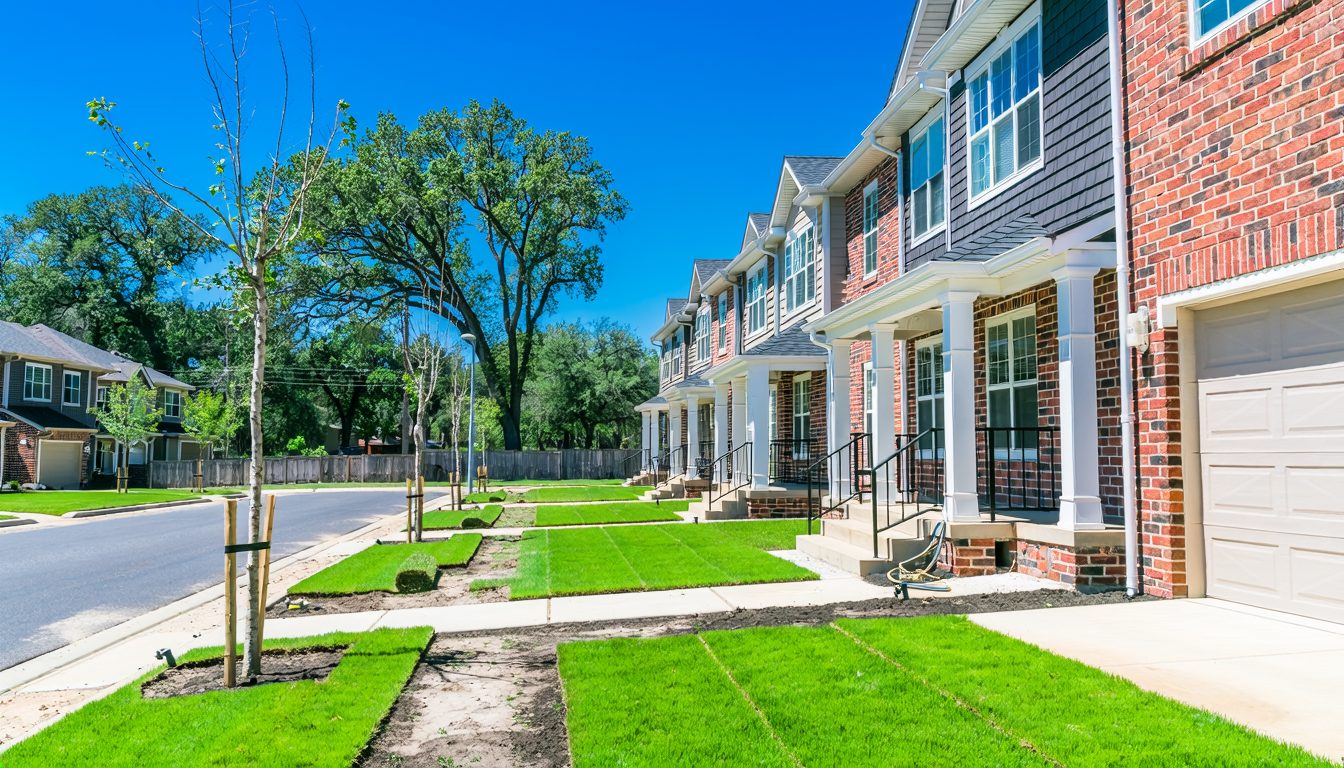
The new construction arriving there sits close to the metro’s middle on price. Single-family homes and townhomes at University Hills, a mixed-use development next to the University of North Texas at Dallas, are expected to sell for $300,000 to $500,000. The median list price across DFW stood at about $420,000 in early 2026.
What the area still lacks defines the trade-off. The Rivulet community planned near University Hills Boulevard and Camp Wisdom Road includes a 20-acre retail district meant to address the shortage of amenities, retail, and grocery options in southern Dallas. Buyers who move in now accept those gaps in exchange for a lower entry point, and the value of that exchange depends on the gaps closing.
Capital as the Signal
Whether the southern sector’s gaps close depends on who commits money there, and that money now comes from several directions at once. National builders D.R. Horton and Lennar have bought into University Hills, a $1 billion development near UNT Dallas. The City of Dallas has put its own financing behind the project, and other developers are planning communities nearby and in Cedar Hill. When national builders, the city, and other developers make the same bet, the southern sector’s growth no longer hinges on any single project.
Hughes is making the same bet with her own business. She is working with a developer on a new community in DeSoto, and after years on the production side, she plans to start building properties in South Dallas. “This time I’m going to be on the builder side,” she says.
Committed capital doesn’t guarantee a fast timeline, though. University Hills has moved slowly since its unveiling in 2022, and its developer once projected first residents by mid-2026. Buyers betting on the southern sector should expect the payoff over years rather than months.
Buying Early on Better Terms
A long payoff makes the cost of getting in matter more, and the current market lowers that cost. The shift toward buyers runs across the whole metro rather than the south alone, but it changes the math for anyone buying early in the southern sector. Inventory has piled up across the region, and sellers have lost much of the leverage they held. “The Dallas market has been so up for sellers for so long, and right now the buyers have the upper hand,” Hughes says.
Hughes uses that leverage to win seller credits, which she then directs toward the monthly payment. On a $20,000 credit, she might put $10,000 toward a rate buydown, which can cut a couple hundred dollars from the monthly payment, and apply the rest to cash to close. A price reduction of the same size barely moves the payment by comparison.
For many of her clients, seller credits are a better deal than down payment assistance programs. The trade-off with those programs is usually a higher interest rate, so buyers pay for the help every month for as long as they keep the loan. “It’s free money for the buyers that they don’t have to pay back,” she says. She still recommends assistance programs for buyers with little savings, since negotiated credits can’t cover a full down payment.
The monthly focus matters all the more in Texas, which has no state income tax but makes up for it with some of the highest property tax rates in the country, a cost that lands in every monthly payment. A buyer who secures a lower payment can carry a southern-sector home more comfortably while the development around it matures.
Whether that patience pays off depends on the projects arriving as planned, and the commitments so far point in that direction even where the pace has lagged. Hughes’s own conclusion is practical: “The best time to buy is when you’re financially ready. Pick a home that you love. It doesn’t have to be your dream home.”
About the Expert: Britaney Hughes leads the Britaney Hughes Group, a four-person team at Compass RE Texas LLC based in Dallas.
This article is intended for informational purposes only and does not constitute legal, financial, or investment advice. The views and opinions expressed herein reflect those of the individuals quoted and do not represent an endorsement of any company, product, or service mentioned. Readers should conduct their own due diligence and consult qualified professionals before making any investment decisions.