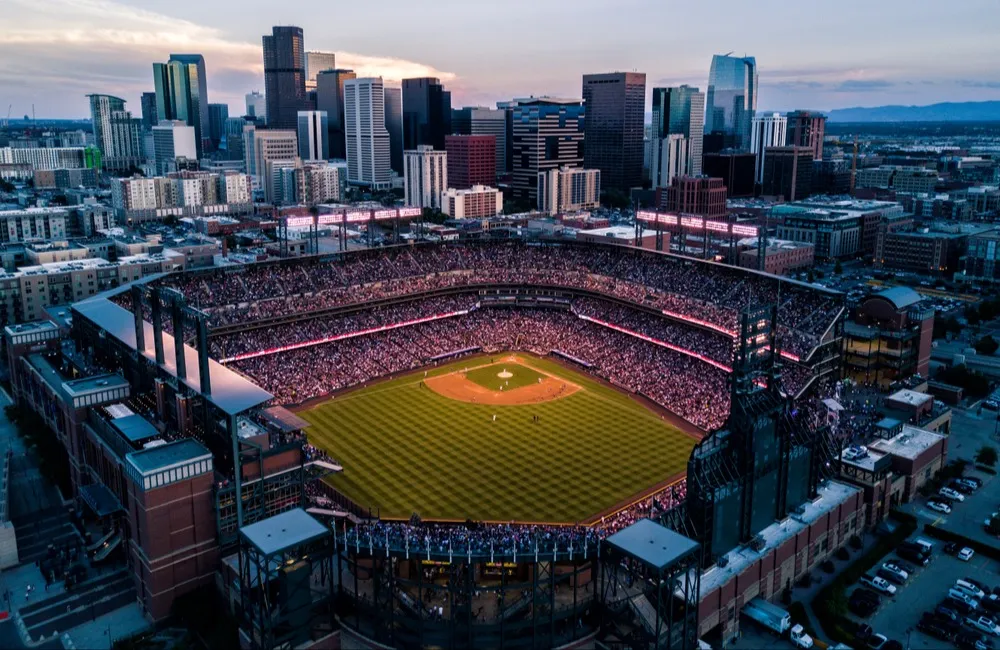
The construction cranes and fenced-off lots around Ball Arena and Coors Field signal more than just stadium renovations. Denver is in the midst of a sports-driven real estate surge that is reshaping entire neighborhoods. This new wave is less about the games themselves and more about creating places where people want to live, work, and gather year-round.
“Sports facilities are no longer standalone buildings,” says Andrea Austin, a shareholder at Greenberg Traurig who specializes in sports facility transactions and mixed-use development. “They’re anchors for entire districts — places people want to live, work, and hang out, whether there’s a game happening or not.”
Why Sports Districts Are Taking Off
For years, stadiums and arenas were surrounded by parking lots and filled only on game days. That model is fading as teams and developers see greater value in turning these areas into year-round destinations. The goal now is to draw people in every day, not just for a handful of games each season.
This approach gained momentum with projects like The Battery in Atlanta, a mixed-use district built around the Braves’ stadium. What began as an entertainment complex now includes apartments, offices, restaurants, and retail—forming a full-fledged neighborhood that attracts residents and visitors even when no games are scheduled.
Denver is following this blueprint. Ball Arena, home to the Nuggets and Avalanche, sits on 65 acres slated for transformation into a mixed-use district over the next decade. The plan includes new offices, housing, restaurants, and entertainment venues, all connected by two light rail stops and designed for walkability.
“You’ll see walkable streets and programming that works seven days a week,” Austin says. “It’s not just about filling seats on game night anymore.”
Three Forces Behind the Boom
Several factors are making sports-anchored development both practical and urgent in Denver and other cities:
- Downtowns Need New Draws
Remote work has left a third of downtown Denver’s office space underused. Cities now need attractions that bring people back into urban cores. Sports districts provide consistent foot traffic, events, and a vibrant atmosphere that empty office towers cannot.
- Sports Are Reliable
Professional sports teams play through economic downturns, providing steady activity that reassures lenders and investors. “The Broncos are always going to play, whether or not there’s a recession,” Austin notes. This reliability makes financing large-scale mixed-use projects less risky.
- Private Equity Is Fueling Growth
Investors are now targeting not just team ownership, but also the real estate surrounding stadiums and arenas. The influx of private capital allows developers to build out these districts faster and more completely than in the past, accelerating neighborhood change.
Impact on Buyers and Renters
For those looking to buy or rent near Denver’s major sports venues, the landscape is changing quickly. New residential projects are increasing the number of available homes, but growing demand—especially among younger buyers and renters seeking walkable, transit-connected neighborhoods—means competition is rising as well.
Neighborhoods near Ball Arena, Coors Field, and the future MLS stadium are attracting renewed interest. Developers are adding apartments and condos, while restaurants and shops fill in around them. The result is a surge in both inventory and demand.
“These districts appeal to young urban professionals who want to be in a thriving downtown neighborhood,” Austin says. “But they also work for families and seniors who want safe, active places to walk and feel connected to their community.”
For buyers, properties within a 10-minute walk of a venue or near light-rail stops tend to hold their value best. For renters, rising demand is likely to push rents higher as districts fill in, making it advantageous to secure leases sooner rather than later.
Beyond Major League Sports
The sports-anchored development model isn’t limited to big-league franchises. Smaller cities are using minor league baseball, USL soccer, and youth sports complexes as anchors for new real estate projects. The essential ingredient is a steady reason for people to gather, regardless of the sport’s level.
“It can be a minor league team, a college arena, or a youth sports facility,” Austin says. “The key is creating a reason for people to gather, and then building around that.”
Cities like Wichita and Tuscaloosa are testing this approach with districts built around college athletics. Alums return for games, and developers add hotels, condos, and restaurants that serve the community year-round.
What Sets This Wave Apart
Unlike past stadium booms, today’s sports districts are designed as permanent neighborhoods rather than seasonal event spaces. They combine housing, offices, dining, and entertainment, all centered around reliable sports activity and integrated with transit. This approach addresses multiple needs at once: it helps fill the gap left by struggling office markets, adds much-needed housing, and creates lively public spaces that attract residents and visitors every day.
For Denver, this means that sports venues are no longer isolated landmarks. They are central to the city’s strategy for revitalizing downtown and creating places where people want to spend time—even when no game is on the schedule. “A sports facility can transform an economy in ways that are hard to conceptualize until you see it happen,” Austin says. “But once it does, it changes everything.”
About the Expert: Andrea Austin is a shareholder at Greenberg Traurig, LLP, based in Denver. She specializes in sports facilities, public-private partnerships, and mixed-use real estate development.
This article is based on information provided by the expert source cited above. It is intended for general informational purposes only and does not constitute legal, financial, or real estate advice. Readers should conduct their own research and consult qualified professionals before making any real estate or financial decisions.