When housing affordability makes headlines, institutional investors are often blamed. The common argument is straightforward: large companies buy up homes, edge out regular families, and drive prices higher. The solution seems simple — stop investors from buying, and home prices will fall.
But in Las Vegas, this narrative doesn’t fit the facts. Even if every institutional investor stopped buying tomorrow, home prices would be unlikely to fall. The real barrier to affordability isn’t who is buying homes, but that too few homes are being built — especially at prices regular buyers can afford.
“If you wiped out institutional investors, the impact on the market would be negligible,” says Zach WalkerLieb, a Las Vegas real estate professional at Willow Manor who has tracked local housing supply for over a decade. “The impact would be so small that we would see no reduction in pricing.”
In WalkerLieb’s view, Las Vegas’s affordability crisis stems from a decade-long construction shortfall, not from investor activity.
A Decade of Underbuilding
According to WalkerLieb, Las Vegas averaged 25,000 to 31,000 new homes built each year from 2000 to 2007, keeping pace with demand. The 2008 housing crash brought construction to a halt, dropping output to just 4,000 or 5,000 homes annually. Unlike other markets that rebounded, Las Vegas’s slowdown lasted for a decade. Between 2008 and 2018, the city underbuilt by at least 10,000 homes each year — a pattern borne out by recent research from UNLV’s Lied Center for Real Estate — creating a deficit of about 100,000 homes.
“We stayed at building 5,000 new homes per year, 6,000, 7,000 new homes per year until like 2018 or 2019,” WalkerLieb says. “So for a decade, we were under-building by at least 10,000 new homes per year.”
This shortfall is the root cause of today’s high prices. The few thousand homes purchased by investors are insignificant compared to the 100,000 homes that were never built. Recent construction has picked up slightly, but the gap hasn’t closed. More importantly, new homes aren’t being built where demand is highest.
The Entry-Level Home Disappears
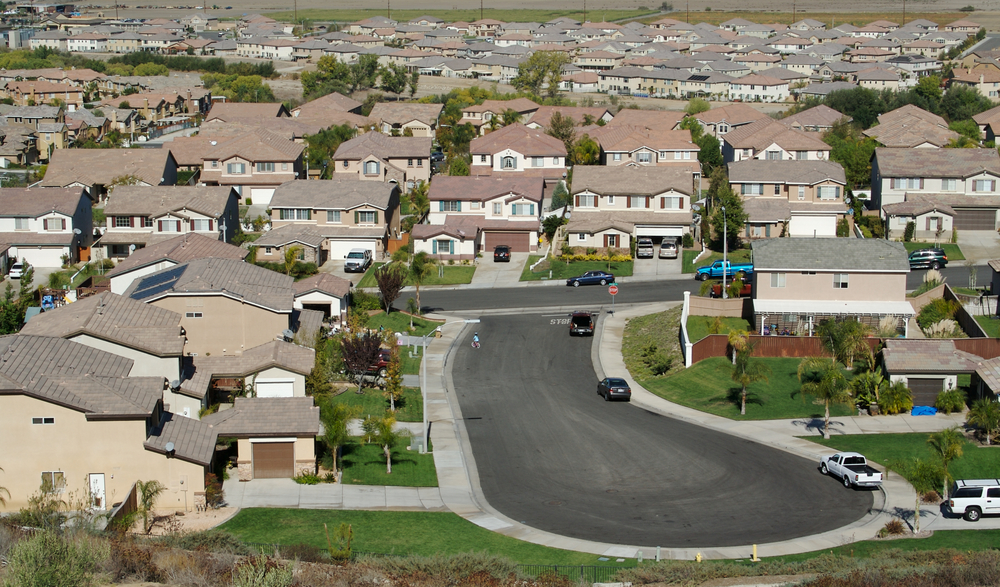
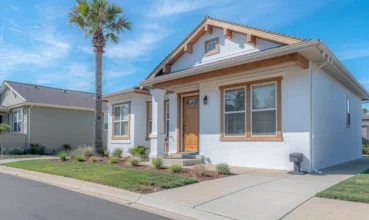
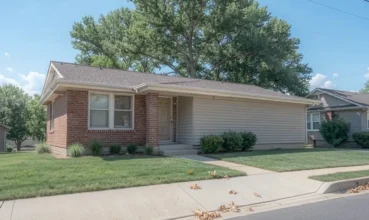
The other key factor driving unaffordability is the absence of new entry-level homes. The valley’s dominant builders focus almost exclusively on upper-middle and luxury segments, with prices at their active communities running from $1 million to $3 million. Builders that do operate at lower price points are concentrated in North Las Vegas and represent a fraction of overall new construction activity. Almost nothing is being built in the range that first-time buyers and working families can actually afford.
As a result, the supply of affordable homes continues to shrink. Existing entry-level homes are aging, and when they’re renovated, they are typically resold at higher prices. In some cases, older homes are demolished to make way for new, higher-priced construction. There is no influx of new affordable homes to replace what’s being lost.
“Not only did we underbuild by 10,000 units per year, but we also never built the homes that were the entry-level homes,” WalkerLieb says. “So that supply is disappearing year after year after year, and that’s what’s causing prices to become unaffordable.” This means that a $400,000 home today will likely cost much more in a few years, simply because new affordable inventory isn’t being added.
Blaming Investors Misses the Problem
Institutional investors do own homes in Las Vegas, but their market share is small compared to the scale of the housing shortage. Even if all investor activity stopped, the city would still face a deficit of roughly 100,000 homes and a construction pipeline focused on high-end buyers.
The only effective solution is to build more homes — especially at affordable price points — but that would require changes to zoning, incentives for entry-level construction, and addressing land supply constraints that increase costs and slow development.
“The only answer for affordability is to supply the market with enough homes so that it becomes affordable again,” WalkerLieb says. Without a significant increase in the number of reasonably priced new homes, prices will continue to rise regardless of who is buying.
What Buyers and Policymakers Should Know
For buyers, waiting for a price drop isn’t a viable strategy. The shortage of homes is baked into the market, and without a surge in construction, prices are unlikely to fall. Buyers should focus on what they can afford now, as waiting often leads to higher costs later.
For investors, although the supply shortage is not their doing, it does offer an opportunity. Neighborhoods with strong schools and infrastructure — such as Summerlin, Henderson, and Inspirada — are likely to see continued appreciation as long as supply remains tight. Investors can target areas with lasting demand and solid fundamentals, rather than betting on a market correction.
For policymakers and voters, the takeaway is clear: affordability depends on building more homes, particularly at the entry level. Efforts to restrict investor purchases may be popular, but they won’t fix the underlying shortage. Real progress requires zoning reform, support for affordable construction, and policies that address barriers to development.
The math is straightforward: a shortage a decade in the making won’t be fixed by regulating who buys homes. It will be fixed by building more of them — at prices people can actually pay. According to WalkerLieb, that’s the only answer — and until it happens, Las Vegas home prices have nowhere to go but up.
About the Expert: Zach WalkerLieb is a fourth-generation Las Vegas native and managing partner of Willow Manor, a luxury real estate group operating under Keller Williams The Marketplace in Las Vegas.
This article is based on information provided by the expert source cited above. It is intended for general informational purposes only and does not constitute legal, financial, or real estate advice. Readers should conduct their own research and consult qualified professionals before making any real estate or financial decisions.