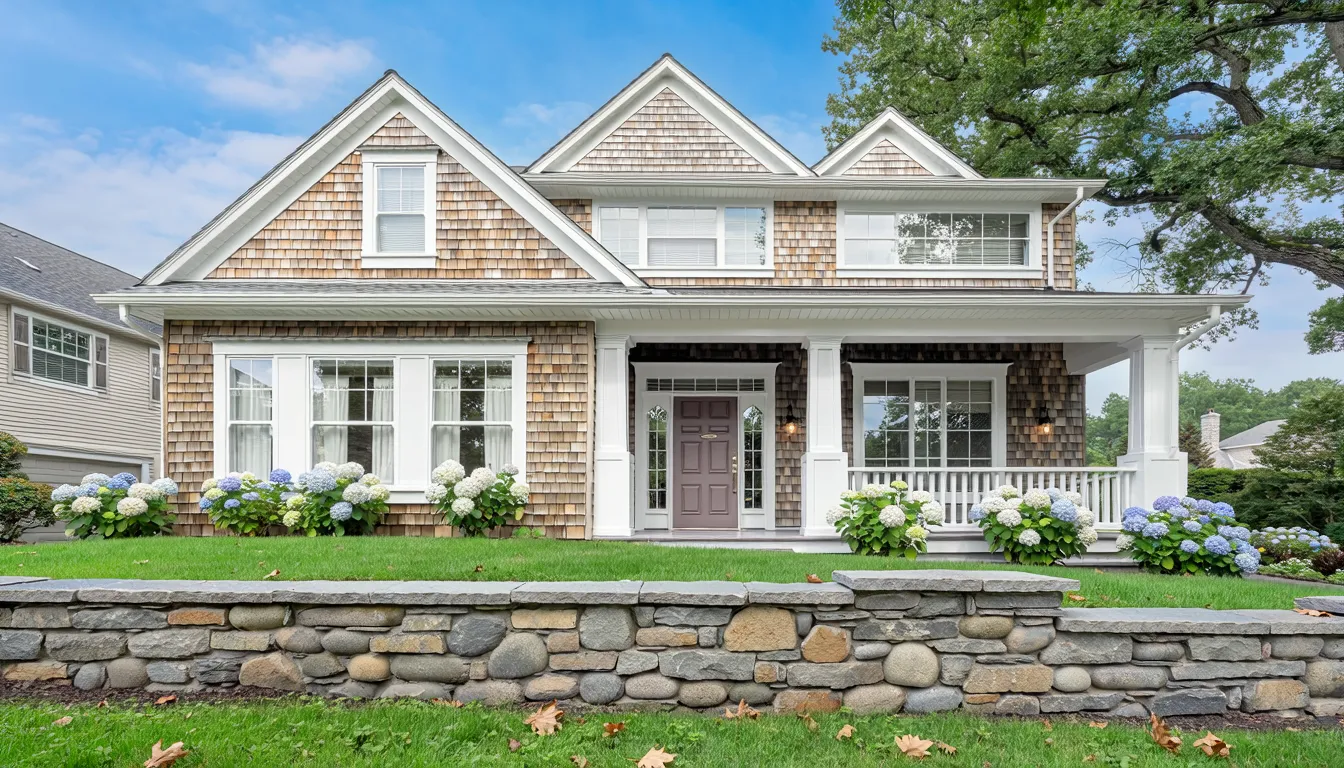
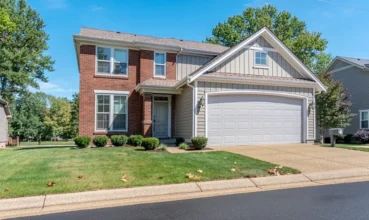
In most housing markets, a listing price gives buyers a reasonable starting point. In Darien, Connecticut – a town of roughly 12 to 14 square miles on the Long Island Sound, about an hour by train from Grand Central – it has become something closer to a floor in an auction. Homes routinely sell well above asking, sometimes by hundreds of thousands of dollars, and the pattern has persisted long enough that buyers and agents can no longer rely on list prices as meaningful signals.
The cause is straightforward: demand consistently exceeds supply in a town with roughly 6,300 households and limited room to build. But the pricing mechanics that result are specific and instructive, because they show what happens when traditional comp-based pricing methods cannot keep pace with a market that moves faster than the data behind it.
When Comparables Lag Behind the Market
Ingrid Hess, a 38-and-a-half-year veteran of Lower Fairfield County real estate and a founding member of Compass’s Darien and New Canaan offices, describes a compounding problem. To price a listing, agents pull comparable sales from the previous six to twelve months. But in a market with limited inventory, those comps reflect where the market was – not where it is. By the time a newly listed home attracts competing offers and closes two to three months later, the sale price has leapfrogged the data used to set the original list price.
“Agents have been underpricing the asking or the listing price and not putting it higher at which the market can absorb the price,” Hess says. The result is a market where buyers have learned to ask a different question. Instead of negotiating down from a list price, they ask how much above it they need to go. “Buyers look at a property and say, okay, you’re asking $2.5 million for this property. How much over do I have to bid in order to get it?”
That dynamic erodes the transparency list prices are supposed to provide. A buyer scanning listings online sees a number that may bear little resemblance to the price the home will actually trade at.
A Shift Toward Forward-Looking Pricing
Hess says she has changed her own approach in response, listing homes at the price she believes they will sell at rather than the price backward-looking comparables suggest. The goal is to narrow the gap between listed and closed prices, giving buyers a more accurate signal from the start.
She acknowledges this is a transition. If it takes hold more broadly, the statistical picture may look like a slowdown – homes selling closer to ask rather than 109 or 110 percent of it – even though actual sale prices remain strong. “The statistics might come out saying that the market is slowing down because we’re not selling way over ask,” she says. “But we were just trying to find our footing to try to see where we were.”
The shift could also change buyer behavior. Hess expects that as list prices begin to reflect actual sale values, buyers who previously assumed a $2 million listing meant a $2.5 million purchase may re-enter the process with more confidence. A buyer who sees a price closer to what the home will actually sell for can decide whether to compete rather than guessing how far above the listed number they need to reach.
What Separates the Homes That Sell From the Few That Don’t
Price cuts in Darien are rare enough that Hess says she can nearly count them on her hands. When they do occur, they tend to involve listings that started significantly overpriced relative to condition or location.
Condition has become a primary filter, according to Hess. Buyers are wary of renovation costs and a limited contractor pool. “Buyers want the properties really turnkey and ready if possible,” she says. A home that needs substantial work faces a double disadvantage: the cost itself and the difficulty of finding contractors to do it.
Location, long the default hierarchy in real estate, has shifted in relative importance. Hess says demand is strong enough that neighborhoods previously considered secondary have appreciated sharply – a change she traces to the last two or three years, beginning with the Covid-era migration and persisting after it receded. Entry-level homes start around $1.5 million, the median sits near $3 million, and the upper tier begins around $4 to $4.5 million. A significant share of buyers pay cash, which insulates the market from interest rate sensitivity and intensifies competition.
For buyers evaluating whether to enter this market, the practical implication is that condition and preparedness matter more than finding the right neighborhood at the right moment. A well-maintained home in a previously overlooked area may sell faster than a dated home on a premium street.
The Draw That Sustains Demand
Darien’s appeal rests on a specific combination: proximity to New York, two Metro-North train stations, waterfront access along the Long Island Sound and the Five Mile River, and a public school system that consistently ranks among Connecticut’s best. Hess cites student proficiency rates of 76 percent in math and 89 percent in reading, against state averages of 33 and 53 percent, respectively, with a 99 percent graduation rate. Among adults, 86 percent hold a bachelor’s degree or higher.
The buyer profile reflects these draws. According to Hess, the typical purchaser is a couple starting a family in New York City, seeking strong schools and suburban space while maintaining a commute. That profile creates a self-reinforcing cycle: the school system attracts families, those families invest in the community, and the community’s reputation draws the next wave.
Hess says these buyers require significant preparation before entering the market. “They have needed a lot of preparation coming in and need a lot of training and learning as to how they’re going to be able to get a property,” she says. “Because it’s very competitive.” In practice, that means understanding that list prices are not ceilings, that cash offers carry an advantage, and that homes in ready condition will draw the strongest competition.
The pricing gap Hess describes is not a sign of a broken market – it is a symptom of a market where demand has outrun the tools agents use to measure it. As forward-looking pricing gains traction, buyers may get clearer signals about what homes will actually cost. But in a town with fixed land, limited inventory, and sustained demand, the competitive pressure that created the gap is unlikely to ease on its own.
About the Expert: Ingrid Hess is a founding member of the Compass Darien and New Canaan offices, covering Darien, Connecticut, and lower Fairfield County.
This article is based on information provided by the expert source cited above. It is intended for general informational purposes only and does not constitute legal, financial, or real estate advice. Readers should conduct their own research and consult qualified professionals before making any real estate or financial decisions.