US buyers shopping for a second home or investment property abroad have historically gravitated toward the familiar: a beach condo in Mexico, a pied-à-terre in Europe, a vacation property in the Caribbean. But brokers working in international new development sales are seeing demand land in less expected places, and Costa Rica’s luxury resort corridor is drawing serious attention from buyers who would have looked elsewhere five years ago.
The reasons go beyond scenery. Brokers point to a convergence of practical factors: political stability, US dollar transactions, short flight times from major American cities, and a growing inventory of branded residence projects that attach hotel amenities and management infrastructure to a private ownership structure. That combination is proving more attractive to a certain buyer profile than a comparable price point in a more established market.
One Project, One Broker
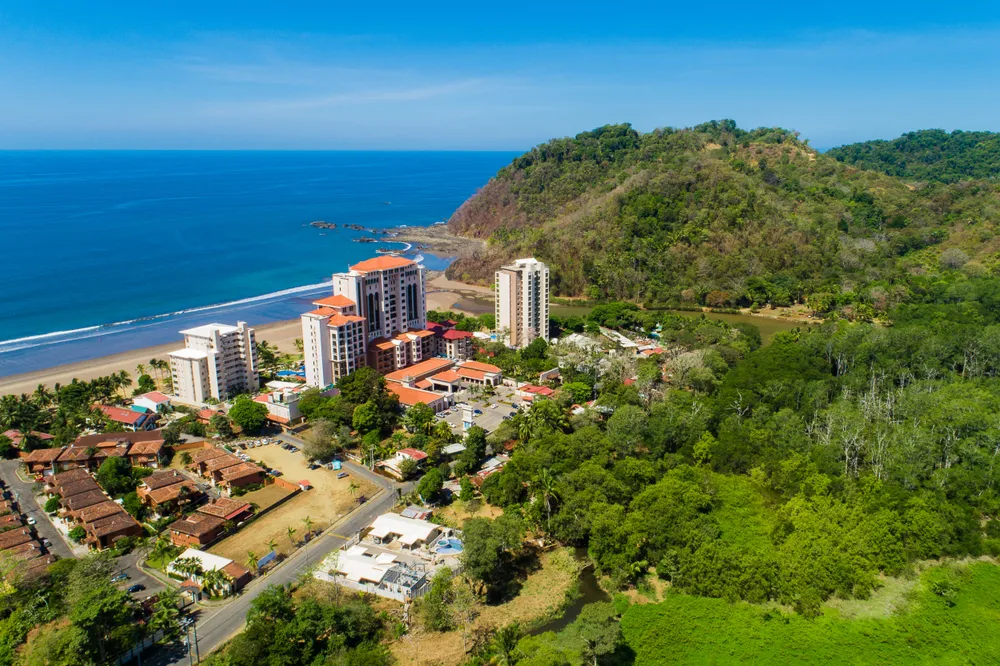
Brandon Talalaevsky, Founder and Principal Broker of Property Pro Partners, a brokerage handling new development sales across Florida, New York, and international markets, is currently preparing to launch sales on a branded residence project in Manuel Antonio, Costa Rica, a Hilton LXR property called Marave Residences and Beach Club, comprising 66 villas and 50 condos. The project has been in development for roughly two and a half years and is scheduled to open sales July 1, 2026. According to Talalaevsky, approximately 95 percent of buyers for Costa Rica projects like this one are US-based, with the largest concentrations coming from Texas, Florida, New York, and California, along with a meaningful share from Canada.
Three Buyer Motivations
The buyer motivations he observes cluster around three areas. The first is lifestyle infrastructure – amenities, restaurants, and walkability built into the property itself, so owners do not have to leave the development to access what they came for. The second is what Talalaevsky describes as luxury eco-tourism: buyers who want seclusion and natural surroundings without sacrificing the service levels of a high-end hotel. Boutique scale – fewer units, more controlled environments – makes that possible. The third is portfolio diversification. “Buyers who already own in Florida or New York are looking for something that performs differently,” he says, pointing to the appeal of a different regulatory context and currency environment.
Costa Rica’s specific characteristics support that diversification case. The country has not maintained a military since 1948, which Talalaevsky cites as a marker of long-term political stability. Transactions are conducted in US dollars, removing currency conversion risk for American buyers. The flight from Fort Lauderdale is roughly two and a half hours. And the legal framework for foreign ownership is relatively straightforward compared to many other international markets.
What Branded Ownership Means
Those are genuine advantages. But buyers considering an international purchase of this kind should understand what branded residence ownership actually involves. In a structure like Marave, buyers own a unit that is part of a resort managed under a hotel flag – in this case, Hilton’s LXR brand. That typically means access to hotel services and the option to place the unit in a rental pool when not in personal use, with the hotel operator managing bookings and maintenance. It also means the owner’s experience of the property is shaped by the operator’s standards and decisions, not just their own preferences.
Rental income projections that often accompany branded residence sales presentations deserve careful scrutiny. Occupancy rates, management fees, and the revenue split between owner and operator vary significantly by project and are not standardized across the industry. A buyer who purchases primarily on the strength of projected rental returns should stress-test those numbers against conservative occupancy assumptions, not the developer’s best-case scenario.
A Maturing Global Trend
The broader trend Talalaevsky describes – luxury projects oriented around boutique scale and natural settings – is visible across multiple markets, not just Costa Rica. Similar products are being developed in other parts of Central America, in Southeast Asia, and in select US markets. Buyers today have more options and more basis for comparison when evaluating whether a specific project’s pricing and structure are competitive.
For US buyers weighing an international second-home purchase, Costa Rica’s combination of dollar transactions, short travel time, and stable legal environment does distinguish it from many alternatives. The branded residence structure adds operational support that pure vacation-home ownership does not include, which matters for buyers who will not be present to manage the property themselves. However, the market for these products is still maturing in Central America, and long-term resale data for branded residences in this region remains limited. Buyers should weigh the appeal of early entry against the uncertainty that comes with a market where comparable sales history is thin.
For the Marave project specifically, sales have not yet launched as of this writing, meaning pricing, availability, and final unit configurations are still being established.
About the Expert: Brandon Talalaevsky is Founder and Principal Broker of Property Pro Partners, a brokerage handling new development sales across Florida, New York, and international markets, with a current focus on a branded residence project in Manuel Antonio, Costa Rica.
This article is intended for informational purposes only and does not constitute legal, financial, or investment advice. The views and opinions expressed herein reflect those of the individuals quoted and do not represent an endorsement of any company, product, or service mentioned. Readers should conduct their own due diligence and consult qualified professionals before making any investment decisions.