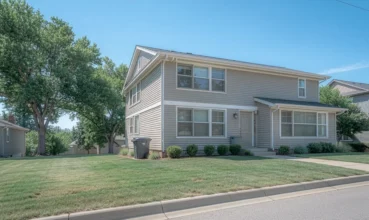
The rolling hills of Central Virginia have become a prime destination for high-end buyers seeking a mix of rural beauty and urban sophistication. In Charlottesville and its surrounding counties, lifestyle appeal, geographic constraints, and new economic drivers have transformed a once-quiet university town into one of Virginia’s most competitive real estate markets.
Peter Wiley, broker and owner of Corcoran Wiley, has observed these changes since he began his real estate career in 2005. Raised on a working horse farm in the region, Wiley offers a long-term perspective on a market that has shifted dramatically, especially since the pandemic.
“This area is as close to the Northeast as possible without being there,” Wiley says. The area is accessible from New York and Boston by plane, train, or car. This convenience attracts buyers seeking a second home or permanent move without losing urban connections.
Pandemic Demand Rise
During the pandemic, urban professionals sought more space and safety outside major cities, creating a surge in demand. Central Virginia offered more than open land: it provided rural living paired with amenities such as top-tier restaurants, the University of Virginia, and strong medical facilities.
“During COVID, the trend was to leave the city for the country, but buyers also wanted culture,” Wiley explains. Buyers from New York and other cities found that purchasing a farm in Albemarle County for $2 to $6 million was both attainable and appealing, given the lifestyle and access to Charlottesville’s cultural resources.
This influx of wealth raised prices significantly. Corcoran Wiley’s average sale price topped $1 million last year — a milestone that seemed unlikely just six years ago. Typical sales range from $500,000 to $2 million, with some properties selling for $4 to $6 million.
Market Momentum Continues
The city-to-country migration of 2020 and 2021 set the stage, but several factors have helped Central Virginia’s market maintain momentum. The University of Virginia continues to attract professionals, and major employers are investing locally. AstraZeneca is building a $4.5 billion manufacturing facility in the region, expected to bring 600 high-skilled jobs.
Charlottesville now attracts financial professionals relocating offices, not just working remotely. “People in finance have realized they can move here and operate as effectively as if they were in New York,” Wiley says. The area has seen growth in smaller private equity and venture capital firms, further diversifying the economy.
Infrastructure improvements have supported this shift. Fiber optic internet now reaches rural properties, solving a key barrier for remote workers. Wiley notes this addressed “the big problem going into the pandemic,” providing high-speed internet even in the countryside.
Limited Supply Drives Prices
Charlottesville’s housing supply is tightly constrained. The city has a population of just 50,000 and limited space for new development. In neighboring Albemarle County, 95% of the land is designated as rural, restricting where growth can occur.
“Only two small areas allow higher-density construction,” Wiley says. Most land is off-limits, so demand has steadily raised prices over the last five to six years.
Conservation easements further limit supply. Wiley’s clients have placed thousands of acres in Albemarle and Orange counties under easement, permanently restricting development while providing tax benefits and preserving the area’s rural character. “Albemarle County might now be the most protected county in Virginia by percentage of easemented land,” Wiley says. These protections maintain the scenic landscape that attracts buyers, even as they reduce the pool of available properties.
Buyer Behavior Trends
The frantic market of 2020–2021 has stabilized. Buyers have more options and are taking time to make decisions. “There’s less of a sense that if you don’t buy today, it’ll be gone tomorrow,” Wiley observes. Inventory has increased modestly, and buyers are more selective, leading to price adjustments on properties that linger.
The farm and estate segment responds more to broader economic conditions than interest rates. “These purchases are largely discretionary and tied to how buyers feel about the stock market and prospects,” Wiley says. When financial markets dip or uncertainty rises, activity slows and then rebounds as confidence returns.
Virginia’s Farm Credit program supports the market by offering competitive financing for agricultural properties. This helps both cash buyers and those seeking loans to purchase working farms more easily, smoothing transaction hurdles that might otherwise slow sales.
Importance of Local Knowledge
Success in Central Virginia’s real estate market depends on nuanced, hyper-local knowledge. Traditional Charlottesville neighborhoods like Rugby, Belmont, and downtown each offer distinct lifestyles and price points. Outside the city, areas such as Free Union, Keswick, and Somerset in Orange County represent unique submarkets.
“Every area is different — feel, attributes, and price points vary,” Wiley says. Central Virginia’s countryside is not uniform, making local knowledge essential for matching buyers to the right property and navigating conservation, zoning, and financing challenges.
Corcoran Wiley’s boutique approach focuses on deep market knowledge and high service rather than sheer transaction volume. “We handle fewer deals per year, but with a high average price. This allows us to provide the level of service clients expect,” Wiley says.
Future Market Outlook
Recent weather disruptions slowed the spring market, but underlying demand remains strong. Scarcity of land, lifestyle appeal, and improved digital connectivity continue to attract buyers nationwide.
“The scarcity is going to drive pricing moving forward,” Wiley predicts. Remote work enables more buyers to live in places like Charlottesville without sacrificing career opportunities or amenities. A larger pool of buyers competes for a limited number of homes and farms.
Investors can find opportunities in town, on rural estates, or on working farms. Tools such as conservation easements, agricultural tax benefits, and specialized Farm Credit financing allow buyers to tailor investments to long-term goals. “Prices have gone up, but in 10 years, we may look back and see these as good investments,” Wiley suggests.
Corcoran Wiley plans steady growth in 2026 by recruiting high-quality agents and increasing sales volume without sacrificing service, reflecting the broader market’s trajectory of measured, sustainable expansion.
Buyer and Seller Insights
Charlottesville’s rise as a high-end real estate destination shows how lifestyle preferences, economic flexibility, and geographic limits can redefine a market. Buyers focus on properties that suit their lives — whether a historic home in town, a modern farmhouse, or a conserved estate with tax advantages.
Sellers who understand these priorities and price realistically can expect strong interest. Those holding onto pre-pandemic expectations may need to adjust. The market favors properties that offer both immediate appeal and long-term value.
For buyers seeking a mix of countryside tranquility and urban sophistication, Central Virginia now provides both. Fundamentals suggest continued demand for years to come.
About the Expert: Peter Wiley is the broker and owner of Corcoran Wiley, specializing in high-end residential and agricultural properties in Central Virginia. Raised on a working horse farm, he brings decades of local expertise to guide buyers and sellers through the region’s competitive real estate market.
This article is based on information provided by the expert source cited above. It is intended for general informational purposes only and does not constitute legal, financial, or real estate advice. Readers should conduct their own research and consult qualified professionals before making any real estate or financial decisions.