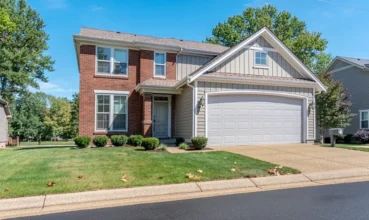
The future of real estate ownership might not be the traditional single-family model we’ve grown accustomed to. Cody Anderson, founder of Tomi, is pioneering a sophisticated platform that’s reimagining how people can collaborate to own property together. Drawing from his experience transforming equity management for private companies at a software company called Carta, Anderson is now applying similar principles to democratize real estate ownership.
“If you design thoughtful incentive structures that align social and financial outcomes with the people in your life who matter most, you can create a far more fulfilling life,” Anderson explains, highlighting the philosophy behind Tomi, whose name derives from the Japanese word for wealth. “Our goal is to help people develop a more sophisticated way of thinking about homeownership. And in doing so, we hope to help them identify an ownership (often co-ownership) model that works for them. Once that foundation is set, we work to bring it to life.”
The timing for such an innovation couldn’t be better. In 2023, over 1.1 million homes were purchased by two or more buyers, yet Anderson notes that roughly 80% of non-married co-buyers lack formal agreements governing their shared ownership – a significant gap in the market that Tomi is positioned to address.
The platform’s approach focuses primarily on tenants in common (TIC) ownership structures, where multiple parties hold title directly. Unlike platforms that match strangers for co-ownership, Tomi specifically works with pre-existing relationships – whether family members, friends, or trusted associates – who already have a foundation of trust and shared goals.
Using a football analogy, Anderson describes Tomi’s role as a coach rather than a matchmaker. “Most of these groups typically have a quarterback – the co-owner captain who’s really leading the charge,” he explains. “We support these natural leaders with the expertise and infrastructure needed to navigate the complex process of joint property ownership.” This includes thorough financial pre-underwriting and offering both joint mortgage applications and individual financing options through established lending partnerships.
The company’s systematic approach extends from initial property selection through creating comprehensive TIC agreements. To facilitate this process, Tomi has developed innovative tools including a co-ownership calculator that integrates with platforms like Zillow and Redfin. The company is also launching a comprehensive co-ownership quiz designed to help potential buyers understand their hierarchy of needs, ultimately recommending the most suitable model of home ownership for their situation.
Looking ahead to 2025, Anderson envisions Tomi becoming the operating system for co-owned properties. The company is developing an AI-powered platform that will serve as a tech-enabled property manager, streamlining everything from financial management to governance and decision-making processes. Their AI home concierge will provide continuous support for co-owners navigating shared property decisions, while automated tools will handle the day-to-day administrative tasks of co-ownership.
This vision is being built methodically, following Anderson’s philosophy of “do things that don’t scale” first – learning the intricacies of co-ownership intimately before moving to automation. With housing prices in major markets continuing to outpace wage growth, Tomi’s innovative approach to co-ownership could provide a viable path to property ownership for many who might otherwise be priced out of the market. By combining technological innovation with deep real estate expertise, Anderson and his team are working to transform how the next generation thinks about and accesses homeownership.
In Warminster, a middle Bucks County township where many homes date to the 1950s and 1960s, a split has opened between properties that are move-in ready and those that need work. According to Tracey Hill, a 20-year real estate veteran who recently opened an office for Innovate Real Estate in Bethlehem, Pennsylvania, 54% of homes ...
The narrative forming around North Jersey’s rental market is that it’s softening. By at least one measure, that’s accurate: leasing teams are working harder, showing more units, fielding more inquiries per signed lease, and spending significantly more on marketing than they did three years ago. But the actual rents tenants are paying have held up ...
Compliance has become the defining pressure in UK facilities management, and confidence in meeting it is falling. In SFG20’s State of Facilities Management 2026 Report, a survey of nearly 200 built-environment professionals found that 72% named improving compliance and safety as their top priority. Only 54% were confident their organization could achieve it, a nine-point ...
The conventional assumption is that downsizing seniors and young families shop in different price tiers. In Doylestown, Pennsylvania – the commercial center of Bucks County – those two groups are increasingly circling the same listings, according to Deana Corrigan of The Deana Corrigan Team at Compass. The competition is reshaping how homes get priced, how ...
The math on a fix-and-flip in metro Atlanta looks straightforward on paper: buy a distressed property at a discount, renovate it, sell it at market value, pocket the spread. In practice, the spread is shrinking from both directions. Sellers of distressed properties are asking prices that reflect peak-market expectations rather than current conditions, while construction ...
A homebuyer comparing two nearly identical four-bedroom houses on either side of the Butler-Allegheny County line in western Pennsylvania could face a property tax bill roughly double on the Allegheny side – $8,000 or $9,000 a year versus around $4,200 in Butler County. In a rate environment where monthly payment calculations dominate every purchasing decision, ...