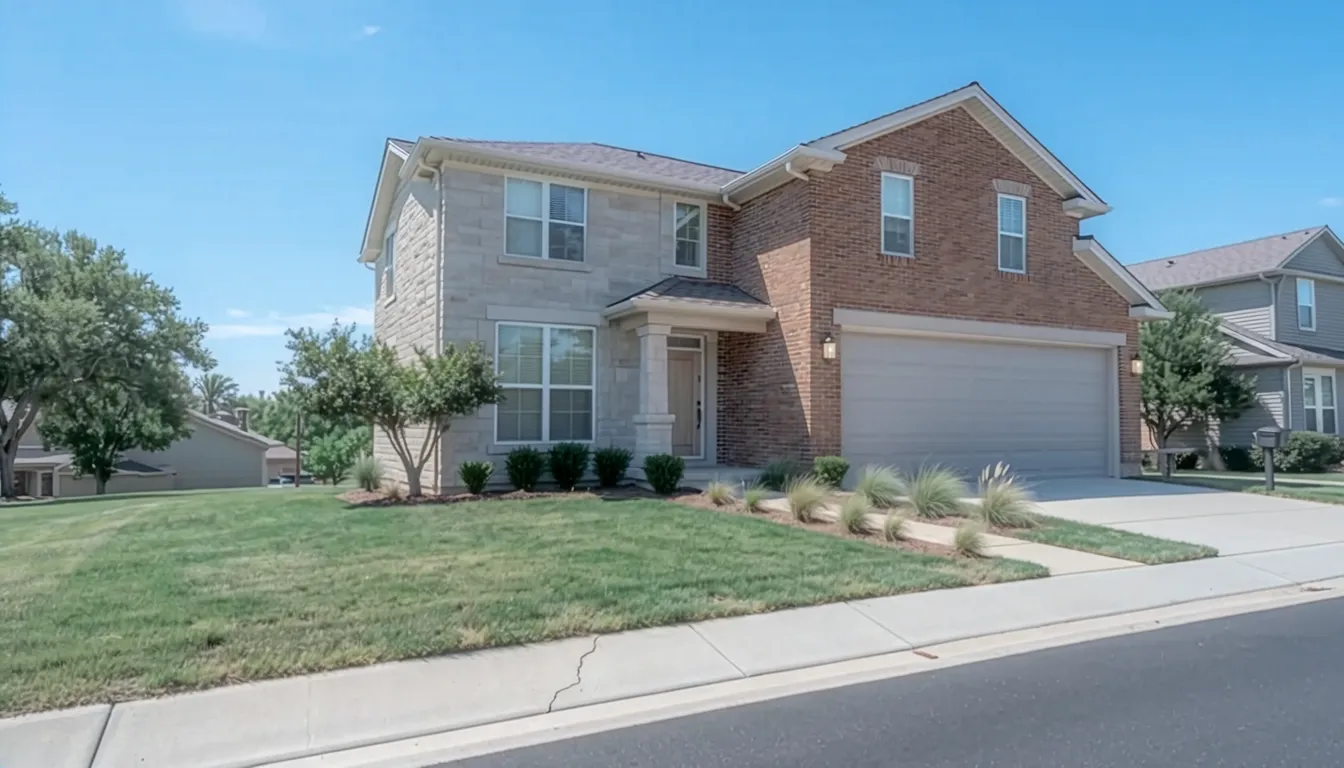
Inventory in the Austin, Texas metro has loosened considerably since the pandemic-era frenzy. Buyers browsing online listings could reasonably conclude they have time to deliberate, compare, and negotiate. In the northwest suburbs – communities along the Highway 183 corridor running through Cedar Park, Leander, and Round Rock – that conclusion holds for most of the market. But for fully renovated, move-in-ready homes priced well and in desirable school zones, the competition looks much less like a buyer’s market.
“Buyers imagine that they have more time, that they can wait and deliberate, because that’s what they’ve heard,” says Hillary Smith, a real estate salesperson/REALTOR® and Co-Owner of HomeSmith Realty in Austin. “But if it’s a really beautiful house and it’s priced well and it’s a good place, all the buyers want the same house.”
Smith describes putting in offers on homes that already have one on the table, or finding out a contract was executed before a showing could be scheduled. Multiple-offer situations still surface on what she calls “cream puff” homes – properties that are fully remodeled and magazine-ready. These listings may last two or three weeks rather than the single weekend of 2021, but they are not lingering.
The Price Gradient That Surprises Relocating Buyers
The northwest suburbs draw a steady stream of relocation buyers. During the pandemic years, California transplants seemed to account for every third client, according to Smith. That pipeline has diversified. She now works with families from North Carolina, New Jersey, New York, Florida, and intrastate movers from the Dallas, Houston, and San Antonio area.
What catches many of these buyers off guard is the price gradient heading north from central Austin. Starting around the border of northwest Austin and Cedar Park, homes drop roughly $100,000 in price for every 10 minutes driven further north, according to Smith. Buyers accustomed to seeing older homes from the 1970s and 1980s listed at $600,000 to $700,000 – or even over a million – near central Austin are surprised to find 4,000- to 5,000-square-foot homes at comparable prices just 20 minutes away.
The trade-off is commute time, but remote and hybrid work arrangements have softened that calculation. Smith says many buyers still work from home or commute only two or three days a week, making a 45-minute drive manageable in exchange for access to master-planned communities with pools, parks, and trails.
Builders Are Competing Hard for Buyers
New construction along the 183 corridor has expanded substantially over the past five to ten years, and builders now sit on overstock. That surplus has shifted leverage to buyers in ways that go beyond price cuts. Smith describes builders offering to buy down mortgage interest rates and throwing in upgrades – appliances, blinds, flooring – to move standing inventory.
For investors, this dynamic opens a window that was closed during the pandemic. Builders who once restricted sales to owner-occupants because of limited supply are now willing to sell to investors again. Smith says she would explore new construction first if she were investing in the area herself, citing the advantage of a home with a new roof, new HVAC, a builder warranty, and minimal near-term maintenance.
The rental side carries a caveat. According to Smith, rents did not rise in step with home prices during the pandemic surge, which left some investors squeezed as property taxes climbed while rental income stayed flat. An investor focused on long-term appreciation faces different math than one seeking immediate cash flow.
How Buyers Are Structuring Deals
At rates above 7%, many buyers have little cash left after their down payment to invest in repairs or renovations. That financial constraint reinforces the premium on move-in-ready homes and shapes how offers are written.
Smith describes a strategic pattern in negotiations: buyers increasingly ask for seller-paid closing costs rather than equivalent reductions in sale price. A $20,000 closing cost concession is $20,000 the buyer does not have to bring to the closing table, while the seller’s net proceeds remain the same. There are limits – sellers can only legally contribute up to a certain amount, which sometimes caps what can be negotiated this way. On the repair side, some buyers prefer the seller to complete material fixes before closing, while others opt for a repair concession so they can choose their own vendors after moving in.
What’s Stalling – and What to Watch
Outside the metro, the land market has gone quiet. Smith, who has hill country acreage listed, says raw land is “just not moving very much right now,” particularly parcels off major roads. The buyers who are looking tend to be large-scale developers rather than individual investors.
Within the metro, Smith says she is watching two things: how further rate increases affect an already selective buyer pool, and whether the luxury segment – sluggish for a stretch but showing some recent movement – picks up if affluent buyers rotate capital out of other investments and into real estate while prices remain below pandemic peaks. “I’m curious to know if maybe some folks would be moving their money out of certain investments and back into real estate while they have the opportunity to get a deal,” she says, “and then let it appreciate over the coming years.”
For buyers weighing the northwest suburbs today, the market sends two signals at once. There is more selection and more room to negotiate than at any point since before the pandemic – but that breathing room disappears the moment a well-priced, move-in-ready home hits the market. Buyers willing to take on cosmetic work or negotiate repairs can find deals; those holding out for a finished home at a discount are competing with everyone else who wants the same thing.
About the Expert: Hillary Smith is a broker with HomeSmith Realty in Austin, Texas, covering the northwest suburbs along the Highway 183 corridor, including Cedar Park, Leander, and Round Rock.
This article is based on information provided by the expert source cited above. It is intended for general informational purposes only and does not constitute legal, financial, or real estate advice. Readers should conduct their own research and consult qualified professionals before making any real estate or financial decisions.