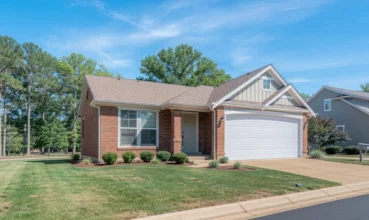
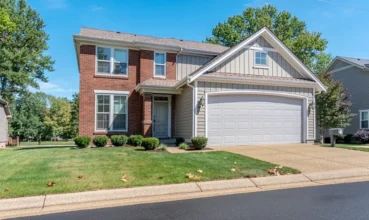
In most markets, resale homes and new builds compete on roughly even footing. In Austin and Central Texas, the balance has tipped decisively. Builders sitting on completed inventory are discounting prices and offering financing incentives that resale sellers cannot match – and the result is a market where the sub-million-dollar segment is stalling while homes above that threshold move with relative ease.
The divergence comes down to a straightforward advantage: builders who own their mortgage companies can offer rate buydowns that dramatically undercut prevailing market rates. Cody Wickham, a Central Texas agent who covers the corridor from Fort Hood to San Antonio, says VA buyers are getting forward commitments on new builds that bring first-year rates down to 2.9 percent. “You just can’t do that on a resale,” he says. “It would cost a lot, a lot of money.”
That gap matters because Austin’s inventory has roughly doubled beyond what Wickham describes as a stable level. Days on market have stretched into the 60s or possibly the 70s, price cuts are routine, and many sellers remain anchored to prices set when mortgage rates were two and three percent. Wickham puts it bluntly: sellers are “behind the game.”
Where Builders Hold the Upper Hand
The new-construction advantage extends beyond pricing. Wickham notes that younger buyers are drawn to the warranty packages that come with new builds – a 10-year foundation warranty, one-year coverage he calls “bumper to bumper,” and two years on structural components. Combined with the financing incentives, the package is difficult for a resale seller to replicate.
Most of those incentives require using the builder’s in-house lender, and Wickham says buyers on new builds are generally going that route. When the rate gap is that large, shopping elsewhere is hard to justify.
Builders also face their own pressure to deal. Completed homes sitting unsold rack up tax costs daily, which pushes builders to discount heavily to move inventory. That urgency creates the buying conditions Wickham describes.
For resale sellers trying to compete, the playbook starts with pricing. Wickham says homes that are priced correctly from the start avoid the worst of the market’s friction. But many sellers resist, clinging to valuations that comparable sales data no longer supports. The pattern that follows is predictable: multiple price cuts over weeks on market, then concessions – seller-funded buydowns, closing cost credits – just to reach the finish line. Wickham says he rarely sees resale homes sell at full list price unless they were priced accurately from day one.
The Million-Dollar Line
The market’s other split runs along a price threshold. Homes above a million dollars are moving without much difficulty, according to Wickham, because those buyers tend not to be rate-sensitive. Many pay cash or use jumbo financing where monthly payment math is less punishing.
Below that line – in the $300,000 to $700,000 range that makes up the bulk of transactions – the market is sluggish. Rate sensitivity hits hardest here, and new-construction incentives pull the most demand away from resale listings. Wickham describes the mood in this segment plainly: “What are we doing? What are we doing? What’s next?”
Established Austin neighborhoods with no nearby new construction are the exception. Wickham names River Place, Steiner Ranch, and Circle C as areas where pricing holds up because buyers who want those specific school zones have no alternative but resale. “If you want to be in that particular area, you have to buy a resale,” he says, “and that keeps the prices pretty good on those.”
Where Growth Capital Is Heading
For investors evaluating Central Texas, Wickham points north. He calls Williamson County “a gold mine,” citing Georgetown, Round Rock, Leander, and Cedar Park as areas with sustained momentum. Eastern Williamson County stands to benefit from a $17 billion Samsung facility opening in Taylor, which Wickham expects to bring significant economic growth to the area.
South of Austin, the I-35 corridor running through Kyle, Buda, San Marcos, New Braunfels, and into San Antonio is another growth lane. Dripping Springs, west of Austin, has become more accessible since the completion of a tollway that shortened commute times into the city. “Dripping Springs is going to absolutely blow up,” Wickham says.
The Rate Question Hanging Over Everything
Despite the buying opportunities, Wickham is candid about headwinds. He points to the bond market as a signal that interest rates may worsen before they improve. Global uncertainty, he adds, is making many prospective buyers hesitant to act. “There’s a lot of shock and knee-jerk reactions in the world right now, and a lot of people are just scared,” he says.
That uncertainty has changed how he advises clients. Wickham says he tells some buyers that now is not the right time and to revisit the conversation in a year or two. “At the end of the day, it’s not about me,” he says. “Real estate completely changed my life, and I want to help people experience that at the highest level. And sometimes that means that now is not the right time.”
For buyers who are financially stable enough to act, the current combination of high inventory, builder incentives, and seller concessions offers leverage that did not exist two years ago. For sellers, the math is less forgiving – and the longer they wait to price to the market rather than to memory, the more ground they lose to builders who have already adjusted.
About the Expert: Cody Wickham is a Central Texas real estate agent covering the corridor from Fort Hood to San Antonio.
This article is based on information provided by the expert source cited above. It is intended for general informational purposes only and does not constitute legal, financial, or real estate advice. Readers should conduct their own research and consult qualified professionals before making any real estate or financial decisions.