As major metropolitan markets price out buyers and compress investor returns, secondary cities across the Northeast are drawing renewed attention. Albany, New York, sits at a practical crossroads, the state capital with geographic access to Boston, New York City, Philadelphia, and even Montreal and Toronto, yet with prices far more accessible than those of its larger neighbors. For real estate professionals working the ground there, the market tells a more nuanced story than headline numbers suggest.
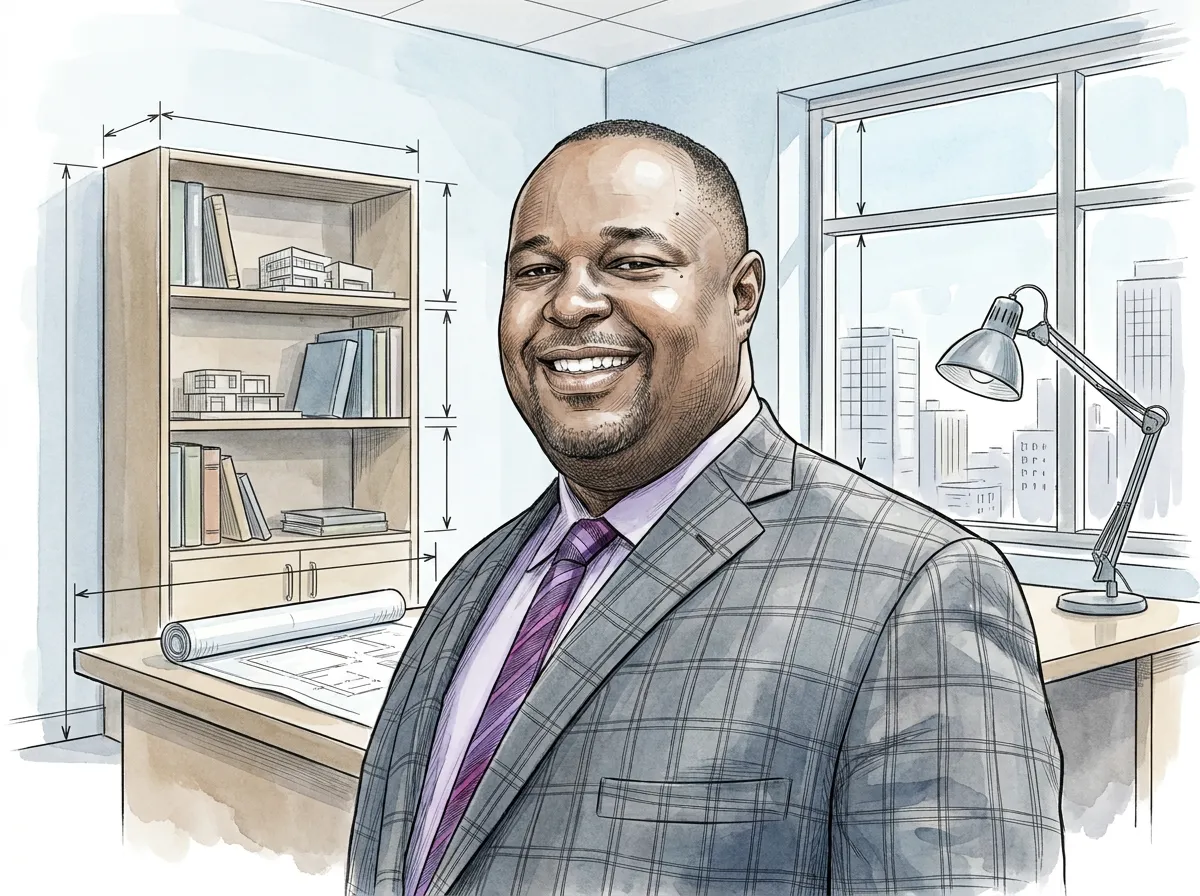
Lorenzo Murray, a Licensed Associate Real Estate Broker at HUNT Real Estate ERA, has worked in the Albany Capital Region for 13 years. As team leader of Your Home Team, which covers the four primary counties of Albany, Schenectady, Rensselaer, and Saratoga, Murray offers a practical read on a market that continues to attract both local buyers and out-of-state investors.
A Market Built on Accessibility
Albany’s draw is straightforward: lower price points than surrounding metros, combined with proximity to major employment centers. That combination opens the door for buyers who want to build equity without the financial pressure of a purchase in Boston or New York City.
Two distinct buyer profiles emerge. The first is the local renter transitioning to ownership, already familiar with the region and motivated by the economics of buying versus continuing to rent. The second is the investor, often from higher-cost markets, seeking returns that are increasingly difficult to find closer to home.
On the relocation side, Murray’s Cartus Relocation certification reflects a meaningful segment of the business. Albany’s corporate base – GlobalFoundries, GE, Regeneron, and a dense network of colleges and universities – generates consistent demand from professionals relocating from across the country and abroad. “We have a very strong relocation industry here, based upon the numerous businesses that are hiring from overseas and within the country,” he explains.
Correcting the Narrative on Priced-Out Buyers
A popular storyline holds that Albany is absorbing buyers who have been pushed out of Boston and New York City. Murray pushes back on part of that narrative. Investors from those markets are indeed purchasing properties in the Capital Region, but owner-occupants looking to live near Boston or New York City are not relocating to Albany as a substitute. Primary residents tend to be already embedded in the region, existing renters who know the area and are simply ready to buy.
This distinction matters for anyone trying to read demand signals. Investor activity from out of state is real and measurable. But the owner-occupant pool is largely homegrown, which gives the market a different kind of stability, one less vulnerable to shifts in sentiment among distant buyers.
Sellers Adjusting, Buyers Staying Selective
Albany remains a seller’s market from an inventory standpoint as of mid-2026, though the dynamics have loosened somewhat from the tightest pandemic-era conditions. Murray notes there is more inventory available than in recent years, while buyers still need to calibrate expectations accordingly.
On the seller side, price reductions have become more common. Sellers recognize that borrowing costs remain elevated and that the price they want may not match what buyers are willing to pay. For properties that don’t check every box, multiple-offer situations are no longer guaranteed, and motivated sellers are adjusting to attract competitive interest.
Buyers, meanwhile, are running the numbers carefully. Interest rates, price, and property condition all factor into the decision, and deals close when all three align.
Where Deals Break Down
Misaligned expectations remain the most common deal killer in Albany, often the result of buyers or sellers who haven’t assembled the right advisory team.
Murray sees this play out when clients carry over assumptions from a different era or market. “What was customary before may not be customary now,” he says. “It’s very important for home buyers as well as home sellers to gather a team of professionals that will help them make the best decision.”
For relocation clients specifically, the adjustment often involves recalibrating assumptions built elsewhere. Someone arriving from New Jersey, for example, may need to rethink expectations around convenience and travel times. Murray’s framework for working through that is practical: identify the two most important factors out of budget, location, and home type, and let the market define the third. “Focusing on two of the three usually makes for an easier transaction,” he notes.
Build-to-suit timelines have improved enough to make new construction a viable alternative for buyers who can afford it and prefer to avoid the renovation work that older inventory often requires. Murray points out that construction can now be completed in about eight to 12 months, a meaningful improvement from the extended delays seen during the COVID years. For buyers willing to wait, this path sidesteps the competition and condition issues that come with existing homes.
The Investment Case
For investors eyeing Albany, Murray is careful not to offer blanket recommendations. The region supports a range of strategies, residential, commercial, short-term, and long-term rentals, and the right approach depends entirely on the investor’s goals and risk tolerance. His consistent advice: define objectives first, then identify the right asset class and submarket.
The urban cores – Albany, Schenectady, Troy, Saratoga Springs, and Clifton Park – consistently drive the most activity. Surrounding areas move at a slower pace, but Murray sees that as a natural feature of the market rather than a weakness.
Looking Ahead
For Murray and Your Home Team, the focus heading into the back half of 2026 centers on expanding access to homeownership. “We’re focusing on truly making sure that we help close the generational wealth gap,” he says, describing an effort to ensure that anyone considering ownership has a viable path to get there.
That goal reflects something broader happening in secondary markets like Albany, where relative affordability, corporate investment, and institutional stability create conditions that make ownership attainable in ways that are increasingly rare in larger metros. The market isn’t flashy, but for buyers and investors who do their homework, that may be exactly the point. Albany’s strength lies not in rapid appreciation or speculative upside, but in consistency, the kind of market where careful decisions compound over time.
About the Expert: Lorenzo Murray is a Licensed Associate Real Estate Broker at HUNT Real Estate ERA and team leader of Your Home Team, serving the Albany Capital Region across Albany, Schenectady, Rensselaer, and Saratoga counties for 13 years. He holds a Cartus Relocation certification reflecting a meaningful portion of his business.
This article is based on information provided by the expert source cited above. It is intended for general informational purposes only and does not constitute legal, financial, or real estate advice. Readers should conduct their own research and consult qualified professionals before making any real estate or financial decisions.