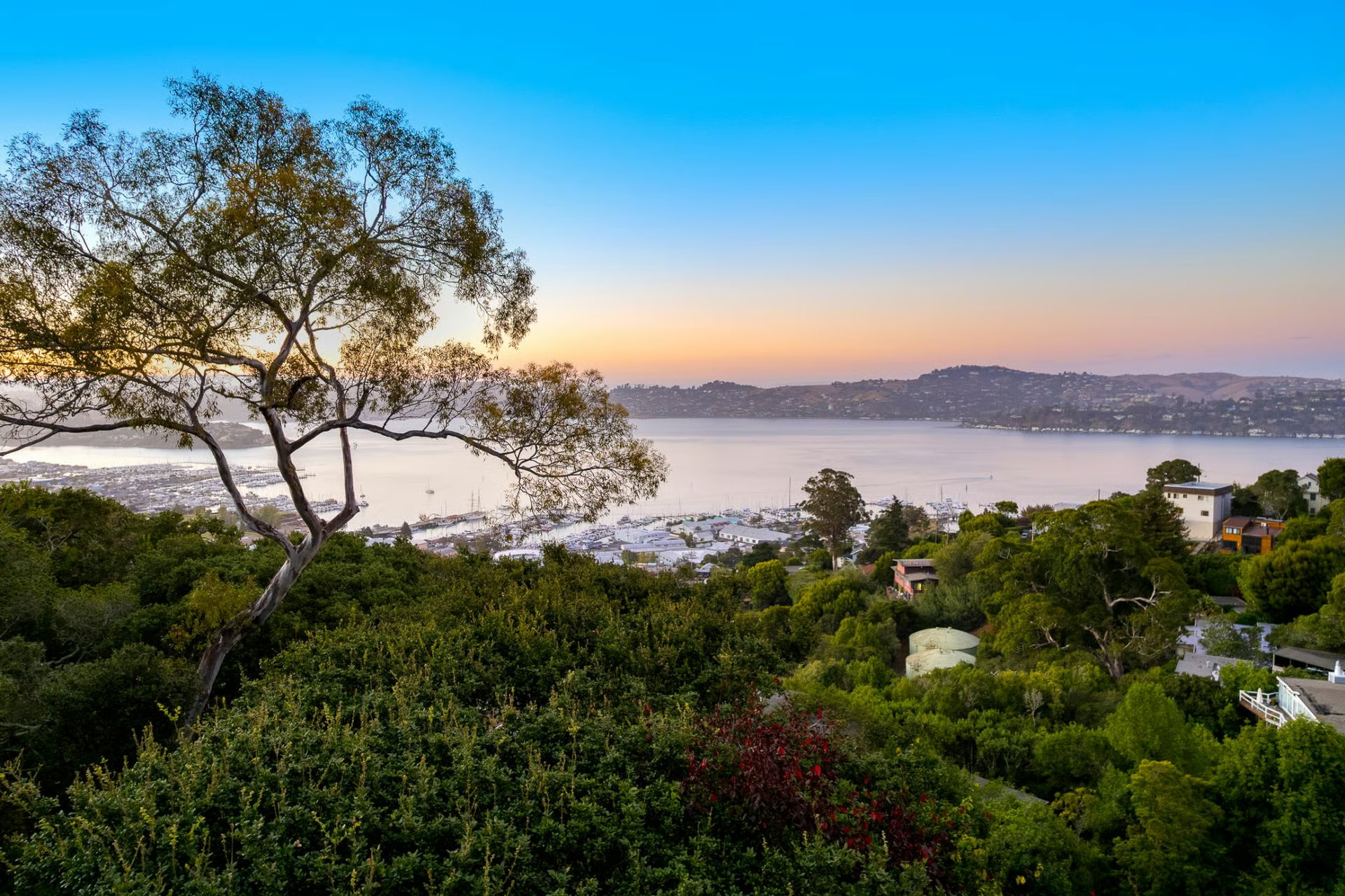
Sausalito has long been known as an artist colony turned waterfront enclave, a town where boats were built during World War II and a bohemian culture took root afterward. But the buyer pool in this small Marin County community is changing. Alongside empty-nesters downsizing from larger suburban homes, a newer cohort is emerging: young tech founders, many from the artificial intelligence sector, who want to be minutes from San Francisco without living in it.
According to Tyler Stewart, broker at Heath Real Estate and a Sausalito resident, the shift reflects what high-earning buyers now prioritize, and where pricing pressure may build next in the Bay Area’s southern Marin corridor.
Privacy, Proximity, and the Home as Infrastructure
Stewart describes a buyer profile that doesn’t fit neatly into traditional luxury categories. These AI founders are often bicoastal, treating a Sausalito home as their primary West Coast residence. What they want is a compressed version of daily life: office, gym, and sanctuary under one roof.
“They need their home to be their office, they need their home to be their home, they need their home to be their gym,” Stewart says. “So that when they are working so much, they really don’t even need to leave their home if they have a very busy day.”
The appeal for this group comes down to a specific combination. The town sits five to nine minutes from San Francisco, on the north side of the Golden Gate Bridge, making it the closest Marin County community to the city. Yet many of its hillside neighborhoods feel deeply private, a contrast to San Francisco’s density. These buyers are drawn to proximity to trails and open space, and they want enough yard to build out wellness amenities like saunas, cold plunges, and home gyms.
“These are people that are not looking for other people’s approval,” Stewart says. “What they’re looking for is privacy, a place to kind of escape to. And yet they’re so close to everything that they need to be close to.”
Finished Homes Are Commanding Attention
One pattern Stewart identifies across younger buyers – including but not limited to the AI cohort – is a strong preference for finished homes. Buyers working demanding schedules don’t want renovation projects. They want to arrive with a suitcase.
Stewart is currently listing a property on Curry Lane in Sausalito that illustrates this. The home was fully furnished by the Wiseman Group, a nationally recognized design firm, and can be purchased with all furnishings included. That kind of turnkey presentation, Stewart says, resonates with buyers whose time is their scarcest resource.
“Oftentimes what I’m finding with people right now is they’re so incredibly busy in their day jobs that they don’t really have the time, the energy or the creativity to want to do a project,” Stewart says.
A Pricing Gap That May Not Last
For investors evaluating southern Marin, Stewart points to a pricing disparity across neighboring markets. Mill Valley, one town north, is approaching over $2,000 per square foot for desirable inventory, according to Stewart. San Francisco is now seeing over $3,000 per square foot in certain segments. Sausalito, partly because of its historical identity as a funky, artisan-oriented community, has not yet reached those levels.
Stewart sees that gap narrowing as pricing pressure from surrounding markets pushes buyers toward the closest alternative. When San Francisco inventory tightens further, the nearest periphery absorbs that demand, and Sausalito is, geographically, the first stop.
“If you look at Sausalito, you would say that it likely has one of the most potential to see an uptick in its value,” she says. “Especially as the city, we all know what’s going on in San Francisco right now. And so when those people can’t find inventory, they’re going to press to the peripheries.”
Low Inventory Keeps the Market Tight
Sausalito’s small physical size means inventory is structurally limited. Stewart notes that the town’s most desirable pockets, areas he compares to Pacific Heights or Presidio Heights in San Francisco, such as Newtown and the Banana Belt, sell almost immediately when listings appear. Condominiums have had a harder time, largely because buyers coming to Sausalito specifically want single-family homes. Single-family properties move faster and sell for a higher price per square foot, Stewart says.
Deals Are More Complex, Not Harder
Stewart says all transactions in the Bay Area have grown more complex, driven partly by buyer caution and partly by appraisal friction in a transitioning market. Appraisers typically look at comparable sales from the past six months, and when a market is accelerating, recent comps may not support the prices buyers are writing. Stewart says he has seen appraisal issues on some properties for this reason.
That dynamic makes the choice of agent and lender more consequential. Stewart stresses the importance of working with local appraisers who understand the specific markets they are evaluating. The experienced agents, she says, are capturing a larger share of transactions because they prepare buyers with thorough market analysis and comparable sales data before offers are written.
Sellers Are Weighing Whether to Accelerate
The broader market mood, as Stewart reads it, is one of cautious acceleration. Sellers who had been planning a move within the next couple of years are starting to consider whether now is the time, given current strength. Stewart compares the dynamic to the early months of the pandemic-era price run, when homeowners who had been loosely planning future moves decided to act sooner.
“I don’t think that there are people in the Bay Area that are selling just to sell if they really want to be here,” she says. “But I think there are sellers where, if they were going to think about moving in the future, they are starting to think about whether now would be the right time to kind of accelerate their timeline.”
Stewart says the main variable he is watching is what happens in San Francisco’s housing market. Sausalito’s proximity, seven minutes from parts of the Presidio and the Marina, means its trajectory is closely tied to the city’s inventory and pricing conditions.
For buyers considering Sausalito, the calculus is straightforward: limited inventory, rising prices in every neighboring market, and a town whose per-square-foot pricing has not yet caught up. For sellers, the question is whether today’s strength represents the beginning of a new pricing floor or a peak worth capturing.
About the Expert: Tyler Stewart is a broker at Heath Real Estate and a resident of Sausalito, California.
This article is based on information provided by the expert source cited above. It is intended for general informational purposes only and does not constitute legal, financial, or real estate advice. Readers should conduct their own research and consult qualified professionals before making any real estate or financial decisions.